


In the following essay, Zhao Shukai (赵树凯; b. 1959) argues that rural reform was not the result of far-sighted planning or the guidance of some enlightened “thought” or “theory”, but was driven largely by farmers’ own innovations, which policymakers gradually accepted after failing to suppress them.
This is the second instalment in Zhao Shukai’s series, Reflections on the History of China’s Rural Reform. The Chinese original is available on the WeChat blog 九号院时刻 (No. 9 Courtyard Moment). The first instalment was published in Pekingnology, our sister newsletter, and the remaining essays will be published in due course.
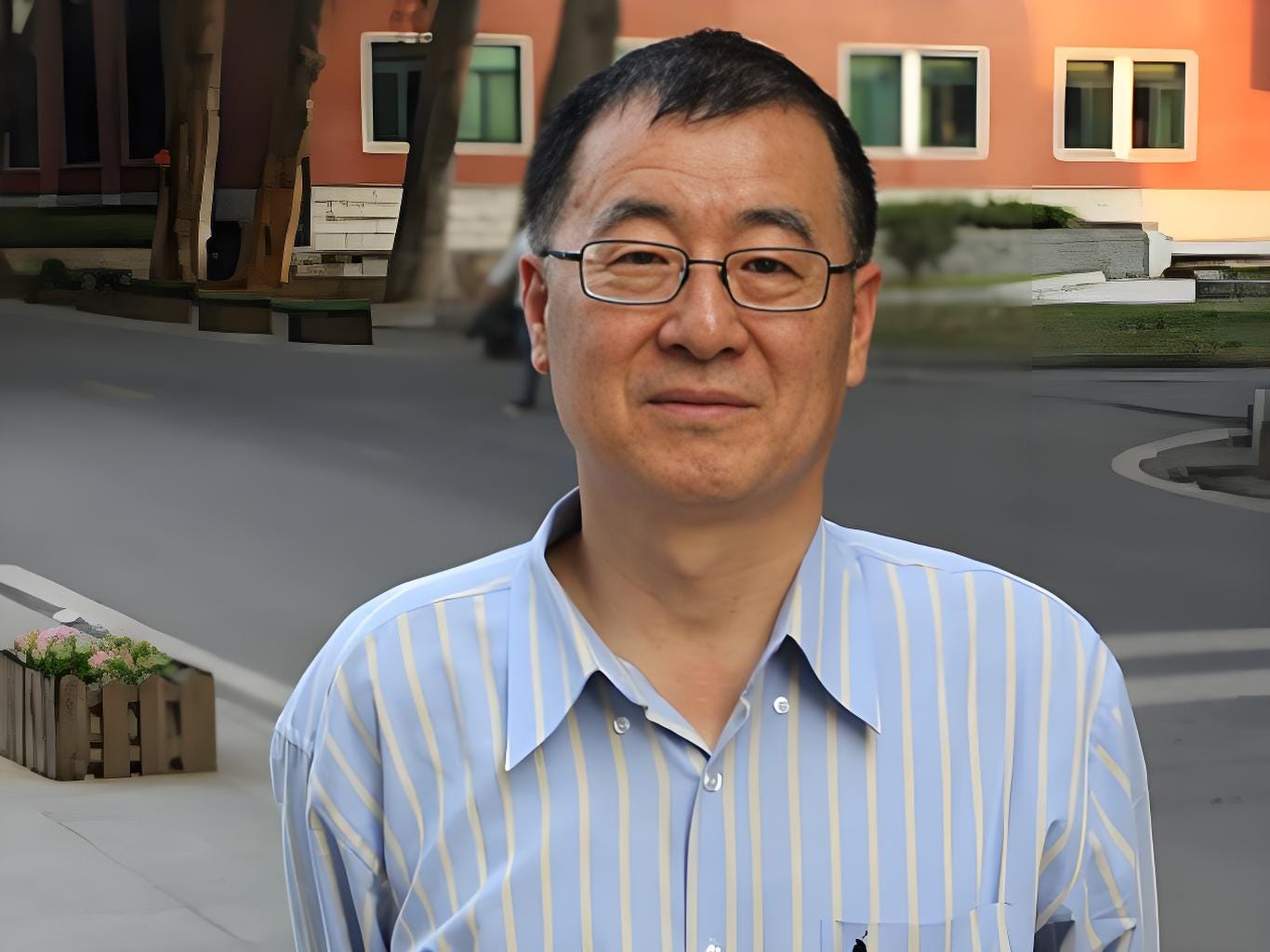
Zhao is a retired Chinese official of rural policy and governance. From 1982 to 1989, he worked at the Rural Policy Research Office of the Communist Party of China Central Committee’s Secretariat (later reorganised as the State Council’s Rural Development Research Centre and subsequently the Research Centre of Rural Economy under the Ministry of Agriculture and Rural Affairs). Starting in 1990, he served at the Development Research Centre of the State Council, China’s government cabinet, holding roles including Director General of the Rural Department’s Organisation Research Office and Director General of the Information Centre.
—Yuxuan Jia
Zhao has reviewed the following translation before publication.

赵树凯:”政策失灵”与农民幸运
——农村改革史阅读随笔(2)
Zhao Shukai: “Policy Failure” Proved a Blessing for Farmers
—Reflections on the History of China’s Rural Reform (II)
The Third Plenum of the Eleventh CPC Central Committee is said to have ushered in rural reform — not because the meeting itself devised a blueprint for such reform, but quite the opposite. The policies adopted at the meeting explicitly declared that “the household contract responsibility system is not permitted.”
The meeting also approved a revised Draft Regulations on the Work of Rural People’s Communes. At the time, the consensus among the top leadership was that the people’s commune system should remain in place for at least another twenty years. Even after that, the aim was not to introduce household contracting, but to take the commune system to a still higher level of “large in size and collective in nature” — in other words, to make the communes’ egalitarian “big rice bowl” even bigger.
The meeting’s significance for reform lay chiefly in abandoning class struggle as the key link and shifting the focus to economic development. In the rural areas, it emphasised respect for the autonomy of production teams and the need to encourage farmers’ initiative in production. Yet it continued to insist that the people’s commune system be consolidated and that the collectivist path it represented be upheld.
In fact, it was precisely the household contract responsibility system that ultimately dismantled the people’s commune system and reversed the course of collectivisation that the communes embodied. The central leadership had once declared the people’s commune to be both the basic unit of socialism in the countryside and the basic unit on the road to communism. The Third Plenum, then, did not script the story of rural reform. At most, it shifted the political climate in a direction more conducive to reform, creating room for the successive policy breakthroughs that followed.
Not long after the Third Plenum, in April 1979, the central leadership issued Document No. 31, again affirming that the household contract responsibility system was “not permitted.” In September, a document adopted at the Fourth Plenum softened the wording from “is not permitted” to “should not be practiced.” In September 1980, Central Committee Document No. 75 allowed the practice in some underdeveloped areas while maintaining that it should not be adopted elsewhere. The internal criterion was that only places with an annual net income of less than 50 yuan per capita would qualify — areas accounting for roughly 5 per cent of China’s rural population.
In March 1981, the General Office of the Central Committee circulated throughout the Party a policy proposal by Du Runsheng suggesting that 15 to 20 per cent of the country could adopt the household contract responsibility system on a trial basis for three to five years.
As late as the Central Rural Work Conference in October 1981, local authorities were still being told to hold the line: outside poor areas, the household contract responsibility system should not be introduced, nor should it be allowed to undermine the collective economies of ordinary and more developed areas. Farmers, however, kept pushing the boundaries, and the momentum soon became impossible to contain. The rule against adopting the household contract responsibility system in ordinary areas became a dead letter.
By the end of the year, the central leadership had realised that the practice could no longer be suppressed through administrative measures. The draft policy document was hastily revised to state that farmers were free to choose among the various forms of production responsibility. This became the No. 1 Central Document of 1982. The government’s gradual acceptance of household contracting was thus also a process of successive retreat from its original policy design.
Many people regard a speech by Deng Xiaoping as the historic turning point in policy toward household contracting. In fact, its impact was not nearly as great as is often assumed. In a conversation on May 31, 1980, Deng endorsed the 大包干 dabaogan used in Fengyang County. Many take this to mean 包干到户 the household contract responsibility system associated with Xiaogang Village.
But a close examination of the record shows otherwise: the dabaogan Deng referred to was not contracting full responsibility to individual households, but contracting it to small groups under the unified leadership of the production team. Deng’s point was that, so long as the production team and its collective economy remained the principal unit, there was no need to fear the emergence of the household contracting in a few places. In other words, he accepted limited household contracting on the assumption that the people’s commune system would remain intact.
What happened, however, was that the spread of household contracting rapidly dismantled the collective organisations built around production teams. This had not been anticipated, much less designed in advance. Even after Deng’s remarks, the top leadership continued its efforts to revise and adopt the Regulations on People’s Communes in order to further consolidate the commune system. But events on the ground far exceeded its expectations: within two years, the people’s communes had fallen apart.
Once land was contracted to individual households, the private hiring of labour, the rise of township and village enterprises, and large-scale migration to the cities soon followed. None of these developments had been planned or designed by policymakers; in their eyes, they were unforeseen “accidents.” The real wisdom of policymaking lay in responding appropriately to these developments. This was the great achievement of the five consecutive No. 1 Central Documents. Their success was not the result of far-sighted planning or the guidance of some enlightened “thought” or “theory.” On the contrary, they proceeded from the realities of everyday life, followed their underlying logic, and accommodated farmers’ own choices and innovations.
A review of policymaking throughout the reform era reveals a recurring pattern: when farmers first came up with new practices, decision-makers often failed to support them promptly and sometimes even sought to restrict or suppress them. Policy “brakes” were applied repeatedly. Deng Xiaoping once described township and village enterprises as an unforeseen force that had “suddenly emerged.” Indeed, in the early years of reform, the government neither anticipated nor supported their rapid rise. Instead, it tried to suppress them through policy on the grounds that they were disrupting the planned economy.
The same pattern emerged with the private hiring of labour in the countryside. Initially, the authorities decided to wait and see for two or three years. When that period had elapsed, they concluded that the practice could no longer be left unchecked and called for tighter controls, even explicitly proposing heavy taxes. Practical difficulties and policy disagreements, however, prevented the proposed measures from being adopted, and the matter was eventually dropped.
The same was true of farmers moving to the cities for work or business. From the outset, central government departments repeatedly condemned such movement as “disorderly migration.” Even in the mid-1990s, they continued to introduce measures to restrict it, at times deploying the police to remove migrant workers from cities and send them home. Yet rural migration to the cities proved unstoppable. Restrictions remained in place for more than a decade and were only gradually lifted after the turn of the twenty-first century.
It is difficult to imagine what farmers’ lives — or reform itself — would have looked like had those policy “brakes” been effectively applied: the bans on household contracting, on hiring labour, and on farmers moving to the cities. Put differently, had those policies “succeeded,” how could there ever have been a development miracle? This kind of “policy failure” was therefore a stroke of good fortune for farmers — and for rural development as well.
(January 2025)
Zhao Shukai: How China Allowed Private Employment

China’s removal of restrictions on private employment was gradual and contested. It unfolded through local experiments involving farmers, fishponds, and small workshops, amid conflicting instructions from senior leaders and repeated decisions to defer a definitive answer.
Zhao Shukai: where Ezra Vogel got it wrong

Zhao Shukai (赵树凯; b. 1959) is a Chinese official of rural policy and governance. From 1982 to 1989, he worked at the Rural Policy Research Office of the Communist Party of China Central Committee’s Secretariat (later reorganised as the State Council’s Rural Development Research Centre and subsequently the
Zhao Shukai: From National Policy to Local Politics

Regional stereotypes are a staple of Chinese humour: Shandong is associated with bureaucracy and protocol, Sichuan and Chongqing with bluntness, Beijing with political savvy and grand talk, and Shanghai with commercial pragmatism.
The Politics of Policy Research in China

In China, the boundary between politics and policy is often extraordinarily blurred. Yet very few people — especially those who have worked inside the system — are able to explain, with the benefit of deep experience in China’s Party-state apparatus, how the two relate to each other, where they should be distinguished, and why that distinction matters.
Zhao Shukai: Ghostwriters of Reform

Behind China’s big policy documents and set-piece speeches stands an anonymous guild of wordsmiths whose drafts have nudged the course of reform as surely as any the leaders who sign them. One of them, veteran rural-policy insider Zhao Shukai, looks back on four decades in the engine room of official document writing to reflect on what it means to “danc…
A fascinating example of how reform can emerge from below, with policy gradually adapting to realities that were neither planned nor anticipated.
What interests me is what happens when we extend this four-year window over the following forty years. China’s land system did not stop evolving with household contracting; it continued to change alongside industrialization, urbanization, migration, infrastructure, and the renewed consolidation of agricultural production.
So I hesitate to call land reform simply a “success.” Perhaps the more important lesson is the system’s capacity for feedback and adaptation: allowing practices to emerge from below, responding to reality, and repeatedly finding a new equilibrium.
In that sense, the reform described here may have been less an endpoint than the beginning of a much longer institutional evolution.
There's some element of "There go the people. I must follow them, for I am their leader." (Alexandre Auguste Ledru-Rollin) 为人民服务!
This is a brilliant, fascinating account of how change and progress happen, thanks much.