


Regional stereotypes are a staple of Chinese humour: Shandong is associated with bureaucracy and protocol, Sichuan and Chongqing with bluntness, Beijing with political savvy and grand talk, and Shanghai with commercial pragmatism.
But do these contrasts go beyond personalities and reflect deeper differences in regional political culture? In this short essay, Zhao Shukai asks whether such regional traditions give rise to what he calls a “geography of policy.”
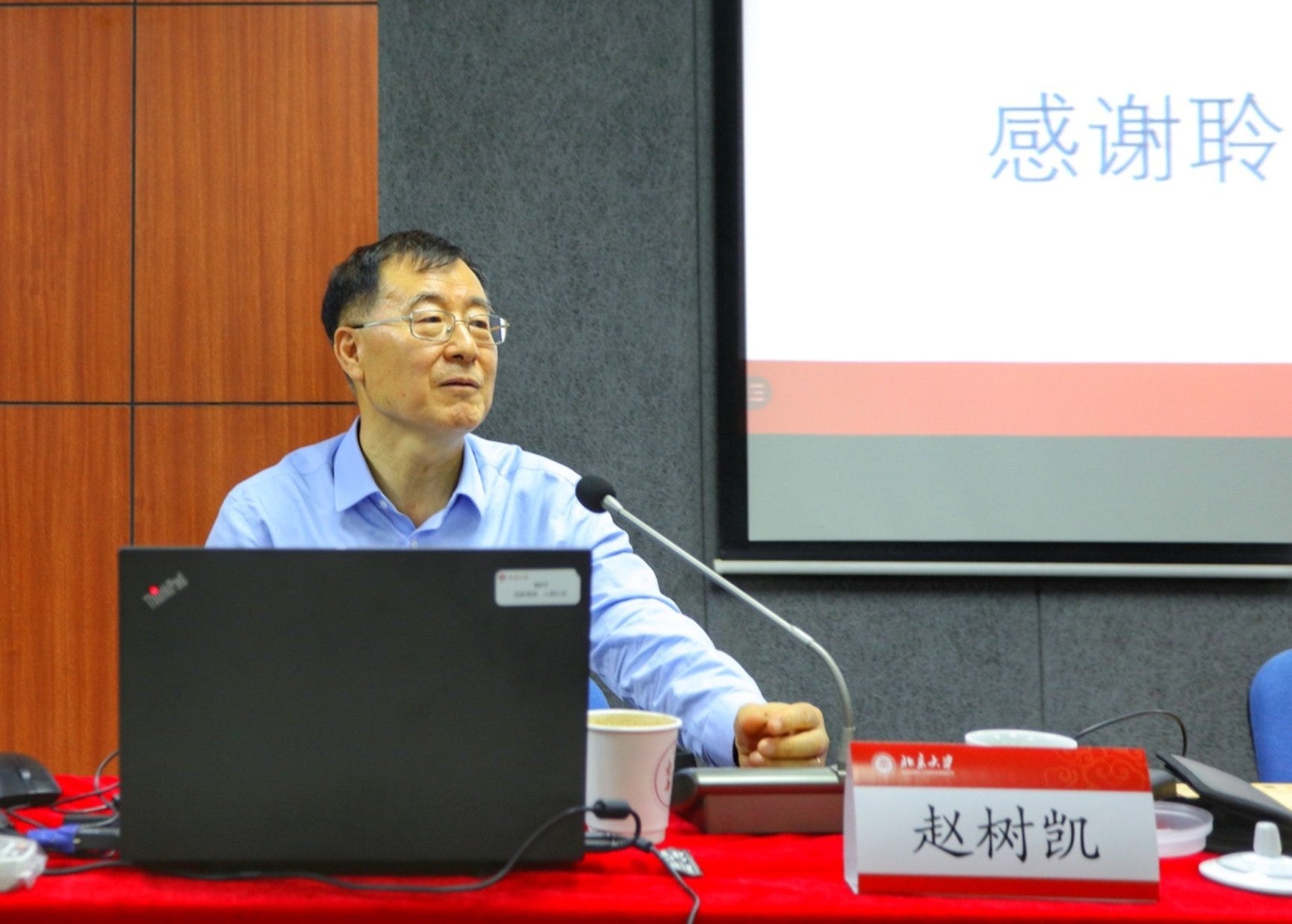
Zhao Shukai (赵树凯; b. 1959) is a Chinese official of rural policy and governance. From 1982 to 1989, he worked at the Rural Policy Research Office of the Communist Party of China (CPC) Central Committee’s Secretariat. Starting in 1990, he served at the Development Research Center of the State Council, holding roles including the Director General of its Information Center.
The article, written in November 2025, was originally published on Zhao’s personal WeChat blog, Guhe Hushan (沽河虎山). The account has now been disabled for “suspected violations of relevant laws and regulations,” but reposts of the article remain available online.
Zhao has kindly reviewed the translation.
— Yuxuan Jia
赵树凯:“地缘政策”缘何而成?
Zhao Shukai: What Gives Rise to a “Geography of Policy”
Research on rural development often raises a puzzling question. Under the unified leadership of the central authorities, localities operate under the same policy guidelines and political system, read the same documents, and receive the same messages from official meetings. Yet policy implementation varies sharply from place to place, as do patterns of governance. Why is this so?
Clearly, policy and governance are geographically conditioned.
During the Great Leap Forward, a famous slogan proclaimed, “The greater the daring, the higher the yield.” In People’s Daily reports, this was presented not merely as a slogan but as practical experience in agricultural production. It calls to mind the Boxers’ claims of supernatural invulnerability to weapons. This particular “experience” originated in Shandong, where the Boxer movement had arisen more than half a century earlier. The Fan County Party Committee in Shandong even boldly proposed “entering communism within two years.”
The Great Leap Forward and the People’s Commune Movement unfolded very differently across regions, and the severity of the nationwide famine likewise varied enormously from one region to another. These differences can, of course, be attributed first and foremost to the local leaders in charge. During the Great Leap Forward, for example, five provincial first secretaries became known nationally as the “Five Tiger Generals” for their particularly radical conduct: Shu Tong in Shandong, Wu Zhipu in Henan, Li Jingquan in Sichuan, Zeng Xisheng in Anhui, and Zhang Zhongliang in Gansu. These five leaders pursued leftist policies most aggressively, and the famine was especially severe in their provinces.
Take Shu Tong in Shandong. His ultra-leftist tendencies were already apparent during the Anti-Rightist Movement of 195,. After the nationwide campaign, he launched what was called “remedial rectification” in Shandong. In effect, this was a second round of the Anti-Rightist Movement, and tens of thousands more people in the province were classified as rightists. This was a classic case of policy being implementation ratcheted up at every level and pushed to greater extremes: a political campaign that was already misguided became even broader and more intense than it was elsewhere.
Shandong was again at the forefront of the Great Leap Forward and the People’s Commune Movement, and famine also broke out there at an especially early stage. Shandong’s famine was the first to draw the central authorities’ attention, leading to Shu Tong’s removal as provincial Party first secretary. After returning to political life, he was assigned to Shaanxi, where he continued to pursue ultra-leftist policies. When Hu Yaobang became the province’s first secretary and introduced more relaxed policies, Shu Tong took the lead in attacking him.
On 9 November 1970, in the middle of the Cultural Revolution, the Core Group of the Shandong Provincial Revolutionary Committee submitted a report to the CPC Central Committee on its provincial rural work conference. The conference had focused on further developing the mass campaign to “Learn from Dazhai in Agriculture.” The report stated:
“In the past, our province’s campaign to learn from Dazhai treated Dazhai solely as a model of production. It did not see learning from Dazhai as a fundamental question of political orientation or of which road to follow, and the campaign therefore lacked momentum. Through study, a consensus was reached that learning from Dazhai meant following the socialist road, while failing to learn from Dazhai meant following a deviant path.” “Anyone who opposes learning from Dazhai is a capitalist roader.” “Learning from Dazhai requires a firm grasp of class struggle; without it, learning from Dazhai is empty talk.”
The CPC Central Committee circulated Shandong’s report to all provinces that same day.1 This document pushed the campaign to learn from Dazhai to a political extreme where one’s attitude toward Dazhai became a criterion for identifying class enemies.
In August 1978, after Anhui and Sichuan had already stopped learning from Dazhai and begun making policy breakthroughs, the Shandong Provincial Party Committee, acting on instructions from Chen Yonggui [who had risen from a model peasant in Dazhai to vice premier in charge of agriculture], convened an conference in Tai’an, Shandong on learning from Dazhai. Shandong thus became Chen’s last source of support in promoting the Dazhai model and resisting rural reform.
At the time, the nationwide Dazhai campaign used a “one-two-three” assessment standard requiring county-level cadres to perform one hundred days of farm labour each year, commune cadres two hundred days, and production-brigade cadres three hundred days. Many provinces reported that these targets were impossible to meet. Shandong, however, responded more enthusiastically than any other province and submitted to the central authorities a report on Yutai County’s experience in meeting them.
An investigation by the Ministry of Agriculture and Forestry found that the county had counted attendance at meetings and participation in official receptions as farm labour, explaining that Dazhai calculated its figures in the same way. This prompts a question. The Great Leap Forward and the campaign to learn from Dazhai were nationwide, but could such extreme slogans and practices have originated in Guangdong or Zhejiang?
It is certainly reasonable to attribute distinctive local policy approaches to the individual leaders in charge. Yet local traditions of political culture are also important. Without taking them into account, it is impossible to explain local political and economic differences across wider geographical areas and longer historical periods.
Some places, for example, were not only particularly radical during the Great Leap Forward, but also especially aggressive during the Cultural Revolution in learning from Dazhai and “cutting off the tails of capitalism,” and later in enforcing family-planning policy — as in Guan County, Shandong, with its “Childless Hundred Days” campaign in 1991. Some localities appear to have a tradition of implementing policies from above with uncompromising rigidity, with each successive level adding new demands and greater severity. Such localities tend to win recognition and praise from higher authorities, and often produce larger numbers of officials who are promoted. Behind this phenomenon lie regional history and culture, as well as political traditions.
In reading historical materials on policy, I have found that places denounced during the Cultural Revolution as “models of capitalist restoration” — for example, Wenzhou in Zhejiang and Putian in Fujian — often later took the lead in reform and opening up. The deeper explanation may lie in differences in cultural outlook, in political and policymaking practices, and in modes of economic activity. Ultimately, these are differences among people. Why did Kang Youwei and Liang Qichao, the leading advocates of the Hundred Days’ Reform in 1898, emerge in Guangdong rather than Shandong or Henan?
The study of international relations includes geopolitics. Should research within China similarly examine the “geo-policy” or the “geo-governance”? This may be a question worth considering. Regional differences within China in history, culture, and political tradition are even greater than those between some countries in continental Europe. Northern Austria and southern Germany, the Netherlands and Belgium, and eastern France and western Switzerland all share much in historical tradition, political culture, and language; each pair may have more in common than northern and southern China. Research on regional development should therefore also examine regional differences in historical and cultural traditions, as well as in politics, policy, and governance. This should be an important component of research on the modernisation of governance.
(November 2025)

The Politics of Policy Research in China

In China, the boundary between politics and policy is often extraordinarily blurred. Yet very few people — especially those who have worked inside the system — are able to explain, with the benefit of deep experience in China’s Party-state apparatus, how the two relate to each other, where they should be distinguished, and why that distinction matters.
Zhao Shukai: How China Allowed Private Employment

China’s removal of restrictions on private employment was gradual and contested. It unfolded through local experiments involving farmers, fishponds, and small workshops, amid conflicting instructions from senior leaders and repeated decisions to defer a definitive answer.
Zhao Shukai: Ghostwriters of Reform

Behind China’s big policy documents and set-piece speeches stands an anonymous guild of wordsmiths whose drafts have nudged the course of reform as surely as any the leaders who sign them. One of them, veteran rural-policy insider Zhao Shukai, looks back on four decades in the engine room of official document writing to reflect on what it means to “danc…
Zhao Shukai: where Ezra Vogel got it wrong

Zhao Shukai (赵树凯; b. 1959) is a Chinese official of rural policy and governance. From 1982 to 1989, he worked at the Rural Policy Research Office of the Communist Party of China Central Committee’s Secretariat (later reorganised as the State Council’s Rural Development Research Centre and subsequently the
《当代中国的农业合作制》上册,第731页。The Agricultural Cooperative System in Contemporary China, vol. 1, p. 731.