
Zhao Shukai: Ghostwriters of Reform
A veteran policy drafter reflects on the craft, constraints, and quiet power of official document writing inside China’s policy machine.


Behind China’s big policy documents and set-piece speeches stands an anonymous guild of wordsmiths whose drafts have nudged the course of reform as surely as any the leaders who sign them. One of them, veteran rural-policy insider Zhao Shukai, looks back on four decades in the engine room of official document writing to reflect on what it means to “dance in shackles”: how good documents are really made, where they go wrong, and why the people who write them must answer not only to their leaders, but also to history.
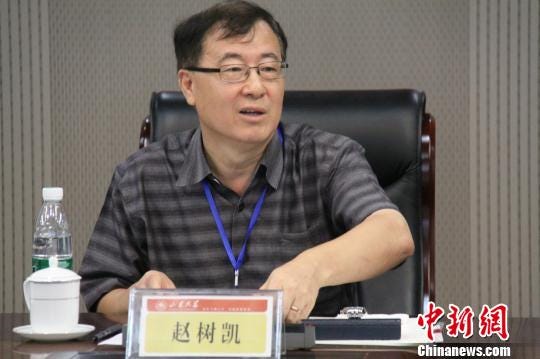
Zhao Shukai (赵树凯; b. 1959) is a Chinese official of rural policy and governance. From 1982 to 1989, he worked at the Rural Policy Research Office of the Communist Party of China Central Committee’s Secretariat (later reorganised as the State Council’s Rural Development Research Centre and subsequently the Research Centre of Rural Economy under the Ministry of Agriculture and Rural Affairs). Starting in 1990, he served at the Development Research Centre of the State Council, China’s government cabinet, holding roles including Director General of the Rural Department’s Organisation Research Office and Director General of the Information Centre.
He held short-term visiting positions at the Australian Centre on China in the World (CIW), The Australian National University (ANU) (Jul 1996–Jan 1997); Universities Service Centre for China Studies, The Chinese University of Hong Kong (CUHK) (May–Jul 1998); Asian/Pacific Studies Institute (APSI), Duke University (Jul 2000–Jul 2001); Fairbank Center for Chinese Studies, Harvard University (Jul 2001–Jul 2002); Harvard-Yenching Institute, Harvard University (Sep 2010–Feb 2011); and the University of Tübingen, Germany (Sep 2012–Jan 2013). He also completed an executive education programme in public management at Harvard Kennedy School (Jun–Sep 2003; Jun–Sep 2008) and an executive education programme at Cambridge Judge Business School, University of Cambridge (Jul 2007).
—Yuxuan Jia
The article is published in full on 20 November 2025 on the WeChat blog 沽河虎山. Zhao has kindly authorised the translation but has not reviewed it. Before appearing on the WeChat blog, the following article became available in six parts on the website of the Institute of Governance, Shandong University.
赵树凯:漫谈公文写作 ——我的观察与体会
Zhao Shukai: Notes on Official Document Writing—My Observations and Reflections
Note: On June 30, 2020, I was invited to give a talk at a workshop on official document writing organised by the Personnel Department of Shandong University. This article is adapted from the script I prepared for that occasion. I would like to thank Ms Pu Yehong of the Personnel Department of Shandong University for her kind assistance.
I am very glad to be here today. This workshop on official document writing, organised by the university’s Personnel Department, is very meaningful and a valuable learning opportunity for me as well.
I joined the Rural Policy Research Office of the Communist Party of China (CPC) Central Committee’s Secretariat 中央书记处农村政策研究室 in 1982 and moved to the Development Research Centre of the State Council 国务院发展研究中心 in 1990. I have worked in policy research for nearly forty years. I cannot claim any particular distinction in official document writing, nor do I believe my experience is exemplary; a long career does not automatically translate into a high level of mastery. What I do have, however, are a number of experiences in important policy contexts, which have given me some observations and reflections that may be of value. What I share today is not a formal lecture; there is no doctrine to offer, and very few definitive answers. I simply share my own observations and reflections in the hope that they may be of some use.
I will talk about six issues: the concept of “official documents”; the writing style; platform support; learning from exemplars; scope for innovation in writing; and the attitude towards writing.
1. The concept of “official documents”
In general, the notion of “official documents” is more a matter of convention than a clearly defined concept. In August 2000, the State Council issued the Measures for the Handling of Official Documents in State Administrative Organs, which set out the types and formats of official documents, rules of correspondence, and procedures for issuing and receiving them. The provisions are highly general and do not directly address how to write official documents. They focus mainly on document taxonomy and regulating how they are processed—and even that taxonomy is quite broad.
In practical work, most writing tasks involve things like work plans and summaries, leading officials’ speeches and articles, research reports, and various project proposals. More basic tasks include meeting minutes and preparing related documents.
In Party-related work, the commonality is even greater: Party-building work reports, materials for the “three meetings and one lecture” [general membership meetings, branch committee meetings, and Party group meetings, plus Party lectures], inspection and discipline-related documents, as well as personal self-examination reports and Party spirit analyses prepared for leading officials, and so on. Strictly speaking, none of these would be classified as “official documents” under the formal definition, but all of them fall within the broader category of writing tasks that support administrative work.
In my view, official documents can be roughly divided into two types. The first are administrative documents, such as notices, circulars, and announcements, which tend to have simple content, strictly prescribed formats, rigid procedures, and highly standardised language.
The second type are research-oriented documents. These include research reports, work reports, leading officials’ speeches and signed articles, and specialised project plans. Such documents require a solid research base, clear concepts or theoretical perspectives, and a coherent logical structure; in essence, they are a form of thematic research.
The kind of writing I focus on today falls mainly into this second category.
Within Party and government organs, people rarely describe their job as “official document writing.” Instead, they more often refer to it simply as “writing work,” meaning drafting support for leading officials. This drafting work is wide-ranging and takes many forms—from short toasts at banquets and remarks for various occasions, to government work reports for Party congresses and people’s congresses, as well as signed articles by leading officials. Compared with ordinary official documents, these materials are held to much higher standards. This is what I mainly discuss today.
Whether one calls it “official document writing,” “writing work,” or “drafting support,” the core feature is the same: it is writing for public purposes, speaking on behalf of the organisation and its leaders. Although writing is, in itself, a personal act, official document writing is not about the writer’s personal expression. It is done from an impersonal standpoint, drafted in someone else’s name. Accountability for the text, therefore, does not rest with the individual writer but with the institution. This gives rise to some very specific requirements for how such materials are written.
There is no shortage of textbooks on official document writing, and many universities offer similar courses. In my view, these textbooks are worth reading, but there is no need to read too many of them. They can be useful for understanding basic formats and conventions. Good official document writing, however, does not simply come from studying these textbooks. In fact, those who are capable of writing textbooks on official document writing are not necessarily the ones who can draft strong documents in practice. As for how to improve this craft, it essentially comes down to two things: reading more and writing more. Of course, how one reads and how one writes involve many subtleties that deserve careful attention.
2. Writing style
Let me begin with a story. In the summer of 1982, I had just started work at the Rural Policy Research Office at the Secretariat of the CPC Central Committee. On my very first day, on the shuttle bus after work, the colleague sitting next to me—who didn’t know me—asked where I had come from and what I had studied. I told him I had studied Chinese language and literature. He replied, “Chinese is not a real speciality. You need to find a way into specialised research.”
I later learned that this colleague was Yang Kunchuan 杨坤泉, then director of the General Affairs Bureau 综合局长. He had served as principal secretary to the vice premier in charge of agriculture and was one of the office’s leading writers, responsible for drafting major central documents and People’s Daily editorials in those years. As is well known, at that time the central authorities issued five consecutive “No. 1 central documents”—the first policy document released each year—on agriculture, rural areas, and farmers. Yang Kunchuan was the principal drafter of the first No. 1 central document and played a major role in drafting the subsequent ones. His remark left a deep impression on me, and my later work experience confirmed what he said.
When I first started working, I served as an office secretary—also called a secretary on duty—responsible for very detailed tasks such as taking phone call notes, keeping conversation records, drafting meeting minutes and notices, and compiling meeting materials. Even so, these tasks were not easy to handle. Because I lacked the necessary background knowledge, there were times when I could not even produce a satisfactory phone call note.
The central departments in charge of rural affairs have a long institutional history, and rural policy itself has evolved over a long period: the Land Reform Movement, agricultural cooperativisation, the Great Leap Forward and the establishment of people’s communes, the policy adjustments of the 1960s, the “Learn from Dazhai” campaign during the Cultural Revolution, and, later, the rural reforms that began in the late 1970s. Behind many writing tasks that looked simple, there were, in fact, numerous people, meetings, events, and documents.
In discussions, leading officials might refer to particular incidents, individuals, or meetings that were directly tied to policy background, historical developments, or debates at higher levels. Without that background knowledge, it was hard to follow what they were talking about, and this inevitably affected the accuracy of the minutes and summary notes. At times, a leader would ask me to phone someone to attend a meeting—perhaps a scholar who had been highly influential in rural policy research in the 1950s—and I would not even recognise the name. This naturally displeased the leader and slowed down the work.
In my daily work, I came to realise that such specialised knowledge is not a matter of writing ability as such, yet it directly affects the quality of writing tasks. One needs to understand the evolution of policy, the evolution of institutions, and the current state of policy; only on this basis can one complete even simple writing tasks smoothly, let alone develop one’s own research and views. Thus, while a background in Chinese language and literature may seem to offer certain advantages for writing in a specialised department, its limitations are inherent. Even someone with a doctoral degree in Chinese studies would find the work challenging.
The conversation on the shuttle bus on my first day of work was repeatedly confirmed by what I encountered in the years that followed. It became an important reason why, six years later, I decided to change fields, take the entrance examination for graduate studies, and leave my post to pursue further education.
In the years just after I started working, I often went on field trips as a research assistant. The secretariat where I worked supported ministerial-level leaders. China’s senior officials in policy research departments were generally strong writers, all capable of producing their own articles. I once worked with a vice-minister named Shi Shan 石山. He had been a university student before the War of Resistance Against Japanese Aggression, later served for many years as the principal secretary to Vice Premier Tan Zhenlin 谭震林, who was in charge of agriculture, and went on to head the Policy Research Office of the Ministry of Agriculture and Forestry 农林部政研室 in the later years of the Cultural Revolution. When I accompanied him on field trips, much of my work was to copy out his drafts by hand.
In the first half of the 1980s, the vice premier responsible for agriculture was Wan Li 万里. For his speeches at the Central Rural Work Conference, the initial drafts were prepared by others, and I copied them out afterwards. The drafter would then revise my handwritten copy, after which I would produce a clean version. The text would then be sent to the printing house for typesetting, and I was responsible for proofreading the galley proofs.
The drafting process for the CPC Central Committee’s October 1983 document on abolishing the people’s commune system and establishing township governments was fairly lengthy. I was responsible for proofreading the manuscripts, and in the autumn of the previous year, I made no fewer than ten trips to the printing house.
After 1985, I worked as a secretary to Ji Dengkui 纪登奎 [then minister-level Researcher at Rural Development Research Centre under the State Council] and assisted him with research on rural issues. Ji had previously been a member of the Political Bureau and an executive vice premier of the State Council. For one particular policy issue, he held several discussion meetings. After each session, we would write up what had been discussed, but when we compared notes, mine were much thinner than his, which left him very dissatisfied. The discussion meetings moved across highly technical areas—land, grain, commerce and so on—and I simply couldn’t keep up. As a result, my notes missed many of the key points, even though by that time I had already been working for three or four years.
When it came to reports for the Party Central Committee, Ji initially expected me to prepare the first draft. But I could not do it, so he had to write it himself while I handled only supporting tasks. A truly competent research assistant, after a full day of fieldwork and discussions, ought to be able to sort out the structure of a report just by taking an evening walk with their principal talking through the ideas, and then produce a draft that needs only light editing. This wasn’t just awkward in retrospect—it was already deeply embarrassing at the time.
In the summer of 1990, the Rural Policy Research Office was abolished, and I moved with its former deputy director, Wang Yuzhao 王郁昭, to the Development Research Centre of the State Council, where I continued to serve as his secretary. At first, his speeches and articles still relied largely on his previous secretary; only after two years was I able to take on these tasks on my own. By then, I had already been working for nearly ten years.
In the years that followed, as part of my policy research work, I regularly wrote policy research reports and had opportunities to help draft speeches for central leaders. In 2006, I was the main presenter at the 36th group study session of the 16th CPC Central Committee Political Bureau. I not only had to prepare the lecture itself, but was also responsible for drafting the speech that the General Secretary would deliver after the study session. Preparing for a Political Bureau group study session is a long and complex process involving multiple rounds of internal discussion, and it was an important learning experience for me.
Looking back, I started research from a low base and got off to a slow start. Why was it slow? Partly because of disciplinary constraints: without prior professional training, I progressed more slowly than colleagues who had studied agricultural economics. Partly, it was due to my own limitations.
That said, if I judge myself honestly, I would say that I studied hard and stuck to my work. For nearly forty years, whatever the period and whatever position I held, I devoted myself to research with few distractions. Beyond the writing required for my job, I also made a conscious effort to publish. I wrote not only research papers but also poetry and essays; I was rejected many times, kept submitting, and tried to maintain, in a way, a habit of persevering in the face of setbacks.
In the early 1990s, a wave of officials leaving government for business swept through central agencies, and many colleagues chose to start their own companies. My superior asked if I was interested in doing the same. He said he could help me set up a firm in Shenzhen or Hainan, as he had previously served as a provincial governor there and had extensive connections. I told him I had neither the interest nor the aptitude for business, and that I simply wanted to continue doing research—even though, at that point, I had no significant work to my name and no clear idea whether I really had potential in this field.
In early 1994, I requested to step down from my secretarial post. I faced two options: if I wanted to be promoted from deputy division director to division director, I could move to the General Office and continue doing administrative work; if I wanted to transfer to a research department and focus on research, I would have to remain at my original rank. I did not hesitate. I returned to the Rural Affairs Department because specialising in research had long been my aspiration.
Just as the trend of leaving government for business was taking off, I also began to see faint signs of progress in my own research. I was gradually able to take on drafting tasks more independently, and some of my articles were starting to be published. The first real encouragement came from my superior’s wife. On a business trip, she said to me, “At home, the old man said you write his speeches very well, that they read smoothly and with force.” I took this as a sign of the value of my training in Chinese language and literature: given the same information and the same set of ideas, a better command of Chinese can produce a much better text. In a basic sense, this shows that “writing that lacks effective expression cannot go very far.” [in the words of Confucius] So it is not enough to say that Chinese is not a real speciality; one also has to add the second half of the sentence—that Chinese can sharpen and strengthen professional expression.
Chinese can, of course, be studied as a specialised field, but it cannot be regarded as a “speciality” in the strict sense. The quality of official document writing is not determined by language skills alone, but because it is conveyed directly through language, close attention must be paid to how it is written. The effectiveness of that expression depends not only on choosing the right words and crafting fine sentences, but also on factors that lie beyond the words themselves.
As the Song dynasty poet Su Shi (1037-1101) put it, “Writing is the product of one’s inner force,” stressing that writing is shaped by a whole range of factors. Lu You (1125–1210), also from the Song dynasty, made a similar point when he said that “the real skill lies outside the poem.” Hu Shih (1891-1962) likewise remarked that an article must be clear and easy to understand if it is to be convincing. Yet clarity in writing requires more than language alone; it rests on clear thinking and solid professional knowledge. Only with clear thinking can a person speak clearly and write clearly.
Beyond language and style, official document writing carries other demands that have to be taken seriously if one is to improve. It calls for a solid grasp of the broader situation of the organisation: its current priorities, the expectations of higher authorities, and the concerns coming from the grassroots. A broad, overall perspective is essential, and the structure and framing of a document need to reflect a high vantage point that aligns with the leadership’s view. This kind of understanding has to be built up over time and must encompass both historical developments and present realities.
In many cases, particular attention needs to be paid to the difficulties and emerging points of tension in the organisation’s work. In large departments, even differences of opinion within the leadership are something the writer must keep in mind. Writing often has to help manage and coordinate such differences; put another way, divergences within the leadership can sometimes be balanced and accommodated through the way a document is written.
In drafting documents, especially on major policy questions, finding language that can balance and reconcile conflicting views within the leadership and win acceptance from all sides is a serious test of any drafter’s ability. In this respect, Du Runsheng 杜润生, who headed our office in those years, was truly a master of his generation. His exceptional skill in this area can be seen in the wording of documents that dealt with several thorny policy issues, including those related to the household responsibility system and the use of hired labour. Anyone interested can consult the documents from that period, and if they are read together with the successive drafts and revisions, the insights are even deeper.
Of course, this is not just a matter of literary technique. It is also a matter of political judgment, policy expertise and a certain level of intellectual depth. Put simply, technique matters, but good documents ultimately rest on solid research and serious thinking, not on rhetoric alone.
3. Platform support
Writing is, by its nature, a highly individual activity, and the quality of what one produces is shaped above all by one’s own abilities. Improving those abilities takes time; it is a process of gradual accumulation. Is there, then, any way to improve more quickly—some kind of shortcut? In a sense, there is. It lies in creating a strong institutional environment that provides systematic support for individual growth; in other words, platform support within the organisation. In certain circumstances, that kind of support can be decisive.
A strong institutional environment can provide powerful support for research and writing. With that backing, an individual’s abilities can grow rapidly and sometimes even surpass their usual level. This is most clearly seen in the way world-renowned consulting firms such as McKinsey and the RAND Corporation operate. Research teams of just three to five people, some of them not even senior staff, are able to take on consulting projects for major multinational corporations and governments, charge high fees, and produce reports with real influence. What makes this possible is not only the talent of the researchers themselves, but the larger platform behind them: the organisation’s full support system.
By contrast, without such a platform, a small group of three to five people working on their own would struggle even to secure consulting projects, let alone command substantial fees.
Anyone familiar with China’s rural reforms knows that in the 1980s, the central authorities issued five consecutive No. 1 central documents on rural issues, opening a remarkable chapter in the country’s reform history. As noted earlier, the person in charge of drafting these documents was Du Runsheng, director of the Rural Policy Research Office at the Secretariat of the CPC Central Committee. A veteran of the revolution with a very senior administrative rank, he was, in fact, senior to the premier and vice premiers of the time and enjoyed great respect among the central leadership.
Inside the office, Du placed particular emphasis on creating an open, relaxed working atmosphere and deliberately fostered a culture in which people felt free to speak their minds. When he chaired meetings to discuss documents and reports, he took care to ensure that everyone could fully express their views. Young staff members would sometimes get into heated arguments, and provincial leaders would openly and sharply criticise the heads of central departments. Du encouraged this, wanting meetings to be full of debate and intellectual clash rather than dominated by a single authoritative voice.
When researching policy issues, he often made a point of inviting people with dissenting views—some were ministerial-level officials, others were young staffers. He insisted that everyone conduct field investigations, and he led by example: even in his seventies, he would sometimes spend a full month in the countryside on research trips.
The research atmosphere in the office was already very lively, but Du Runsheng still felt it was not enough. He said, “Our agency’s work style is neither lively nor proactive; there are still bureaucratic habits. The institutionalised ways of doing things built up over the years must change. We need a work style that is distinctive, scientific, and combative. The agency should be open both internally and externally. It should be a great melting pot, boiling and vibrant, so that everyone can be rigorously trained.”
The research environment he advocated played a crucial role in helping researchers grow and in ensuring the quality of the reports they produced.
I worked at the Development Research Centre of the State Council for thirty years, mainly on rural research, and over that time held several different posts, spending my last five or six years as head of the publications department. One important lesson from this experience is that the working environment and atmosphere are crucial for developing outstanding researchers. That environment effectively provides the platform-level support for research and writing. Good research reports are produced smoothly only when they are backed by this kind of institutional platform.
Founded in 1980, the Development Research Centre has a strong research tradition and a relatively relaxed academic atmosphere. Over the years, its leadership has repeatedly reflected on the shortcomings of research reports and pressed researchers to raise their game. Since the late 1990s, the Centre’s leaders have summed up the recurring weaknesses of these reports in three words—“shallow, light and scattered”—and used this as a standing reminder. They have attached high importance to improving the research climate and have worked continuously to strengthen the support system for research.
In recent years, the Center’s leadership has set increasingly high expectations for the quality of research reports and introduced a range of measures, including: continuously improving approval procedures for research reports; establishing a rigorous internal peer-review system; exploring the creation of a nationwide network for sharing policy research information; building a system for collecting and organizing materials from foreign think tanks; and raising the level of accountability for publications departments and editorial staff. Taken together, these steps have significantly helped to improve the quality of research reports.
Creating a favourable environment for research and writing, and establishing a strong support system, depend primarily on the attention of an organisation’s leadership, but individuals also have a role to play. At the individual level, one must fully recognise the importance of such platform support and actively participate in the support system. On the one hand, one should make full use of the formal platforms that already exist. On the other hand, one should also build a personal support network through various informal means, engaging in regular and high-quality exchanges with peers.
4. Learning from exemplars
If building a supportive environment is a relative shortcut for an organisation to raise its overall standard of research and writing, then for individuals, taking seriously the task of learning from exemplars plays a direct role in improvement.
When learning from exemplars, it is worth paying close attention to classical writings, not only from China but also from the West. For policy research reports, China’s ancient memorials to the throne offer a rich body of material to draw on. The ancients themselves attached great importance to these texts and took care to preserve them. During the Yongle Emperor’s reign (1402–24) of the Ming dynasty, for example, an anthology of notable memorials from earlier dynasties was compiled under the title Collected Memorials of Eminent Ministers through the Ages. It brought together major memorials from as early as the Shang (c. 1600–1046 BCE) and Zhou (c. 1046–256 BCE) dynasties through the Song (960-1279) and Yuan (1279-1368), spanning 350 volumes, and was organized into sixty-six thematic categories, including virtuous conduct of the ruler, imperial learning, state rituals, governance, statecraft, rites and music, appointments, selection of officials, laws and regulations, military systems, famine relief, water conservancy, fiscal administration, and frontier defense. Today, several modern editions of ancient memorials are also readily available.
The policy essays used in the imperial civil service examinations, known as celun, were essentially short policy advisory papers, usually one to two thousand characters long, with a very distinctive style. Policy advice, including memorials to the throne, seems to have been a basic part of an educated person’s training in ancient China. In the collected works of the “Eight Great Prose Masters of the Tang and Song” [a group of leading figures who championed clear, straightforward writing over ornate styles], one finds a large number of such celun essays. Among these Eight Masters were the three members of the Su family—Su Xun and his sons Su Shi and Su Zhe, known collectively as the “Three Sus.”
Late in life, Su Zhe reflected on his own learning and writing, saying that his father had been his teacher and his elder brother both teacher and friend. Describing the substance of their studies, he wrote that “the learning of my father and brother always took the successes and failures of politics, past and present, as the central focus of their discussions,” and that they “understood what earlier scholars had not yet grasped.”
Su Zhe rose higher in official rank than Su Shi, eventually serving as grand councillor, and his collected works contain relatively few poems; most of his writings are celun essays. In my view, his poetry is clearly less remarkable than Su Shi’s, but his celun essays are stronger. Within China’s political tradition, there is a rich body of material on policy-recommendation writing that warrants serious study and can be drawn on from many angles in everyday reading and practice.
An important part of official document writing is drafting speeches for leading officials, which is perhaps the most demanding task in this line of work. Here too, it is worth learning from classical writings. In Chinese history, speeches by high-ranking figures did not develop to the same extent as in the West. Their functional equivalent was the imperial edict (zhaoshu), which played a role similar to major public addresses today.
One of the earliest and most complete examples is Emperor Wu of Han’s “Repenting Edict of Luntai” (89 BCE), in which he reflects on his own mistakes in governance. A later example is the Guangxu Emperor’s “Edict on the Determination of National Policy” (1898) in the late Qing, which effectively announced a program of institutional reform. The final imperial edict in Chinese history was the abdication decree (1912) of Xuantong Emperor, Puyi, issued by Empress Dowager Longyu—the last imperial decree ever proclaimed in China:
“In the universal desire of the heart of the people may be discernible the will of Heaven. How dare we then, for the honour and glory of but one surname, persist in opposing the desire of millions of common-folk? In conscience, the general position abroad must be examined and popular opinion domestically ought be considered. I, together with the Emperor, henceforth and hereby transfer the ruling power to the common citizenry, and do ordain that the form of Government herein shall be one of constitutional republicanism.”
In today’s terms, this passage shows a remarkably high political standing and a strong sense of “the world as a common good.” Taken together, China’s imperial edicts and ministers’ memorials form an immense and remarkably rich body of material.
In the West, from antiquity to the modern era, the corpus of public speeches is vast, and multi-volume collections of famous speeches are easy to find. By comparison, public oratory developed much further in Western history than in China. Classic examples include Pericles’ Funeral Oration in ancient Greece, Socrates’ Apology delivered in court, and Julius Caesar’s speech On the Punishment of the Catiline Conspirators. The historical settings of these speeches are well documented. Chinese texts from the same periods, by contrast, often take the form of brief exchanges between teacher and student or between ruler and minister, and leave a very different impression when read.
As the West entered the early modern period, public speechmaking became even more prominent, as seen in Queen Elizabeth I’s Speech to the Troops before the Anglo-Spanish War and the Gettysburg Address by Abraham Lincoln during the U.S. Civil War. In the modern era, Western countries have produced an even larger number of widely known speeches. Many people are familiar with the famous speeches of American presidents after the Second World War, such as those by John F. Kennedy, Ronald Reagan, and Barack Obama, especially Obama’s widely acclaimed keynote address at the 2004 Democratic National Convention in support of John Kerry.
As Chinese and Western civilisations become more closely interconnected, and as international exchanges broaden around a growing range of shared global issues, it becomes all the more important, in drafting speeches, to draw on the full range of humanity’s cultural achievements.
Since the beginning of the reform era, China’s policy research community has opened up to the outside world at a rapid pace. This openness has played an important role in improving the quality of policy research and, in turn, advancing reform itself. China’s social sciences have undergone profound changes over this period, and these shifts are closely tied to greater exposure to Western social science. The field of policy research is no exception.
In the 1980s, scholars from international organisations such as the World Bank and overseas universities started visiting China, and a wide range of joint projects and exchanges emerged across many sectors and in many different forms. These interactions greatly broadened and upgraded policy consulting work and the development of Chinese think tanks. They also left a lasting mark on an entire generation of Chinese scholars, including some senior officials, and there is no shortage of examples.
Since the start of the reform era, the conceptual framework, narrative structure, and language of government documents have changed profoundly; one could even say the entire discursive system has been reshaped. At its core, this linguistic transformation reflects a shift in ideas and theoretical approaches and is a product of civilizational openness. Such openness is demanded by the course of history and aligned with global trends; it cannot simply be set aside once a country reaches a certain level of economic development. Only by staying open can further progress be achieved, and the same holds for policy research and, more broadly, academic work.
So-called “independent innovation” does not mean closing the door and speaking only to insiders; openness is in fact the precondition for any genuine independent innovation. If achievements from outside are neither studied nor absorbed—indeed, not even known or allowed to be known—then what passes for “independent innovation” can only slide into a Boxer-Rebellion-style notion of “innovation.” The “Boxer mentality” that can be seen in today’s social science research is a trend that warrants serious attention.
I spent many years working with Western scholars, doing research at Harvard and Stanford, and participating in rural development projects with the World Bank and other international organisations. These were extremely important learning opportunities. Modern scientific research, including the social sciences, took shape in the West, and modern public administration theory also has its roots there. In social science research, openness to the outside world has had an even broader impact: China’s systems for evaluating National Social Science Fund projects and assessing social science research outputs have both drawn on Western experience.
Today, Chinese universities place strong emphasis on building think tanks, and the modern idea of a think tank itself comes from the West. Modern think tanks differ from traditional advisory bodies. Looking at foreign think tanks, whether independent or affiliated with political parties, one can see that many aspects of their internal operations, the way they organise research projects, and how they write and disseminate their findings all offer valuable lessons.
In writing, it is important to broaden one’s horizons and make focused use of resources. When preparing proposals for research projects, for example, it can be helpful to look at project documents used in foreign universities and international organisations. Broadly speaking, what are now called project proposals, research reports, and systems for evaluating research outputs in China all trace their basic forms to Western practice. In international institutions and universities, project planning—that is, the project proposal—usually follows clear and demanding requirements, with a strong emphasis on the logical framework, which differs markedly from the formats commonly used in Chinese government work plans.
In drafting documents, it is possible to learn not only from higher-level domestic texts but also from foreign materials. Government work reports provide a clear example: reading the U.S. President’s State of the Union Address can be highly instructive. Its structure of argument, use of data, choice of illustrative examples, and overall style of expression all have distinctive features; even the accompanying presentation slides are often prepared with great care. Ideological positions must, of course, be treated with caution, but when exploring the general principles of drafting documents, this should not become an obstacle to learning from Western practice. Keeping an open mind and studying external models closely are fundamental ways to improve research and writing.
5. Scope for innovation in writing
Innovation in this context means exercising creativity within defined directions and boundaries—in other words, “working within the rules while still achieving originality.” In document drafting, such innovation takes place under clear objectives and norms, with a particular focus on reflecting work priorities and the intentions of the leadership.
In drafting official documents, institutional requirements must come first. In any work setting, writing is subject to organisational or institutional constraint, and certain fixed formulations are unavoidable—what might be called standard expressions or set phrases. Because these are official documents, such formulaic language and standard procedures cannot simply be discarded; there are general principles, specific requirements, and established ways of phrasing things, much like fixed movements in a stage performance.
However, in high-quality documents—whether work reports, project proposals, or speeches by leading officials—the real focus is not on set phrases or how polished they are. The emphasis has to be on substantive content, and effort should be directed to that substance. Drafting documents is like “dancing in shackles”: even while observing general requirements and staying within the set direction, the writer must still be able to introduce new elements that have real substance.
A few observations follow.
First, senior-level works, including essays by prominent authors, important speeches, and major official documents, should be approached with a calm and balanced attitude.
This balance has two sides. On the one hand, it is important to take learning seriously and maintain a sense of respect for masters, rather than dismissing everything out of hand. On the other hand, one should avoid blind admiration or treating such works as somehow beyond reach. All writing is done by human beings, and the thinking and expression of any author are open to question.
Research has shown that even in classical works there are cases of inconsistency or a lack of rigour in reasoning and style. For example, among the pre-Qin classics, the Dao De Jing is generally seen as logically and stylistically rigorous, yet its repetitions and redundancies are easy to spot. For this reason, some scholars today have even suggested producing a modern, revised edition of the Dao De Jing.
Since I began working in 1982, every institution I have served in has been dedicated to drafting documents and reports, and the drafting process has always been full of debate and uncertainty. Even after certain documents and speeches are issued, later discussion often reveals many remaining problems. Some articles and speeches are, in fact, the outcome of compromise and trade-offs among sharply different views. A document without any problems is not necessarily a good document, and a good document does not necessarily come without flaws.
For that reason, senior-level works are best read with a learning mindset, but not with blind reverence. When receiving a report or a speech—any senior-level text, whether spoken or written—it is natural to begin with a sense of humility and to read it carefully. At the same time, it does not harm to approach it with a critical eye and a questioning mind. One should be able to distinguish between empty or formulaic language and passages that contain real substance and genuine insight, and not be intimidated by smoothly written parallel sentences or sweeping arguments adorned with classical quotations. Some pieces may appear impressive at first glance, with grand language and striking turns of phrase, but closer examination often reveals gaps in logic, muddled concepts, and a lack of real thought behind the surface.
Second, it is a mistake to assume that only those with profound theoretical mastery and vast learning can produce good documents, or that drafting a good document necessarily requires deep theoretical expertise.
In policy research, if one reviews the drafting of rural policy documents since the founding of the People’s Republic, it becomes clear that the documents and speeches that have been most highly regarded were, in general, not produced by so-called great theoreticians, nor did they begin from abstract theory. By contrast, some of the documents associated with major theoreticians like Chen Boda 陈伯达 and Zhang Chunqiao 张春桥—including those on agricultural cooperativization, the people’s communes and the Great Leap Forward in the 1950s, as well as documents issued during the Cultural Revolution—were, at the time, exalted and praised as “commanding from great heights” and “sweeping away the clouds to see the sun,” and seemed highly persuasive. In reality, however, it was precisely these documents that brought about immense historical disasters in China’s rural areas.
It would be hard to argue that these drafters lacked learning, theoretical grounding, or writing skill. Yet it is just as hard to say that they produced good documents. That is, of course, another question. Seen from another angle, however, this suggests that even without great erudition or profound theoretical achievement, it is still possible to write solid documents and strong reports. Recognising this can, in turn, give drafters a degree of confidence.
Third, writing must involve innovation; it cannot be reduced to merely grasping and carrying out the intentions of higher authorities. A drafter should not limit themselves to formulaic expressions of compliance or to restating existing views without adding anything of their own.
Good documents have a clear character of their own and are genuinely innovative, giving the drafter real scope to exercise creativity. In general, leaders appreciate documents that show originality and distinctive features, but they rarely provide detailed instructions, leaving broad space for the drafter to work in. The drafter, therefore, needs to have ideas of their own: sound concepts, well-designed structures, and effective ways of expressing them. Once those ideas exist, the drafter must also know how to put them into words, communicate with the leadership, offer suggestions, and, when appropriate, hold to a principled position.
Document drafting is not the same as personal creative writing, and there is no room for unfettered self-expression. Innovation, however, is still essential, and crucially, it has to be innovation that can ultimately win the leadership’s acceptance. This is a real test of the drafter’s ability. If the drafter cannot persuade the leaders, then no matter how valuable the ideas may be, they cannot be turned into real innovation in practice. This capacity is indispensable. One must first have independent ideas; once those ideas take shape, one must also be able to persuade the leadership so that these ideas become the leadership’s own.
I once heard senior leaders speak about cadre promotion. In explaining why a particular person had been promoted and entrusted with important responsibilities, they highlighted one key factor: this person was able both to grasp the leadership’s intentions and express them clearly in writing, and to put forward personal views in such a way that the leadership was willing to accept them.
In document drafting, getting one’s ideas accepted by the leadership is both an art and a skill. In a hierarchical bureaucratic system, the dominant will can only be that of the leading officials. If the leadership does not accept a proposal, this reality has to be acknowledged; that is part of respecting the institutional framework.
Su Zhe, in discussing how an official should conduct himself, spoke of being “clear about principles while conforming to prevailing conventions,” and regarded this as a high level of attainment. Under modern conditions, such “prevailing conventions” can be understood as institutional requirements and constraints. In other words, one must grasp fundamental principles inwardly while outwardly observing certain established rules. This offers useful guidance for anyone engaged in drafting documents within an institutional setting.
Here, I should also mention an episode involving Yang Kunchuan 杨坤泉. In September 1980, the central authorities convened a meeting of provincial Party secretaries to discuss the household responsibility system. During the meeting, an intense debate broke out, and the final outcome was No. 75 central document of that year, which stated that the household responsibility system could be adopted only in a few backward areas and should not be implemented in most regions. Yang Kunchuan was the principal drafter of this document. Although he personally supported a universal rollout of the household responsibility system, the wording still had to reflect the will of the leadership.
During the meeting at the Jingxi Hotel, Yang Kunchuan went from room to room visiting several provincial Party secretaries, urging them to support the household responsibility system in order to shape the final policy provisions. This episode, which later became a well-known story within my institution, showed his skill in advancing his own policy views.
Fourth, it is important to manage the relationship between official document writing and academic writing, and to let the two strengthen each other.
People often stress the tension between official and academic writing, and with good reason. The two differ in perspective, style, narrative logic, and even in their basic language. If an official document reads like an academic paper, or an academic paper reads like an official document, neither can really be called successful. In fact, if a person’s way of thinking and writing—even the vocabulary they rely on—becomes fully “officialised,” then genuine research becomes almost impossible and serious academic work is unlikely to emerge.
This problem is evident in some memoirs written by retired senior officials: their conceptual frameworks and language become highly standardised and formulaic, reading more like bureaucratic documents. As a result, many important insights end up buried.
However, at a fundamental level, official document writing and academic writing are not inherently at odds; they can, in fact, complement each other. The rigorous logic required in academic work and the clarity and concision required in official documents can reinforce one another, since they rest on many of the same underlying demands. Historically, the drafting of official documents did not necessarily suppress personal creativity or scholarly inquiry. Among traditional Chinese literati, these two roles often overlapped.
Writers of the Song dynasty, such as Su Shi and Huang Tingjian, and of the Tang dynasty, such as Liu Zongyuan, Du Fu, and Du Mu, all served on the imperial writing staff. They annotated memorials, drafted imperial edicts, and compiled important state documents—positions commonly known as zhongshu sheren (drafters in the Secretariat). Du Fu, for example, briefly served as a consultant and researcher in the emperor’s entourage, and many of his poems can, in a sense, be read as outstanding investigative reports. Today, Du Fu’s works are frequently used as source materials in research on political and social history.
These examples show that official document writing does not inevitably undermine individual thought and expression. On the contrary, such experience can broaden a scholar’s exposure to society and ideas and help cultivate distinctive powers of observation and analysis. Thus, while acknowledging the tensions between the two forms of writing, it is also important to recognise how they can complement each other.
6. The attitude towards writing
The attitude towards writing is an important reflection of one’s overall attitude toward scholarship.
What makes a good piece of writing? A well-known formulation from antiquity offers three dimensions of evaluation. The Qing-dynasty scholar Dai Zhen identified three essential elements: yili (principles and reasoning), kaoju (textual and evidential substantiation), and cizhang (expression and style). Put more simply, a good article must present its reasoning clearly, rest on solid evidence, and convey its ideas with clarity and force. These are basic requirements for all kinds of writing, whether official documents or personal work.
In specialised research, however, there is an additional and deeper level of demand: the analytical tools and methods of the social sciences. This involves reviewing and assessing existing scholarships, formulating new questions and hypotheses, and constructing coherent analytical frameworks. Writing under the conditions of modern social science, therefore, has to go beyond the general principles of yili, kaoju and cizhang, and move toward greater specificity and methodological rigour.
Brevity, substance, and the ability to convey depth in simple language mark a high level of achievement in writing. Any article will inevitably contain some degree of formulaic expression, and this is especially true in official document drafting: in a certain setting, certain stock phrases cannot be avoided, and some formulations have to follow “set movements.” Even so, the overall tone should stay grounded, plain, and unadorned, maintaining a balance between what is concrete and what is conventional.
Brevity and concision are not just about matching form to content; they are only possible when the substance underneath is solid. In classical terms, the ideal is that “the language does no more than carry the meaning” (Confucius). Huang Tingjian in the Song dynasty took this a step further, arguing that “Writing that grows out of simplicity can embody the highest craftsmanship, and that seemingly plain prose can have the depth of mountains and rivers.” He also remarked that “the best writing leaves no visible trace of the effort behind it.”
Of course, there are times when writing also needs to build momentum through emphasis, amplification, or even a touch of rhetorical exaggeration. This is common in foreign election campaign speeches and campaign literature. Even then, however, the underlying facts and basic data are usually solid; what is amplified or embellished is the rhetorical, non-substantive part. If the sections that ought to be substantive are hollow, such documents quickly draw criticism from the media and, above all, from opposition parties.
During the people’s commune movement, the Cultural Revolution, and the “Learn from Dazhai” campaign in agriculture, many documents and articles leaned heavily on this kind of momentum-building rhetoric, full of fervent passion, and the damage they caused was considerable. Official document writing is meant to advance government work and promote social development, and so it has to be grounded in real substance. That necessity naturally shapes the style: the tone should be plain and firm, the reasoning clear, the language accessible, the data detailed, the cases vivid, and the stories concrete.
That said, it would be wrong to claim that all writing must always be calm. At times, a document does need emotional force or even soaring rhetoric. Much depends on the demands of the particular occasion.
How, then, should one judge whether a document is a good one? This is a complex question. Drafting work covers many different tasks and genres, and each type of document can produce outstanding examples in its own way. At the core, however, a good document must have substantive content and express that content clearly, with a distinctive voice.
The central rural policy documents of the 1980s are now often cited as models. In terms of language, they were neither refined nor ornate; their tone was not especially forceful or sweeping, and they did not rely on catchy parallel sentences or grand theoretical slogans that are easy to quote. Many of the major writings of the reform era—whether speeches by senior leaders or key policy documents—shared a similar trait: they were plain and unadorned, and even their grammatical structure was not always strictly polished. Yet their historical impact is indisputable, and nothing written before or since really bears comparison.
During the pandemic, I systematically reviewed rural policy documents issued since the founding of the People’s Republic, comparing policy papers, leaders’ speeches, and work reports across different periods. This yielded many interesting findings and prompted much reflection. In the end, the criteria for evaluation lie in the document’s social impact and historical value, rather than focusing on the writing per se. Such an assessment has to be comprehensive, taking into account both content and form, as well as historical context and present realities.
Of course, for the drafter, when a writing task is assigned, the immediate priority is to finish the job, satisfy the leadership, and gain some peace of mind. But from the standpoint of historical responsibility, it is worth thinking further ahead. As Huang Zongxi (1610-1695) observed, “The true man, in his conduct, judges right and wrong rather than benefit and harm; follows principle rather than success or failure; and thinks in terms of ten thousand generations rather than a single lifetime.” This points to a higher standard. If a document is praised at the time by the leadership or by certain groups, but in the end fails to contribute to reform and development, or even harms society, that fact cannot simply be ignored. From this perspective, document drafting may not be able to “think in terms of ten thousand generations,” but neither should it be concerned only with the present moment. For this reason, those engaged in policy research and drafting should consciously cultivate a sense of historical responsibility.
Looking back over more than half a century of change in China’s rural policies, the whole historical process has been carried forward through a succession of documents and speeches as its textual vehicles. Within the policy research community, there have certainly been some outstanding works, but there has also been no shortage of absurd, laughable writings—and not just laughable, but directly harmful to rural development. It is not hard to recall articles and reports that promoted agricultural cooperativisation and the people’s communes, praised the Great Leap Forward, or championed the “Learn from Dazhai” campaign; even since the start of reform, similar preposterous pieces have continued to appear.
That such texts were produced is, of course, a matter for which the leadership bears primary political responsibility. But all of these documents were still written by drafting teams. When assessing policy successes and failures and reflecting on historical responsibility, the “wordsmiths” who penned these materials cannot simply wash their hands of blame; they, too, must engage in serious self-examination.
In the days before the Spring Festival of 2020, I visited veteran agricultural official Shi Shan, who was then 105 years old and still mentally sharp. For more than a decade before the Cultural Revolution, he had served in the drafting group of the central leadership, working closely with the senior central leaders responsible for agriculture. He not only drafted documents and leaders’ speeches, but also prepared written instructions reflecting the leaders’ directives. Of the seven or eight members in that group, apart from a few who died during the Cultural Revolution, all later became provincial- or ministerial-level officials.
We spoke about rural research during the era of the people’s communes and the Great Leap Forward, and about the misguided writings produced by his drafting group—especially the article “With the Boldness of Man Comes the Yield of the Land,” published in People’s Daily on August 27, 1958. The centenarian recalled events in vivid detail and, unable to contain his emotion, repeated again and again: “Absurd, absurd; fanatic, fanatic—truly disastrous for the country and the people.” Yet at the time, these articles were praised by the top leadership as exemplary work.
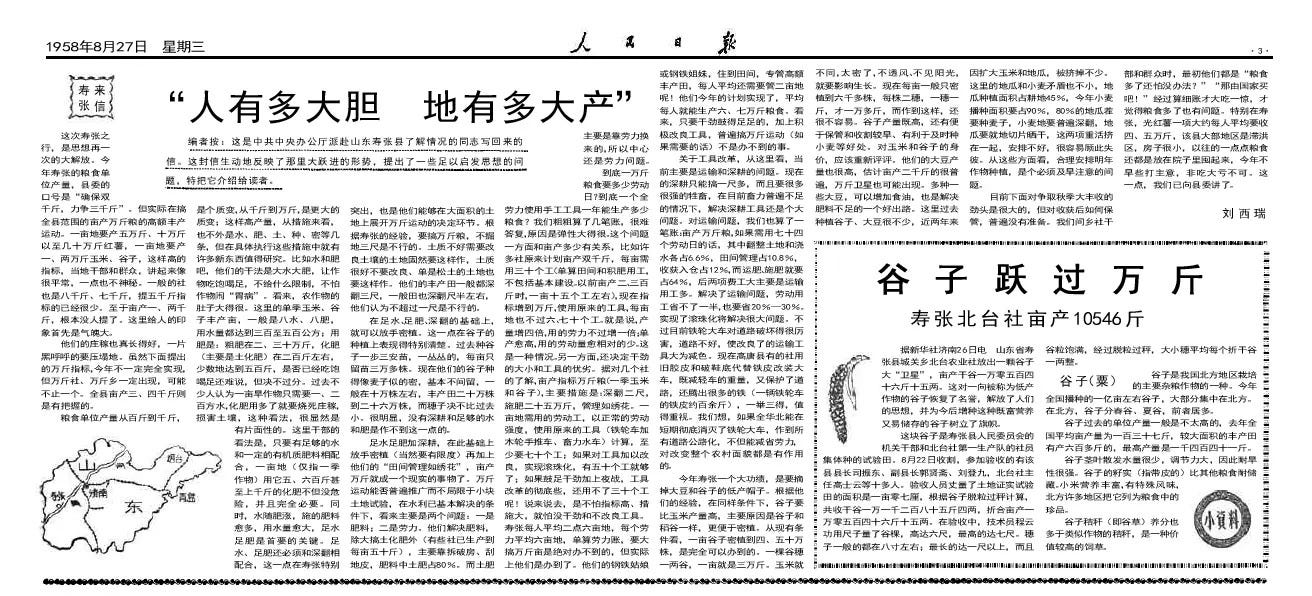
In a sense, this kind of writing is itself a form of wrongdoing, and one that goes beyond what Hannah Arendt called the “banality of evil”—it is a worse evil than that “banal” kind. The people who wrote these texts have no justification for shifting all responsibility onto the top leadership.
Reviewing the history of rural policy and the investigative research and writing produced over the years, one finds much that invites reflection and serves as a warning. From this perspective, Huang Zongxi’s dictum, “think in terms of ten thousand generations rather than a single lifetime,” is neither empty nor grandiose, but takes on a very concrete meaning. At its core, it speaks to the attitude that should guide research and writing.
It is important to find ways of improving one’s writing that suit one’s own situation and strengths. Everyone has their own writing experience and their own way of developing techniques. For example, when I want to check whether a passage reads smoothly, I sometimes read it twice; if it still feels awkward, my ear for the language will usually tell me how to revise it.
To test whether an expression is concise, I also stumbled on another method during discussions with someone who was helping translate my work into English. In some cases, a stretch of Chinese that took five or six sentences could be rendered in just three in English. Redundant or repetitive wording often shows up most clearly in the process of translation.
Wang Mengkui 王梦奎, director of the Development Research Centre of the State Council from 1998 to 2007, once said that one important technique for good writing is to “use frequent paragraph breaks.” In my experience, this is very true. Avoiding overly long paragraphs helps the writer clarify their thinking and makes the text easier for the reader to follow. In the end, improving one’s writing still depends on writing more and revising more. Although some people can dash off a piece in one go, such talent is extremely rare and cannot be relied on. The most effective methods will always vary from person to person; there is no fixed shortcut or formula. The key is to explore and discover what works through one’s own practice.
The most reliable way to improve one’s writing is simply to write more and revise more. It is important to take everyday writing practice seriously: read widely, write often, and reflect carefully. Each piece deserves to be taken seriously, and every chance to write is worth valuing. Whether something is written at leisure or drafted in a rush under time pressure, it can still be an enjoyable experience and merits careful attention. From each act of writing, one should come away with a sense of progress and a sense of pleasure, finding a measure of enjoyment in the effort.
Writing can be spoken of in lofty terms—as in Du Fu’s line that “writing is a matter of enduring significance for a thousand years”—but it can also be understood as a craft. Like a carpenter making furniture, a writer needs the spirit of a craftsman: care, standards and patience.
Traditional stories about poets labouring again and again to perfect a single character are reminders of this spirit. Ancient writers even joked about belonging to a “bitter-drafting school,” struggling over every word and wearing themselves out. I don’t find this especially intimidating. If one approaches writing with a sense of appreciation and savouring, it becomes not just hard mental work but also a source of enjoyment, fulfilment, and accomplishment.
Some pieces are long, others short; sometimes the words come quickly, sometimes slowly; at times the process feels tangled, at other times it flows with ease. All of it deserves to be taken seriously. Writing will inevitably produce many drafts that fall short of one’s expectations and are not fit to show others. But there is nothing to fear in that. Wherever there is writing, there is progress; no draft is written in vain.
I hope the points discussed above will be of some help. I apologise for taking up so much of your time and welcome your criticism and suggestions.
(June, 2020)

 | A guest post by
|
It's interesting how you highlighted 'dance in shackles'. That phrase perfectly captures the complex tightrope walk these ghostwriters must preform, truly insightful.