


In China, the boundary between politics and policy is often extraordinarily blurred. Yet very few people — especially those who have worked inside the system — are able to explain, with the benefit of deep experience in China’s Party-state apparatus, how the two relate to each other, where they should be distinguished, and why that distinction matters.
The essay translated below is one such rare attempt. It does not deny that policymaking is political: policy involves power, interests, institutional authority, and the allocation of resources. But it argues that policy research itself should not be excessively politicized. Specific disagreements over policy should not be casually elevated into questions of political attitude or political loyalty. Otherwise, serious discussion becomes impossible; mistakes become harder to correct; and policy research degenerates into empty praise for decisions already made.
Zhao Shukai, a Director-General-level official before his retirement, drew on China’s own historical experience to make a broader point: good policy cannot depend merely on officials, intellectuals, or theorists claiming to represent the people. It requires institutional channels through which the people affected by policy can speak for themselves.
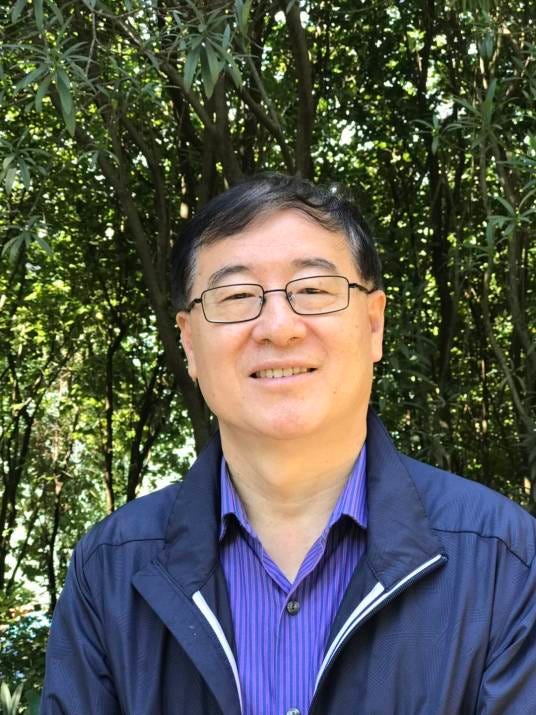
Zhao Shukai (赵树凯; b. 1959) is a Chinese official of rural policy and governance. From 1982 to 1989, he worked at the Rural Policy Research Office of the Communist Party of China (CPC) Central Committee’s Secretariat. Starting in 1990, he served at the Development Research Center of the State Council, holding roles including the Director General of its Information Center.
The following article was published on 10 August 2024 on the WeChat blog 九号院时刻 (No. 9 Courtyard Moment). The name refers to the former site of the CPC Central Committee's Rural Policy Research Office and to an important intellectual and policy hub for China’s rural reform in the 1980s.
Zhao has authorized the translation.
—Zichen Wang
赵树凯:政策研究的政治反思
Zhao Shukai: Political Reflections on Policy Research
Political questions in policy research begin with a basic issue: who takes part in policymaking? For a long time, the real participants in policymaking were leaders and “scholars”. Here, “scholars” refer to so-called theoreticians within the Party: people well versed in the classics, gifted with the pen, and trusted by the leadership.
At times, some farmers were also consulted, but their views could not directly influence the formal policy agenda. Policymaking is a closed system of power that has no place for farmers. Whether a policy embodies the will of farmers or claims to represent them was often a self-serving assertion by those in power and has little to do with farmers’ own wishes. Farmers could not participate in judging or choosing policy. Bringing farmers into the power structure of policymaking is therefore an important part of political reform and political transformation.
The policy process involves the distribution of interests and the structure of power. In that sense, it is naturally a political process. But policy research itself should not be over-politicised. Differences over specific policy proposals should not casually be elevated into questions of political attitude or political position. Policy research should not be subjected to political litmus tests, where support for a policy makes one a political friend, while opposition makes one a political enemy. Otherwise, there can be no fact-based policy discussion, only unprincipled praise, and policy mistakes will have no way of being corrected.
During the People’s Commune era, rural governance was conducted through “political movements”. Farmers’ attitudes toward the commune system, grain procurement, communal dining halls, and the Dazhai experience were all elevated into political questions. They were treated as indicators of one’s attitude toward socialism and the Communist Party, and used as criteria for identifying “class enemies”. This manufactured enemies, damaged the economy, and undermined farmers’ confidence in the system. The historical lessons are profound and abundant.
The policy process should not be monopolised by a small elite, nor should it remain highly closed. It should be highly open, allowing all stakeholders to participate. Such openness and participation should be institutionalised and guaranteed by the political system. In the early years of reform, senior policy research departments were sharply divided over the household responsibility system, but there was no disagreement over the question of establishing farmer associations. Some leaders who clearly opposed the household responsibility system also believed that, had ordinary farmers been able to make their voices heard during the Great Leap Forward and the commune movement—especially had farmers had their own organisations through which to express their views—erroneous policies would not have gone so far as to produce the historical catastrophe of the Great Famine. Therefore, although they opposed the household responsibility system, they supported the establishment of farmer associations.
For a long time, farmers were not the only group unable to express their views on policy; other social groups also lacked channels of expression, and could only sing the praises of mistaken policies. Even today, these historical lessons have not been properly reviewed. The core foundation of policy research does not lie in whether a particular individual, school of thought, theoretician, or political figure claims to represent the people. What matters is allowing the people to speak. Letting farmers represent themselves is the real way to respect their initiative and their right to choose.
Historically, outstanding politicians have not necessarily been thinkers with systematic theories. In American history, Theodore Roosevelt and Ronald Reagan are both highly regarded leaders, yet “Like Roosevelt, Reagan was not a systematic thinker. Like Roosevelt, Reagan saw no need to make all parts of his philosophy or his program consistent.” [See E. J. Dionne Jr., Why Americans Hate Politics: Republican Toughs, Democratic Wimps, and the Politics of Revenge.] Fundamentally, politicians do not need to be thinkers. What they need most is the ability to listen to public opinion. A politician’s grasp of political opportunity should mainly rest on insight into the needs of the people, while political wisdom is chiefly reflected in the process of balancing and integrating the interests of different social groups. In national governance, no theory is suited to all circumstances forever.
Policy research must, of course, “speak politics”. But the highest form of speaking politics is to reflect public opinion, not the will of superiors. How, then, should public opinion be reflected? Most importantly, it requires starting from real life, respecting reality, and respecting common sense. During the Cultural Revolution, “politics first” was everywhere. Even the allocation of work points among commune members had to put politics first. In Dazhai, these were called “political work points”, to the point that whoever could recite Mao Zedong’s writings better would receive more work points.
At a national conference on learning from Dazhai in agriculture, one case was reported: a sturdy farmer in his forties burst into tears on the spot because, having performed poorly in recitation, he received fewer work points than his seventeen- or eighteen-year-old daughter. At the time, there was also a resounding political slogan: “Better the socialist weeds than the capitalist seedlings.”
In the summer of 1977, when Wan Li became First Secretary of the Anhui Provincial Party Committee, this slogan was still admired by many. Wan Li pushed back: “Whether grain comes from collective fields or private plots, it keeps people from going hungry.” “If you would rather have socialist weeds than capitalist seedlings, why don’t you go and eat grass? You eat grain yourself, but tell farmers to eat grass. What kind of socialism is that? What kind of politics is that?” “Letting farmers have enough to eat is the best politics; leaving them hungry is the worst politics.” Here, when Wan Li spoke of politics, he was speaking from the logic of ordinary life, from common sense, and in plain human language. This, too, should be a principle of policy research.

Zhao Shukai: Ghostwriters of Reform

Behind China’s big policy documents and set-piece speeches stands an anonymous guild of wordsmiths whose drafts have nudged the course of reform as surely as any the leaders who sign them. One of them, veteran rural-policy insider Zhao Shukai, looks back on four decades in the engine room of official document writing to reflect on what it means to “danc…
Zhao Shukai: where Ezra Vogel got it wrong

Zhao Shukai (赵树凯; b. 1959) is a Chinese official of rural policy and governance. From 1982 to 1989, he worked at the Rural Policy Research Office of the Communist Party of China Central Committee’s Secretariat (later reorganised as the State Council’s Rural Development Research Centre and subsequently the