


China has two main public pension schemes. Under the employee scheme, employers and workers both pay into workers’ retirement accounts. Everyone else—mostly farmers and informal workers—can join a separate residents’ scheme that relies heavily on government subsidies and pays an average basic pension of just 260 yuan ($39) a month.
Guo Shuqing, who previously led China’s banking and securities regulator as a central government minister, argues that the payout under the residents’ scheme is far too low to live on, and that spending under the employee scheme - the more generous one - will exceed revenue within the next 20 years.
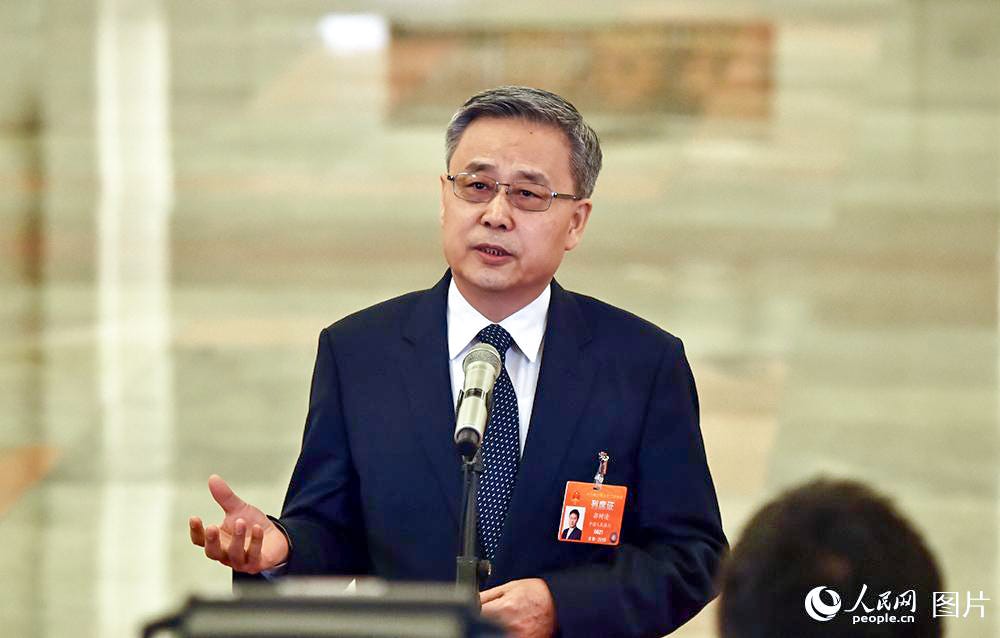
In the article below, Guo sets out several ways to fund higher pensions without straining public finances, starting with money the government is already borrowing. Beijing issues ultra-long-term special treasury bonds and local governments issue special-purpose bonds, yet both are running short of viable projects to finance. Guo proposes diverting a small share of those proceeds to subsidise residents’ basic pensions. The central government would allocate the money so poorer regions are not left behind. He sees similar room to redirect funds from consumer trade-in subsidies and industrial support programmes.
Higher pensions also need a lasting source of income. Guo calls for transferring more shares in state-owned enterprises to social security funds. China’s state firms hold roughly 140 trillion yuan in net assets, yet returns and dividend payouts remain low because they often lack dedicated institutions to act as active shareholders. To tap those assets, Guo calls for transferring more state-owned shares to social security funds and setting up a specialist institution to manage basic pension assets. He also urges policymakers to start drafting inheritance and gift tax legislation. Such taxes would affect only a small group of high earners, and some or all of the revenue could be earmarked for basic pensions.
Guo also identifies healthcare as the other major pressure point in China’s social security system. The country’s basic medical insurance funds hold nearly 6 trillion yuan in combined balances. Yet most of that money sits in separate city-level pools for employees and other residents. Wealthy cities hold large idle surpluses, while poorer regions struggle to cover costs. Guo proposes a national adjustment fund to balance regional gaps and wants idle surpluses entrusted to professional managers for higher returns.
To rein in unnecessary medical spending, Guo urges shifting routine care to primary clinics to reduce overtesting and overprescribing. He also calls for payment rules that let hospitals keep budget savings and tie payouts to health outcomes, giving them stronger incentives to avoid unnecessary treatment. Finally, he urges tougher, data-driven oversight to crack down on insurance fraud, including fake hospital admissions and illicit drug resales.
The translation below covers sections II–IV of Guo’s article, published in issue 5 of the Chinese Social Security Review in 2026.
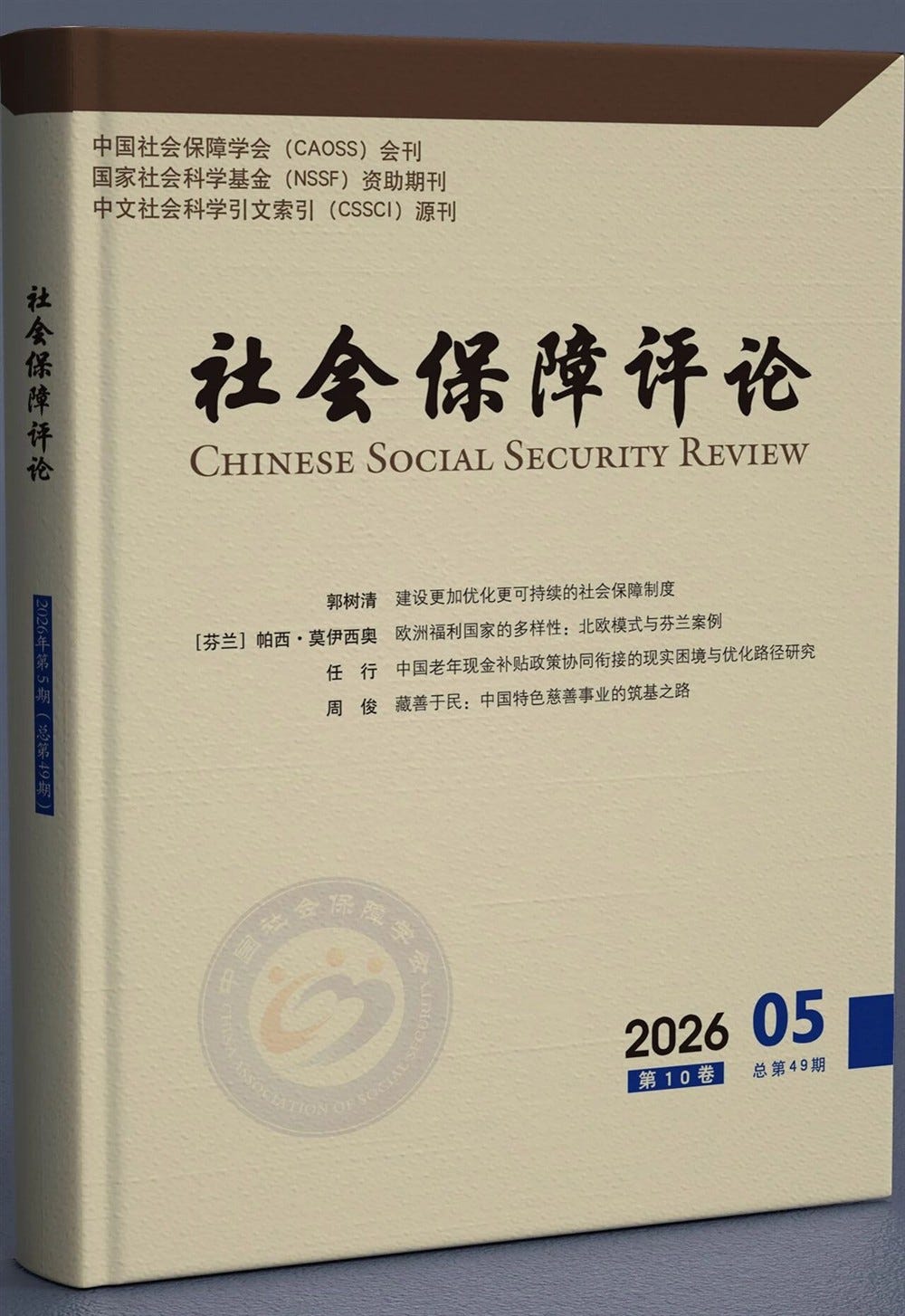
建设更加优化更可持续的社会保障制度
Building a Better-Designed and More Sustainable Social Security System
II. Making Full Use of Social Security’s Role as a Foundation for Common Prosperity and Well-Rounded Human Development
The 20th National Congress of the Chinese Communist Party (CPC) set out a two-step strategic plan to build China into a great modern socialist country. The first step, from 2020 to 2035, is to basically realise socialist modernisation and substantially grow the per capita GDP to be on par with that of a mid-level developed country.
This is an ambitious and demanding goal, but one that can certainly be achieved through hard work. Above all, it calls for a sustained commitment to deepening reform, broadening the scope of development, and encouraging innovation.
Experts estimate that the target implies per capita GDP of over US$30,000 by then. This figure reflects both a reasonable pace of economic growth and changes in prices and exchange rates. As more goods and services are traded and compared across markets, the renminbi becomes more widely used internationally, trading on financial markets becomes easier, and expectations that influence asset valuations improve, prices and exchange rates will naturally adjust.
Common prosperity for all is central to Chinese modernisation. The Recommendations of the Central Committee of the Communist Party of China for Formulating the 15th Five-Year Plan for National Economic and Social Development (the Recommendations) were adopted at the fourth plenary session of the 20th CPC Central Committee. They call for solid progress towards common prosperity for all during the 15th Five-Year Plan period to ensure decisive progress towards basically realising socialist modernisation.
Economic growth is only one measure of China’s progress during this period. A more important measure is how far modernisation benefits everyone and how fairly those benefits are shared.
In this respect, China already has a solid foundation for joining the ranks of developed countries. Under the strong leadership of the CPC Central Committee with Comrade Xi Jinping at its core, China achieved a miracle in the history of poverty reduction. It brought an end to the poverty that had affected entire regions and eliminated extreme poverty nationwide, a rare achievement among the world’s major economies. During the 14th Five-Year Plan period, the ratio of urban to rural incomes fell each year, and income disparities between regions also narrowed somewhat.
Even so, the Gini coefficient has yet to fall appreciably, and an olive-shaped structure of income distribution has yet to emerge. Social security has a key role to play in raising household incomes and improving their distribution. This includes expanding the size of the middle-income group, increasing the earnings for the low-income groups, and adjusting excessive incomes.
Employment services, labour protections, and a range of benefits can help the incomes of low-income households grow faster. Improving the quality and efficiency of services such as elder care, healthcare, education, and maternity care, alongside increases in net transfer income, can help expand the middle-income group. At present, transfers account for a disproportionately large share of high-income households’ income. Setting individual contributions according to ability to pay and strengthening mutual support within the basic social security system can gradually reduce that share.
Chinese modernisation is one of coordinated material and cultural-ethical advancement. The ultimate goal of modernisation is people’s free and well-rounded development, so that everyone can contribute to society. Achieving this depends on a social security system that helps raise basic living standards for the entire population year after year.
There has been lively public discussion recently about what it means to invest in people. Investment in people and investment in physical assets depend on and complement each other. Labour is the most dynamic factor of production. Investing in people allows the workforce to renew and expand itself, with workers becoming more capable over time. Building a great modern socialist country requires a workforce with stronger capabilities across the board.
Seen in terms of people’s well-rounded development, investment in people includes fixed-asset investment in public facilities that meet basic needs, such as schools, hospitals, care homes, kindergartens, libraries, and sports facilities. It also includes recurrent spending on public services by government, institutions, and society at large, as well as all forms of investment in social security in its broadest sense.
In economic and statistical terms, inputs must yield outputs. Investment in people produces material goods and, more importantly, a growing body of cultural and intellectual work. Consider the Chinese belief that older people are a treasure, an idea that informs how families think about care in old age. In material terms, older people are the mainstay of childcare in China. In more than 80 per cent of households, grandparents help care for their grandchildren. If the value added by this work were calculated, it would amount to trillions of yuan a year.
Older people also make a cultural contribution. Much of the best of traditional culture passes from one generation to the next through what children learn from their elders at home. Many people of my generation had parents who could neither read nor write, yet even in times of turmoil they continued to teach their children in this way.
As material, cultural, and intellectual production grows in scale and quality, people’s quality of life steadily improves. So too do their socialist consciousness, their scientific and cultural literacy, and their understanding of law and ethics. Investment in people also builds knowledge, advances technology, strengthens management skills, and increases the data available for productive use. It can thereby expand the supply and improve the quality of traditional factors of production such as labour, capital, and land.
Will greater investment in people crowd out investment in physical assets? The two need to be coordinated to avoid waste. At present, however, the main imbalance is that China invests too little in people relative to what it invests in physical assets.
Once they reached high-income status, most of today’s developed countries moved more quickly to make public services equally accessible to all. They broadened the scope of social security and improved the protection it offered. These changes helped their economies and societies continue to upgrade. China has a distinctive advantage in its persistently high savings and investment rates. In recent years, total savings and total investment have each exceeded 50 trillion yuan. This makes it fairly urgent to reconsider the spending structure, both by government and across the economy.
Most localities in China have considerable scope to reduce the share of investment they devote to industrial parks, surplus equipment, non-essential infrastructure, shopping centres, and office buildings. Across the economy as a whole, there is also ample room to reduce investment in inventories. Moderating the growth of net exports would also be a reasonable option.
At the current level of total savings, one percentage point in either direction amounts to more than 500 billion yuan. A shift of two percentage points amounts to more than 1 trillion yuan, and a shift of five to more than 2.6 trillion yuan. Macroeconomic theory suggests that when aggregate demand is insufficient, each additional yuan that government and society spend on public services generates a larger increase in national income than a yuan spent on fixed assets. From a social perspective, higher social security spending can directly raise China’s score on the Human Development Index and advance social development.
In his report to the 20th CPC National Congress, General Secretary Xi Jinping said, “The social security system provides a safety net for people’s livelihoods and helps ensure social stability. We will further improve the multi-tiered social security system that covers the entire population in urban and rural areas and see that it is fair, unified, reliable, well-regulated, and sustainable.”
As China modernises, social security provision must keep pace with economic development, and each must support the other. An exclusive focus on economic growth risks leaving people with inadequate or uneven protection. The resulting hardship can in turn affect the economy. On the other hand, sustainability also matters. China must learn from countries where excessive welfare commitments have triggered debt crises and avoid the trap of populism.
III. Addressing Potential Funding Gaps in Basic Pension Insurance
China’s basic pension insurance scheme and its basic employee medical insurance scheme both combine social pooling with individual accounts. This distinctive model took shape during China’s economic transition. From the outset, both systems faced enormous pressure to finance benefits for two generations. Several studies project that spending under the basic employee pension insurance scheme will exceed revenue within the next 20 years and that the shortfall will continue to widen as the population ages more rapidly.
The vast majority of participants in the basic pension insurance scheme for urban and rural residents are farmers. This scheme relies mainly on government subsidies, in effect giving farmers some credit as if they had paid contributions. Even so, the pension that older people receive under the scheme averages about 260 yuan a month, far short of what they need to live on.
Historically, farmers and the agricultural sector contributed enormously to the wealth accumulated by the state and society. They did so mainly through agricultural taxes, compulsory labour, the gap between the low prices paid for farm produce and the higher prices charged for industrial goods, and the migrant worker system. Substantially raising the basic pension in recognition of those contributions would create a further funding gap.
Fortunately, alongside its aggregate liabilities, China has vast assets and resources. Making even some of them liquid would go a long way towards addressing the shortfall, subject to conditions discussed below.
Profound changes are taking place in science and technology, the economy, public finance, investment, and financial markets. Industrial innovation in particular suggests that breakthroughs in factor productivity are on the horizon. These changes make it both necessary and possible to alter and adjust savings and investment structures.
There is further cause for reassurance when pensions and medical insurance are considered together. In the past, they were often considered separately. Whether older people can live comfortably and securely depends largely on their health, and medical and nursing care may well cost more than their ordinary living expenses. Two developments are encouraging. First, reforms to basic medical insurance have yielded results, and the system has accumulated a balance of nearly 6 trillion yuan.Second, in 2025 China began rolling out long-term care insurance nationwide. It is often called the sixth form of social insurance [because it complements the five existing schemes covering pensions, healthcare, work-related injuries, unemployment, and maternity —Yuxuan’s note]. It already covers about 300 million people.
The second and third pillars of China’s pension system have also seen some progress. [The first pillar is the national basic old-age insurance system. The second consists of enterprise and occupational annuities. The third covers commercial old-age financial products and the private pension plan.]
These factors give China greater financial scope to adjust pension replacement rates and overall spending.
In sum, despite the considerable challenges, the options for addressing them outnumber the obstacles. There is every reason for confidence in China’s ability to prevent or manage funding shortfalls.
The Recommendations set out six broad lines of action.
First, improve the social insurance actuarial system. As demographic, institutional, and economic conditions change rapidly, the parameters and models need frequent updating. A sound actuarial system for pensions must take account of past experience and adapt to new conditions.
Second, strengthen long-term financing and ensure that each party pays its share. The state, employers, workers and their families, collectives, and other relevant institutions all have a stake in the system. Stronger incentives and clearer obligations should encourage all parties to play their part, especially workers and their families. This would help extend coverage and put basic pension funds on a sounder financial footing.
Third, further harmonise the basic rules and policies to eliminate perverse incentives. These include effective contribution rates and contribution bases, pension replacement rates and benefit adjustment mechanisms, and pension eligibility ages and minimum contribution periods. They also cover the differing rules governing transfers from the residents’ pension scheme to the employees’ pension scheme.
Fourth, increase the share of government spending devoted to public services and allocate a substantial portion to subsidising basic pensions and balancing basic pension funding.
Fifth, continue transferring state capital to replenish social security funds. The priority is to begin the first phase of these additional transfers as soon as possible.
Sixth, improve the arrangements for pooling and reallocating social security funds, preserving and increasing their value, and overseeing their security.
Three issues deserve closer examination. Handled well, each could benefit several parties.
First, higher fiscal subsidies for basic pension funds would help China establish a modern budget system sooner and improve the management of government debt.
As the socialist market economy develops, public services should account for a growing share of both the general public budget and the government-managed funds budget (in effect, the government debt budget). Less should go towards production and commercial projects. This would help society use resources more efficiently and is necessary to reverse the excessive competition seen across many industries.
Changing the structure of public spending requires rethinking longstanding assumptions and breaking entrenched spending patterns. At present, there are too few projects to finance with the proceeds of ultra-long-term special treasury bonds or local government special-purpose bonds. A small share of the proceeds should go towards subsidising basic pension insurance for urban and rural residents. Similar adjustments could be made to funding for consumer goods trade-ins and other general industrial development programmes.
Reducing local governments’ reliance on land-sale revenues and resolving legacy issues associated with local government financing vehicles (LGFVs) also require careful planning of borrowing and budgetary expenditure. The central government should allocate any bond proceeds earmarked for basic pensions. Central allocation would help equalise access to public services, narrow disparities between regions and population groups, provide more effective support for vulnerable groups, and prevent and mitigate risks arising from government debt.
Planning should also begin now for new sources of government revenue. The Recommendations call for improvements to local and direct taxation, better tax rules for business, capital, and property income, more consistent rules on tax concessions, and a reasonable overall tax burden. Income tax should be administered according to the ability to pay, so that people on higher incomes pay more and those on lower incomes pay less or nothing.
One issue that needs addressing is that many business owners draw no salary and pay no personal income tax. In principle, whether they draw a salary and how much they pay themselves are matters for them to decide. What matters is that companies report genuine production and operating costs that comply with the rules. They must not reimburse owners for household expenses.
Work on inheritance and gift tax legislation should begin as soon as possible. There is also scope to improve the consumption tax and other taxes. The resulting tax increases would affect only a small number of people on high incomes. Some or all of the additional revenue could be explicitly earmarked for basic pension subsidies. Policymakers should assess whether this would be a sound policy approach.
Second, transferring more state capital to social security funds would put existing assets to work on longstanding problems. It would also be a practical step towards reforming the management of state capital and state-owned enterprises (SOEs).
China’s financial and non-financial SOEs have net assets of about 140 trillion yuan. Despite the scale of these assets, average returns are disappointing, and the share available for distribution as dividends is smaller still. Much of the explanation lies within the sector. In many SOEs, it is unclear who exercises ownership rights, and rights and responsibilities are poorly defined. Corporate governance structures need improvement, and the system for delegating authority and holding managers accountable needs stronger safeguards.
Years of reform have shown that state capital must be entrusted to specialist institutions that appoint shareholder representatives or board directors to represent the state’s equity interests. Only by assigning these duties to designated institutions and individuals with the necessary expertise can the state exercise its ownership rights more fully.
The same approach should apply to any additional state capital transferred to social security funds. It would strengthen long-term financing for basic pensions, diversify SOE ownership to some extent, improve corporate governance, and put existing assets to better use.
Third, establish a specialist institution to manage basic pension funds and work alongside the National Council for Social Security Fund (NCSSF), with each body complementing the other.
The new institution would manage basic pension funds and be responsible for preserving and increasing their value. It would receive additional transfers of state capital, exercise the associated ownership rights and responsibilities, and actively manage the balance between the funds’ assets and liabilities.
The NCSSF’s main function is to manage the national strategic social security reserve. In recent years, it has also invested money on behalf of local basic pension funds, with good results. The new institution would act as the client and the NCSSF as the investment manager. This division of responsibilities would give each an appropriate portfolio to manage and spread both management and investment risks. It would also allow the two bodies to compare results, learn from each other, and work together to raise professional standards and make investment practices more consistent.
IV. Making Every Effort to Contain Costs and Improve Efficiency in Basic Medical Insurance
China’s healthcare system has continued to develop through reform, achieving health outcomes that have attracted worldwide attention. Despite the impact of a once-in-a-century pandemic, life expectancy in China rose to over 79 years, a particularly hard-won achievement in which medical insurance played an important part.
Yet reimbursement rates are still lower, and out-of-pocket costs higher, than people expect. The system still leaves people exposed to much of the financial risk of treatment for serious illness. Falling ill, particularly with a serious condition, remains a major worry for urban and rural residents.
China has two parallel medical insurance schemes. The employee scheme pools contributions from people with greater financial means, while the scheme for urban and rural residents pools contributions from those with more limited means. Regions also differ considerably in their ability to raise funds and in the resources available to them. Less-developed regions struggle to cover the costs because of their limited fiscal capacity. Funds are still pooled mainly at the prefectural level, making it difficult for regions to support one another and spread risk more widely. Finding ways to address these problems is urgent.
Improving the quality and efficiency of medical services takes more than additional funding. Many healthcare resources are idle, wasted, or lost. The underlying problems include information asymmetries, a mismatch between authority and responsibility, and diverging interests. Therefore, the most difficult and important task in further reforming medical insurance is to reduce unnecessary spending.
In recent years, healthcare providers and medical insurance authorities have tried new approaches with encouraging results. The main lesson from reforms in Sanming in Fujian, Anyang in Henan, and elsewhere is that every institution and individual involved must take responsibility for keeping costs in check and improving the efficiency of care.
First, use advances in science and technology to improve quality, reduce costs, and increase efficiency throughout healthcare.
The growing use of artificial intelligence, big data, and cloud computing is already making healthcare more efficient. Applications range from computer-assisted diagnosis, telemedicine, and medical image recognition to closer management of hospital operations, checks on the proper use of insurance funds, and early warning systems for public health threats. These technologies are making care safer, better, and more efficient. They could also reduce the excessive overtime worked by doctors and nurses. China’s use of digital technology and artificial intelligence in healthcare has already drawn close international attention. Future medical insurance reforms should continue to take advantage of these advances.
Second, improve the tiered system of diagnosis and treatment by coordinating reforms in medical services, medical insurance, and pharmaceuticals.
Integrated county-level healthcare networks and urban medical alliances should bring more high-quality resources into primary care by unifying management in administration, staffing, finance, clinical operations, medicines, information, and logistics. A stronger tiered system would see patients start in primary care, allow referrals in both directions, and provide separate care pathways for acute and chronic conditions. The aim is to reduce waste from unnecessary tests, overprescribing, and overtreatment. Putting prevention first also means extending targeted annual health checks to a larger share of the population and managing chronic conditions earlier to reduce the risk of acute or critical illness.
Third, encourage hospitals and medical staff to take the initiative.
Payment reforms based on diagnosis-related groups (DRGs) and diagnosis-intervention packets (DIPs) have been highly effective. However, medical treatment is complex, and no system of controls can cover every eventuality. The priority is to build trust and ensure that hospitals, doctors, and nurses receive recognition and rewards for keeping costs in check while improving efficiency.
Hospitals should have a stronger financial incentive to stay within budget. They should be able to keep any savings and bear only part of any justified overspend. This would give hospitals an incentive to reduce unnecessary admissions and improve adherence to clinical standards.
Medical insurance should gradually shift from fee-for-service payments to payments based on health outcomes. Payment levels should reflect the quality and efficiency of care, the proportion of prescriptions that meet prescribing standards, and patient satisfaction. This approach would reward good performance, discourage poor practice, and allow hospitals to earn more even when they provide fewer services.
Fourth, strengthen regulatory oversight at every stage and give the public a greater role in scrutiny.
Local medical insurance enforcement teams should be adequately staffed with qualified personnel. The authorities responsible should work more closely together to enforce the law against insurance fraud. Suspected criminal offences should be referred for prosecution, and those convicted should face criminal penalties.
Regulators should use big data and other tools to monitor how medical insurance funds are used at every stage. This would help them detect, investigate, and act promptly on abuses such as fictitious hospital admissions, inappropriate prescribing, the illicit resale of medicines, and false invoicing.
Healthcare providers, pharmaceutical companies, pharmacies, and insured patients should work more closely together, with clear rights and responsibilities for each and due account taken of their respective interests. Closer coordination between industry bodies, the public, and the media in their oversight roles would help ensure that responsibilities are fairly shared and that each party fulfils its duties.
Fifth, strengthen and centralise the professional management of medical insurance funds.
Medical insurance funds are still largely pooled at the prefectural level. With so many separate pools, management is fragmented, and spending rules vary considerably in practice. There is an urgent need to improve management and investment practices, from the approach fund managers take to the expertise and methods they bring to the job. Moral hazard is also a serious concern. Reform therefore calls for closer oversight at every stage of fund management and clearer rules for budgeting revenue and expenditure, managing finances, and controlling risk.
Authorities should monitor local pools more closely and give them better guidance so that any misuse, diversion, or loss of funds is detected and addressed promptly. A national adjustment fund should be established to address regional imbalances. Transfers of state capital should cover the funding gap that arises as residents and people in flexible employment move to the new system. Accumulated medical insurance surpluses should be entrusted to professional fund managers for investment without delay, and the quality of investment management should improve steadily over time.
Across China, pooled funds under the employee medical insurance scheme hold more than 3.5 trillion yuan, and individual accounts under the same scheme hold about 1.5 trillion yuan. Pooled funds under the residents’ scheme hold nearly 1 trillion yuan. The fragmented management of these balances needs urgent attention, as large sums sit idle and lose value. Broadening the range of eligible investments where appropriate, improving the portfolio mix, and extending average portfolio duration would help safeguard the funds and improve returns. This requires a specialist national institution to manage the investments.
The 15th Five-Year Plan period is critical for China to lay firmer foundations for its 2035 modernisation goal and make progress towards it on all fronts. It is also a time when China must improve its social security system and put it on a more sustainable footing.
To meet its modernisation goals and advance common prosperity for all, China needs to build a broader public consensus on social security reform and pursue it more vigorously. Reform should bring rights and responsibilities into closer alignment, improve the allocation of resources, strengthen mutual support and risk sharing, and make the system more effective at redistributing income. These changes would help China steadily improve the quality of social security provision over the long term.

David Daokui Li calls for 1.25 trillion yuan pension increase for Chinese farmers
David Daokui Li is a Professor of Economics and Director of the Academic Center for Chinese Economic Practice and Thinking (ACCEPT) at Tsinghua University. He has been very active on Chinese social media, including opening a video channel on WeChat, China’s top messaging app, releasing a short video of him talking daily. He posts the same videos on his …
Meng Xiaosu: China’s state capital has a rural debt to pay

For decades, China’s modernisation has been underwritten by the countryside: cheap grain, cheap labour, and cheap land. Yet the welfare state built alongside that growth remains split down the middle.
Gordon G. Liu: community clinics, rational drug use, and surgical robots could help China achieve accessible healthcare

Gordon G. Liu is BOYA Distinguished Professor of Economics, Dean of the Institute for Global Health and Development, and Director of the China Centre for Health Economic Research at Peking University.
Gordon G. Liu on China's healthcare reforms: overcrowded clinics, underpowered pharma

Most Chinese patients tend to seek primary care at tertiary hospitals—the top tier of China’s three-level healthcare system—even for minor ailments. This has resulted in overcrowding at higher-level hospitals and the continued underdevelopment of community-based medical services. Institutional barriers that restrict practitioners from working across mul…
Gordon G. Liu on China's healthcare reforms, drug innovation & future pandemic response

Gordon Guoen Liu, PKU BOYA Distinguished Professor of Economics at the National School of Development (NSD) and Dean of the Institute for Global Health and Development at Peking University, is a leading figure in health economics in China. In one of a
Part III of China's medical security system: bridging the urban-rural divide (2018-present)

This is Jia Yuxuan from Beijing, finally coming to the present phase of China’s medical security system, after the planned economy era and the early days of reform and opening up. This article, authored by Cai Haiqing, former Director of Treatment Insurance, Jiangxi Province Healthcare Security Administration, was originally
The core framing problem is the assumption that a pension increase needs a dedicated funding source: bond proceeds, asset transfers, or earmarked taxes. China issues its own non-convertible currency, so the central government's capacity to pay yuan pensions is not limited by bond proceeds, dividends or inheritance tax receipts. Bonds are a reserve-management and interest-rate tool, not a revenue need. Earmarking taxes for pensions is an accounting convention. It can have political value, but operationally it is not what makes payments possible. The binding limit is real resources: the supply of care workers, clinics, food and housing, and the inflation risk if demand outruns capacity.
That said, much of Guo's practical agenda holds up on real-resource grounds. Raising a 260 yuan pension is a distributional and capacity question, not a solvency one. Pooling regional medical surpluses addresses a real misallocation. Shifting care to primary clinics and cutting fraud and overtreatment economies on scarce medical labor. An inheritance tax can be justified as a way to reduce wealth concentration and cool demand at the top, not as a way of funding anything. The 'investing in people' point is also sound, because spending on health, education and care builds productive capacity.
The warning that the employee scheme will run a deficit in 20 years is a claim about a ring-fenced fund, not about national affordability. A pay-as-you-go pension is a transfer from current workers to retirees, and the real question is whether the future economy can produce enough goods and services for retirees. That depends on productivity, labor supply and healthcare capacity. Fund balances matter far less.