


For decades, China’s modernisation has been underwritten by the countryside: cheap grain, cheap labour, and cheap land. Yet the welfare state built alongside that growth remains split down the middle.
On pensions, most farmers remain in the urban–rural resident scheme (城乡居民基本养老保险), where the average monthly benefit in 2024 was about 246 yuan [$35]. Retirees in the urban employee scheme (城镇职工基本养老保险) averaged roughly 3,825 yuan [$549] a month—around 15 to 16 times higher—according to calculations based on the Ministry of Human Resources and Social Security’s 2024 annual statistical bulletin.

The system still tilts towards urban employees in healthcare. In 2024, the in-catalogue fund payment rate for inpatient care was 84.8% under employee medical insurance, versus 68.6% under resident insurance. That same year, Chinese state media also reported growing drop-out pressures in rural areas as the minimum personal contribution continues to rise.
When protection runs on two tracks, it can feel less like a safety net than a reminder of second-class status.
That is why Meng Xiaosu’s argument deserves attention. The policy lever he centres on is not new: Beijing has been transferring state-owned equity to replenish social security funds (at 10% transfer ratio) since 2017. But the results to date have been limited. In 2022, Zheng Bingwen, Director of the World Social Security Research Centre at the Chinese Academy of Social Sciences (CASS), called the dividend stream “a drop in the bucket.” Prominent Chinese economists, such as Liu Shijin, Former Vice President (Vice Minister) of the Development Research Centre under the State Council, and Xu Gao, Chief Economist and Assistant President of Bank of China International, have also publicly backed a substantially larger transfer.
Meng’s intervention is to push the debate from “transfer more” to “make the transfer bite”, by recognising farmers as rightful beneficiaries, and building workable channels to turn capital returns into higher rural benefits. He proposes earmarking at least 30% of state-capital transfer returns for resident pensions and healthcare, with farmers as the priority, and channelling part of the support through rural collectives that would use business income, land rents, and asset revitalisation proceeds to contribute on farmers’ behalf. Tax breaks or fiscal subsidies would provide the policy backstop to lift rural pensions without increasing farmers’ out-of-pocket burden.
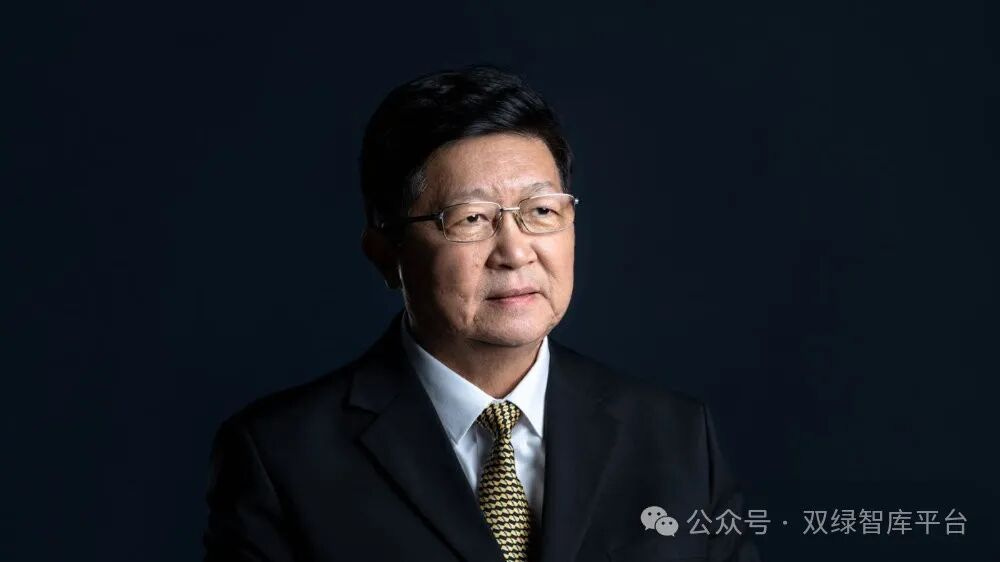
Meng Xiaosu 孟晓苏 is a veteran Chinese economist best known for leading the National Housing Reform research group in 1998, which helped the shift from welfare housing allocation to a commercialised, mortgage-backed urban housing system. In 1983-1988, he was secretary to Wan Li 万里, a pioneer in China’s reform who was then vice premier responsible for agriculture. Wan went on to become one of China’s top leaders. Meng later ran China National Real Estate Development Group as general manager and chairman. He is also the founder and chair of Huili Fund, vice-chair of the China International Council for the Promotion of Multinational Corporations, and vice director of the advisory council of the GG66 think tank, a green-development forum founded by a group of leading Chinese scholars. Meng also pioneered the introduction of REITs in China.
The article was published on 10 November 2025 on the WeChat blog of the GG66 think tank. It is also available on Meng’s personal WeChat blog.
—Yuxuan Jia
将国有资本划转社保覆盖全体农民——理由、路径与实施方案
Transferring State-Owned Capital to Fund Social Security Coverage for All Farmers: Rationale, Pathways, and an Implementation Plan
As the Fourth Plenary Session of the 20th CPC Central Committee calls for “continuing to transfer a portion of state capital to replenish social security funds,” a fundamental question is: who is this transfer meant to benefit? The answer is clear: it is for the benefit of all. And such an arrangement must include the hundreds of millions of farmers who have made enormous sacrifices for China’s modernisation.
I. Why Farmers Must Be Included in Social Security Coverage: Core Rationale
Including all farmers in a social security system funded by returns on state-owned capital is not a favour. It is repayment for historical contributions and a necessary condition for social fairness.
Farmers have made historic contributions to the accumulation of state-owned capital. China’s early capital formation for industrialisation and urbanisation was built largely on the long-term contributions of agriculture, rural areas, and farmers. This is reflected mainly in two areas:
The historical price disparity (the“price scissors”) between industrial and agricultural products. During the planned economy era, and for a long period afterwards, the state accumulated vast funds for industrial development by purchasing agricultural products at low prices while selling industrial goods at high prices. Some scholars estimate that from 1953 to 1985, the total funds extracted from agriculture through this “price scissors” mechanism exceeded 600 billion yuan, close to half of the total value of state-owned fixed assets over the same period.
The contemporary land value disparity (the “land price scissors”) between rural land compensation and state land transfer revenue. As China advances urbanisation, local governments have requisitioned collectively owned rural land, paid relatively low compensation, and then transferred land-use rights at much higher prices through tender, auction, and listing. The resulting land-transfer revenue has become a major source of funding for urban development. In essence, this represents a transfer of farmers’ land rights and entitlements. Over recent decades, the scale of this contribution has exceeded 100 trillion yuan.
To a significant extent, today’s state-owned capital—worth as much as 143.3 trillion yuan—embodies the hard work and contributions of two generations of farmers. Using the returns on that capital to support farmers’ pensions and healthcare is a matter of historical justice.
At present, the gap between the average monthly pension of urban employees and that of farmers is enormous, with the former often tens of times higher than the latter. This dual-track urban–rural pension structure is fundamentally at odds with the goal of common prosperity. The transfer of state-owned capital provides an unprecedented historic opportunity to break this inequitable pattern.
II. How to Make It Happen: Innovative Models for Collective Contributions and Direct Subsidies from Asset Returns
A strong rationale must be matched by workable pathways. I propose the following measures to channel returns from state-owned capital to farmers in a targeted and effective manner.
1. Establish a Special Social Security Fund for Urban and Rural Residents
Within the overall pool of state-owned capital to be transferred, a clearly defined share of no less than 30% should be earmarked specifically to strengthen and raise pension and healthcare benefits, with particular priority given to farmers. This portion should be managed centrally by the National Council for Social Security Fund, and its investment returns should be dedicated to increasing rural pensions and boosting subsidies for rural health insurance.
2. Reform the Contribution Mechanism: Replace Part of Individual Contributions with Contributions by Rural Collective Economic Organisations
This is essential to addressing farmers’ limited ability to make individual contributions. Under the current system, one major reason rural pensions remain low is the inadequate accumulation in individual accounts. The contribution structure could be reformed as follows:
Change in the responsible payer: Rural collective economic organisations with sufficient capacity should be encouraged—and, where appropriate, required—to use business income, land-lease income, and proceeds from asset revitalisation to pay basic pension insurance contributions on behalf of elderly farmers and those approaching retirement.
Supporting policies: The state could provide tax incentives or fiscal subsidies for this portion of contributions, creating a virtuous cycle in which returns on state-owned capital provide support, collective economic organisations strengthen their finances, and individual farmers gain greater security.
In substance, this approach channels a portion of the returns on state-owned capital through rural collective economic organisations and credits it directly to individual social security accounts. It can strengthen collective cohesion while delivering a tangible improvement in farmers’ well-being.
3. Deliver Benefits and Integrate Schemes: Raise Rural Incomes and Reduce Worries About Medical Costs
Pension payments: Building on the mechanisms above, the aim is to raise the average monthly pension for farmers from the current level of a few hundred yuan to over 600 yuan in a steady manner within three to five years, and to establish a regular adjustment mechanism linked to returns on state-owned capital.
Health insurance integration: Accelerate the alignment and unified operation of the New Rural Cooperative Medical Scheme (NCMS) and the basic medical insurance scheme for urban residents. Use the special fund to substantially raise reimbursement rates and the annual reimbursement cap for farmers, narrow the gap with urban employees, and ultimately achieve a unified universal health insurance system.
III. Towards Truly Universal Social Security
Transferring state-owned capital to strengthen the social security fund is about far more than closing an immediate funding gap. It is also a major institutional innovation and a mechanism for redistributing wealth, intended to restore social fairness and settle long-standing historical debts.
A clear point must be made: farmers should, as a matter of course, be among those who share in this national wealth. Through a model that combines a special fund with collective contributions, it is entirely possible to rapidly and effectively multiply rural pension benefits without increasing the personal financial burden on farmers, and to deliver on the solemn commitment that older people are supported and medical needs are met.
This is not only an economic issue, but also a political one. It bears on the country’s long-term stability and prosperity, and it also speaks to the historical responsibility of this generation. This historic opportunity created by the transfer of state-owned capital should be seized to build a Chinese-style modern social security system that covers the entire population and integrates urban and rural schemes.

Meng Xiaosu on China's real estate policy conundrum: too little socialism

Meng Xiaosu is the former head of the National Housing Reform research group in 1998 and former chairman of China National Real Estate Development Group Corporation. He was among the first to advocate for positioning the property market as a new engine of economic growth and for introducing mortgage financing in China. Meng also pioneered the introducti…
Three types of hidden debt unaccounted for in China's official stats

The debts accumulated by Local Government Financing Vehicles (LGFVs), often referred to as China's hidden debts due to their association with government liability, are widely known among observers of China's economy. However, in a recent speech and Q&A
Zhou Tianyong: Why Massive Properties and Land Remain Idle and Only the Market Can Revitalise Them

Zhou Tianyong is Director of the National Economic Engineering Laboratory at Dongbei University of Finance & Economics and Director of the Economic Accounting and Innovative Development Committee, China Society of Economic Reform (CSER). He is also former Deputy Director of the
Zhao Yushun: the last generation of Chinese smallholder farmers

China’s traditional smallholder farming is consolidating into larger-scale operations run by large growers or agricultural companies. Villagers lease plots for roughly 600–1,000 yuan [84-140 U.S. dollars] per mu a year and often return as hired labour on the same fields.
Part III of China's medical security system: bridging the urban-rural divide (2018-present)

This is Jia Yuxuan from Beijing, finally coming to the present phase of China’s medical security system, after the planned economy era and the early days of reform and opening up. This article, authored by Cai Haiqing, former Director of Treatment Insurance, Jiangxi Province Healthcare Security Administration, was originally
Part V:challenges and outlook for China's medical security system

Finally, we've reached the last part of Cai Haiqing's article on China's medical security system. This part - and the entire series - could be an in-depth, complementary reading to the Financial Times' recent report that Millions drop out of China’s state health insurance system