


China’s weak household consumption, mounting local government debt and diminishing investment returns demand reform. But they do not justify a broad retreat from the investment and industrial policies that helped build its economy, argues Zhang Ming, a senior economist at the Chinese Academy of Social Sciences (CASS).
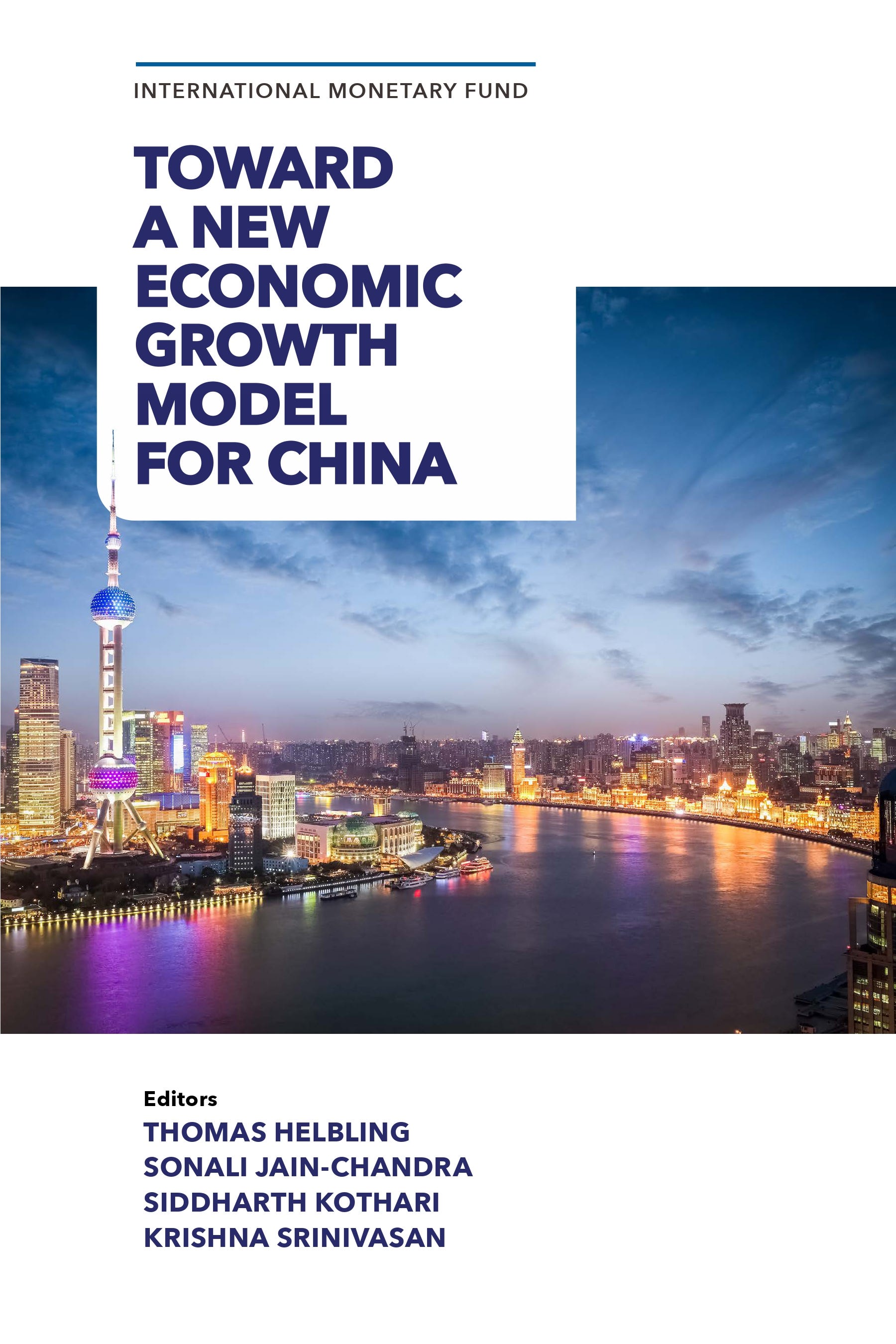
In an op-ed examining the International Monetary Fund’s Sept 30, 2026, report, Toward a New Economic Growth Model for China, Zhang accepts many of the problems it identifies while challenging the direction of its proposed remedies. His central objection is to what he sees as an implicit assumption: that China should converge towards the economic structure of mature Western economies, with a larger role for consumption and services and less government intervention in industry.
Zhang, Deputy Director of CASS’s Institute of World Economics and Politics and of the National Institution for Finance and Development, makes a case for redirecting investment and redesigning industrial support. Property projects and duplicative infrastructure should give way to investment in areas such as AI infrastructure, energy systems, basic research and elderly care. Industrial policy should become more competitive, more rigorously evaluated and less protective of established firms.
His argument leaves substantial room for agreement with the IMF. He endorses stronger social safety nets, higher household incomes, market-oriented reform and measures to address property and local government debt risks. The disagreement concerns how these changes should fit together—and how much of China’s existing development model should survive them.
A full translation of his article follows. It first appeared in Caijing, a business outlet, on 10 October 2026. Zhang has agreed to this translation.

The IMF Has Identified Many of China’s Economic Problems, but It May Not Have Prescribed the Right Remedies
IMF看到了中国经济的很多问题,但未必开对了药方
The International Monetary Fund (IMF) recently published a report titled Toward a New Economic Growth Model for China, which systematically examines a range of issues in China, including household consumption, the service sector, industrial policy, productivity growth, the green transition, reform of the fiscal policy framework, the local government debt overhang, reform of the monetary policy framework, and reform of the financial system. The report argues that, as the property market continues to adjust, local government debt rises, returns on investment diminish, and population ageing accelerates, China’s past growth model, centred on rapid capital accumulation, is becoming increasingly difficult to sustain.
The central question raised by the report is: as the traditional growth model faces mounting constraints, what will drive the next stage of China’s economic growth? The IMF’s answer is clear: China should gradually reduce its reliance on investment, manufacturing, and exports, and shift the drivers of growth more towards household consumption, services, and productivity gains.
In my view, this is a report worth reading carefully. But a comprehensive assessment requires distinguishing at least three questions. First, are the problems identified by the IMF real? Second, is its explanation of the mechanisms behind these problems reasonable? Third, even if the first two assessments are correct, are the remedies it proposes suitable for China?
On the first question, many of the IMF’s diagnoses are accurate. On the second, a considerable part of its analysis deserves serious attention. But on the third, I disagree with many of its conclusions. In other words, the IMF has identified many of the problems facing China’s economy, but it may not have prescribed the right remedies.
1. The IMF’s Diagnosis of China’s Current Economic Problems
China’s past growth model is facing increasingly clear constraints. Since the start of reform and opening up, China has achieved a sustained high-growth miracle rarely seen in economic history. The IMF report notes that China’s real GDP has grown at an average annual rate of nearly 9 per cent, while the size of the economy has expanded almost sixty-fold. China’s share of global trade has risen from less than 1 per cent in 1978 to more than 12 per cent in recent years. Behind this growth miracle were, on the one hand, productivity gains brought about by reform and opening up and, on the other, large-scale capital formation, industrialisation, urbanisation, and globalisation.
Every growth model has a life cycle. When capital is scarce, infrastructure is inadequate, and housing is in short supply, increasing investment can rapidly raise productivity. But once highways, high-speed railways, airports, ports, housing, and other forms of infrastructure have reached relatively high levels of development, the returns on further investment in the same types of assets are almost bound to diminish.
The same applies to the property sector. In the past, its rapid development improved household living conditions while driving growth in steel, cement, household appliances, furniture, and other industries, as well as investment in local infrastructure. Revenue from land sales also supported large-scale urbanisation.
However, because housing serves as both a consumption good and an investment asset, almost all economies undergoing rapid growth experience, to varying degrees, surging property prices and excessive investment in the property sector. Once significant changes have occurred in demographics, housing supply and demand, and household balance sheets, property prices fall, and property investment enters a period of adjustment. Property investment is a major component of aggregate demand, so a sharp downturn in the sector inevitably weighs on economic growth. This effect is particularly pronounced in China, where investment in property development accounts for a much larger share of GDP than in advanced economies, amplifying the impact on current aggregate demand and GDP growth.
Local government debt is another issue that cannot be ignored. In the past, local governments relied on land sales, local government financing vehicles (LGFVs), and infrastructure investment to drive local economic growth. This model was viable during a period of rapid urbanisation. However, as land-sale revenues and returns on infrastructure projects decline, continuing to rely on the same financing arrangements can accelerate debt accumulation and undermine debt sustainability.
The issues identified by the IMF, including declining investment efficiency, adjustment in the property sector, high local government debt, and weak household consumption, all warrant serious study. For example, uncertainty about future expenditure on pensions, healthcare, education, and housing can contribute to higher household precautionary savings. Strengthening social safety nets, improving income distribution, and accelerating reforms to the pension, healthcare, education, and housing systems are therefore undoubtedly the right long-term priorities for boosting household consumption.
In short, the problems identified by the IMF are real, and reform is indeed necessary. The question worth debating is whether the IMF’s proposed solutions are the only way to address them.
2. The Main Problem with the IMF Report Is Not Its Diagnosis
A clear underlying logic runs through this report of more than 200 pages: if investment efficiency is declining, reduce investment; if household consumption is insufficient, boost consumption; if manufacturing accounts for a large share of the economy, further develop the service sector; if industrial policies risk causing resource misallocation, scale back those policies; and if some state-owned sectors are relatively inefficient, strengthen market competition.
Each of these judgments makes some sense on its own. But taken together, they point towards an implicit objective: that China’s economy should gradually move towards the structure of a mature Western economy, characterised by a higher share of consumption, a larger service sector, less government intervention in industry, and a more market-oriented allocation of resources. This is precisely the point I find most open to debate.
Why must China move towards a standardised model of a mature economy? China’s economic development over the past 40 years is itself one of the strongest rebuttals to the idea that there is only one correct path to development. Reform and opening up were, of course, extremely important. Marketisation was extremely important. Globalisation was extremely important. The private sector and entrepreneurship were extremely important. But at the same time, prioritising infrastructure development, giving precedence to manufacturing, fostering constructive competition among local governments, pursuing industrial policy, and providing long-term government support for strategic industries were also important components of China’s rapid economic growth.
It is important to acknowledge that all these mechanisms have their shortcomings today. Yet their present-day problems and past successes are two sides of the same coin. If a theory can explain why China now faces high levels of local government debt, an adjustment in the property market, and some resource misallocation, but fails to explain how the country managed to achieve industrialisation and urbanisation on such a massive scale and catch up technologically over the past 40 years, then that theory is, at the very least, incomplete.
Evaluating a development model requires explaining not only why it faces problems today, but also why it succeeded in the past. Moreover, China has yet to complete its catch-up with advanced economies. Significant gaps remain in per capita income, basic research, key technologies, public services, and regional development.
China clearly needs to boost consumption, develop the service sector, and strengthen social safety nets. But it should not make convergence with Western developed economies an implicit objective of transforming its growth model. The real task is to reform and upgrade China’s own growth model, not to replace it with a different one.
3. China Needs to Reform Industrial Policy, Not Abandon It
Industrial policy is one of the areas where my views differ most sharply from those of the IMF report. The IMF argues that certain forms of industrial support have contributed to factor misallocation, duplicative investment, overcapacity, and fiscal costs. It therefore recommends scaling back industrial policies that do not address well-defined market failures and making greater use of transparent budgetary tools. These recommendations feature prominently in its proposed reform agenda.
I acknowledge that China’s industrial policy has its problems. Some local governments chase the latest industrial trends, leading to duplicative investment; some companies remain dependent on fiscal subsidies for years; some government investment funds are not sufficiently market-oriented; some investment-promotion policies encourage local protectionism; and, in certain industries, the more subsidies are provided, the faster capacity expands, and the lower corporate profits become. All these problems call for reforms.
However, it is questionable to conclude from these phenomena that the Chinese government should substantially scale back industrial policy. The reason is straightforward: if industrial policy had not played an important role overall, how did China develop the international competitiveness it now enjoys in electric vehicles, power batteries, photovoltaics, telecommunications equipment, high-speed rail, shipbuilding, drones, and other industries? Competition among firms has, of course, been fundamental to the development of these industries. But they have also benefited from long-term government investment in basic research and infrastructure, government procurement, industrial planning, and financial support, as well as from China’s vast domestic market and competition among local governments.
Industrial competitiveness develops through a complex and dynamic process. Focusing solely on the amount of government subsidies provided in a given year and the additional profits generated by companies can easily lead to an underestimation of the long-term effects of industrial policy. The accumulation of technological know-how, the development of engineering talent, the clustering of supply chains, knowledge spillovers, economies of scale, and supply-chain security are all difficult to capture fully in individual companies’ short-term profits. Industrial policy therefore cannot be assessed solely on the basis of narrow, short-term financial calculations.
More importantly, the international economic environment has changed fundamentally. The United States is once again strengthening industrial policies in semiconductors, artificial intelligence, advanced manufacturing, and clean energy. Europe, too, is placing increasing emphasis on economic security, strategic autonomy, and capabilities in critical industries. Industrial policy has once again become an important instrument of competition among the world’s major economies. In these circumstances, it would be neither wise nor realistic for China to scale back industrial policy substantially simply because it can lead to some resource misallocation.
What really needs to change is how industrial policy is implemented. In the future, China should further reduce sectoral targeting in its industrial policies and strengthen competition policy, while maintaining broadly accessible support measures and expanding support allocated on a competitive basis; strengthen the unified national market and reduce duplicative investment by local governments; reduce protection for established firms and direct more scarce resources towards basic research, generic technologies, and fields with significant positive externalities; and establish stricter mechanisms for policy evaluation and exit.
The question, then, has never been whether China should have industrial policy. The real questions are: under what circumstances is industrial policy needed? What should it support, and for how long? Who should evaluate it, and when should it be phased out? In this sense, China needs Industrial Policy 2.0, not a weakening or even an abandonment of industrial policy.
4. China Needs to Reduce Inefficient Investment Without Downplaying Its Importance
Another important assessment in the IMF report is that China is experiencing diminishing returns on investment. This assessment is well grounded in reality. In particular, property investment and certain types of traditional infrastructure investment can no longer generate the high returns they once did.
However, it is important to distinguish between two questions. First, does China have inefficient investment? Of course it does. Second, does the existence of inefficient investment mean that China’s overall investment rate should be reduced sharply? Not necessarily.
One important but often overlooked question is how the returns on infrastructure investment should be measured. Consider a high-speed rail project. If only construction costs, operating costs, and ticket revenue are taken into account, its financial rate of return may be low. But the benefits of high-speed rail extend far beyond ticket revenue. It can reduce travel times between cities, expand the geographical reach of labour markets, influence firms’ location decisions, facilitate population mobility, improve resource allocation within urban clusters, and stimulate tourism, commerce, and services. Not all these benefits are reflected in a railway operator’s balance sheet. The same is true of power grids, motorways, 5G networks, data centres, and computing networks. Assessments of infrastructure investment should therefore distinguish, at a minimum, between a project’s financial rate of return and its socioeconomic rate of return.
The IMF’s use of cross-country data to assess capital efficiency provides a useful point of reference. But for an economy as large as China’s, comparisons based solely on short-term capital-output ratios may not be enough. Regional integration, technological spillovers, industrial clustering, national security, and long-term productivity gains may all form part of the return on investment.
This certainly does not mean that China should maintain its existing investment structure. Quite the contrary, one of China’s most important tasks now is to substantially change the structure of investment. Investment in property, duplicative infrastructure in areas experiencing sustained population outflows, and vanity projects lacking genuine demand should, of course, be reduced. But investment in AI infrastructure, computing capacity, power grids, energy storage, new energy systems, urban renewal, water infrastructure, elderly care and healthcare facilities, basic research and key technologies may still need to increase.
The real question facing China, therefore, is not whether to invest, but what to invest in and who should invest. Likewise, China needs to boost consumption, but this should not be understood as replacing investment with consumption. When aggregate demand is insufficient, consumption, investment and net exports determine the level of current demand. Investment is not only an important component of current aggregate demand; to a considerable extent, it also determines future productive capacity.
China still has ground to make up technologically, while the energy transition, population ageing and geoeconomic competition pose further challenges. Both stronger current aggregate demand and growth in future productive capacity are therefore indispensable for such a major economy.
5. China Should Draw on the IMF’s Specific Recommendations While Charting Its Own Course
The IMF has considerable expertise in data analysis, cross-country comparisons, and macroeconomic policy research. Much of its analysis of local government debt, property-market adjustment, investment efficiency, household savings, fiscal sustainability, and financial risks deserves careful study. It is therefore neither necessary nor wise to dismiss the IMF’s research out of hand.
But there is equally no need to treat policy recommendations from international institutions as definitive answers. China’s experience over the past 40 years shows precisely that effective development strategies are rarely created by simply copying someone else’s model. IMF researchers may not fully understand the realities of China’s economy, so their views cannot serve as the basis for China’s policymaking. In formulating an overall development strategy, China must start from its own national conditions and actual circumstances, assess the facts objectively, and think independently.
China needs markets, but that does not mean denying the government’s role in curbing monopolies, addressing externalities, providing public goods, and making long-term strategic investments. China needs consumption, but that does not mean weakening manufacturing or high-quality investment. China needs to address the local government debt overhang, but that does not mean denying the important role local governments have played in infrastructure construction and industrialisation. China needs to reform industrial policy, but that does not mean abandoning this important policy tool.
Truly mature reform is never about moving from one extreme to another. It is not about abandoning investment, but about improving its efficiency. It is not about refusing industrial policy, but about improving its quality. It is not about denying local governments a role in promoting development, but about improving how they perform that role. Nor is it about rejecting efforts to expand consumption, but about refusing to treat consumption as the sole answer to future growth.
It is particularly important to emphasise that the international environment China faces today is entirely different from that of 20 years ago. Globalisation is shifting from a focus on efficiency alone to one that places equal emphasis on efficiency and security. Major economies are paying increasing attention to supply-chain security, technological competition, and economic resilience. In this context, an economy on China’s scale cannot define its development goals solely in terms of static efficiency in resource allocation. Efficiency matters, of course, but resilience, security, innovation capacity, and long-term competitiveness are equally important. This means that China’s growth model for the next stage should neither simply replicate past experience nor fully adopt a standardised model of a mature Western economy.
A more reasonable approach would be to upgrade China’s own development model: further raise household incomes and strengthen their capacity to consume, improve social safety nets, continue market-oriented reform, improve the business environment for private enterprises, and address risks in the property sector and local government debt. At the same time, China should preserve its competitive advantages in manufacturing, improve the efficiency of strategic investment, reform and improve industrial policy, and continue to vigorously promote scientific and technological innovation.
Ultimately, China does not face a simple choice between “market or government”, “investment or consumption”, or “manufacturing or services”. The IMF can help China identify some problems, but it cannot choose the country’s development path for it. Had China followed the conventional development model widely advocated over the past 40 years, it might have ended up a mediocre developing country, without having built the infrastructure network, established a complete industrial system, or developed the manufacturing competitiveness it has today.
Past success should not shield the old growth model from reform. At the same time, its current shortcomings should not lead China to discard the institutional capacity, industrial capabilities, and development experience accumulated over several decades. China needs to reform those aspects of its old growth model that no longer work, rather than abandon the elements of its own development path that remain effective.
On specific issues, China can fully draw on international experience. Its overall strategy, however, must remain grounded in China’s own circumstances and guided by its own strategic priorities. Within the framework of a socialist market economy, China needs to manage more effectively the relationships between development and security, reform and opening up, government and market, central and local authorities, consumption and investment, and state-owned and private enterprises. These are the questions China needs to address as it reshapes its growth model for the next stage of development.
Zhang Ming: A Chinese model for currency internationalisation is taking shape

The dollar’s rise has long suggested a familiar path to currency internationalisation: run trade deficits, supply the world with liquidity and draw the money back through deep financial markets.
Zhang Ming: the AI boom’s missing growth dividend & its winner-take-all risks

This essay was excerpted on the personal WeChat blog of Zhang Ming, Deputy Director of the Institute of World Economics and Politics, Chinese Academy of Social Sciences (CASS), and Deputy Director of the National Institution for Finance and Development.
Zhang Ming warns of over-securitization in China

Zhang Ming is Senior Fellow and Deputy Director of the Institute of Finance & Banking (IFB) as well as Deputy Director of the National Intitution for Finance & Development (NIFD) under the Chinese Academy of Social Science (CASS).
Cui Fan: The OECD’s Subsidy Research Is Asking the Wrong Questions

On 1 June 2026, the OECD released its MAGIC Database of Industrial Subsidies, an attempt to quantify the government support received by large manufacturing firms around the world. The report found that Chinese firms received, on average, three to eight times more government support than firms in OECD economies between 2005 and 2024, and estimated that s…
