

On 1 June 2026, the OECD released its MAGIC Database of Industrial Subsidies, an attempt to quantify the government support received by large manufacturing firms around the world. The report found that Chinese firms received, on average, three to eight times more government support than firms in OECD economies between 2005 and 2024, and estimated that subsidies could explain nearly 60% of the global market-share gains of Chinese firms.
International media widely picked up the findings. The Financial Times, for example, described the OECD analysis as showing that Chinese firms’ gains in global market share were “driven by subsidies.”
The report has also prompted a growing pushback from Chinese economists and trade scholars. Yuankun Li, Assistant Research Fellow at the Institute of World Economics and Politics, Chinese Academy of Social Sciences (CASS), questioned the OECD’s calculations, arguing that its choice of interest-rate benchmark substantially inflates its estimate of below-market borrowing subsidies in China. In June, Pekingnology published a study by Zhu He and Guo Kai of the China Finance 40 Forum, which challenged the OECD’s subsidy-centric explanation of China’s emerging industries. The East is Read also reposted a detailed critique by Cui Fan, a professor at the School of International Trade and Economics at the University of International Business and Economics (UIBE), focusing on the OECD database and its methodology.
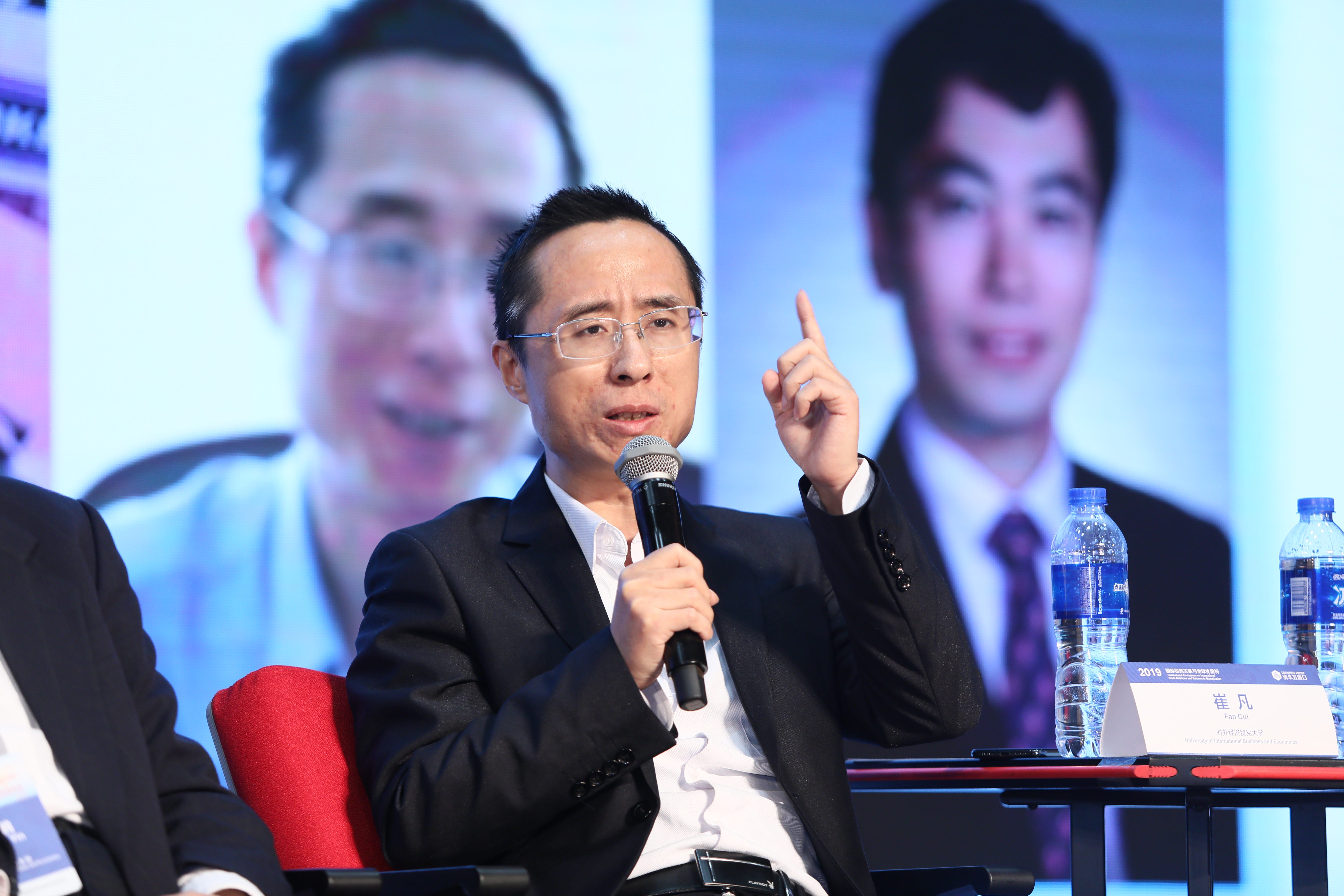
Cui returned to the subject at a 28 September online briefing organised by the Geneva-based Friends of Multilateralism Group (FMG), attended by OECD experts, Chinese scholars and FMG members. He questioned the focus on “non-market policies and measures,” asking why the research focuses on China’s industrial subsidies while leaving tariffs, export controls, and other trade and investment restrictions out of the research agenda.
Below is Cui Fan’s intervention at the discussion, published in English on his personal WeChat blog on 29 September 2026 and reposted here. Cui has kindly authorised the repost.
— Yuxuan Jia
关于补贴问题研究议程和方向的发言
An Intervention on the Agenda and Direction of Research on Subsidies
It is a pleasure to join this discussion with experts from FMG and the OECD.
The issue of subsidies has attracted considerable attention in recent years. However, perspectives and concerns vary. Together with some Chinese colleagues, my primary focus is on the WTO compliance and rationality of subsidies.
In 2024, global average temperature exceeded the 1.5 degree Celsius threshold above pre-industrial levels for the first time. The hazards of climate warming are imminent. Scientists in Europe, the United States, China among other countries have made tremendous contributions to climate change research. Nevertheless, in recent years, we have seen some US officials and senators claim that global warming is a hoax, while certain European think tanks are already discussing adjusting the 1.5–2 degrees threshold to 3 degrees. It appears that some people in Europe and the US are growing hesitant on the climate agenda. Yet faced with this common threat to humanity, we need to reflect on whether national governments have done enough to tackle climate change.
The new energy industry is the sector in China most heavily restricted by some of our trading partners. We understand that countries need to balance industrial interests while addressing climate warming challenges. Every major economy wants a share of the new energy market, and small and medium-sized economies also hope to secure a position in the new energy industrial value chain. China has revoked WTO-compliant export tax rebates for photovoltaic products and has reduced, and is phasing out, export tax rebates for lithium batteries. China has made a trade-investment integration policy in its 15th Five-Year Plan to encourage outbound investment by the new energy industry and other industries. In this process, reasonable technology transfer and spillovers will occur naturally. By contrast, too much investment restrictions through legislation will only slow down such capacity relocation and the re-balancing of trade.
China has made substantial efforts to ensure subsidies are WTO-compliant and reasonable. I believe we should refine WTO subsidy rules, for instance, reactivating the non-actionable subsidies clause and negotiating stronger and more clear disciplines related to non-actionable subsidies. Fiscal spending by governments to fight with climate warming should be encouraged, while upholding the non-discrimination principle and reducing trade distortions. China’s previous subsidies for new energy vehicles were consumption subsidies. Tesla and other foreign-invested enterprises operating in China qualified for those subsidies, as did imported new energy vehicles. That stands in stark contrast to subsidies under the US Inflation Reduction Act, which contain local content requirements and provisions excluding Chinese inputs. China is continuously tightening disciplines on subsidies from local governments, with some requirements stricter than those under WTO rules. China’s economy is not perfect. We have a lot of problems to deal with. Therefore, we are clear that we must continue advancing economic reforms and high-level opening-up. Strengthening subsidy disciplines and ensuring subsidies are WTO-compliant and well-designed based on economic rationality helps improve the efficiency of China’s economy, promotes the development of a unified national market, and enhances the competitiveness of scale-intensive industries. China has a clear understanding of that.
Without consensus, the Chair’s Statement of the G20 Finance Ministers’ meeting called on the IMF and OECD to conduct research on data related to non-market policies and measures. I have some doubts about that. Do those non-market policies include tariff measures that seriously violate WTO rules and forced investment commitments under bilateral agreements such as the Turnberry Agreement? What about the numerous poison-pill clauses specifically targeting China and restricting China’s cooperation with third parties? What about bans on exporting high-end chips and lithography machines to China, plus measures coercing other countries to follow suit? And what about the use of technical measures to directly and totally block imports of a wide range of Chinese products such as drones, robots and inverters — are those NOT non-market policies and measures?
In the OECD subsidy database, subsidies that offset market distortions are treated the same as subsidies incorporating distorting local content requirements. That is just like treating medicine and poison as the same. Which direction such research is pointing to? Therefore, my doubts about OECD subsidy statistics are not merely technical; I have reservations about the entire research agenda and its direction.
Humanity faces many shared challenges at present: environmental and climate risks, income inequality, and inadequate global infrastructure. China hopes to cooperate with all the countries and international organizations to address those issues, and China has accumulated some experience in those areas. Notably, long-term government bond yields in some countries have recently climbed above 5%, and the global financial system faces substantial uncertainty in the period ahead. I believe that China can play an active role in responding to potential uncertainties and risks going forward. We need cooperation. On subsidies, better cooperation should consist of jointly identifying legitimate subsidies, prohibiting distorting subsidies inconsistent with WTO rules, and negotiating to improve subsidy rules. We should not mix medicine with poison together and should not pursue a research agenda headed in a wrong direction.

