

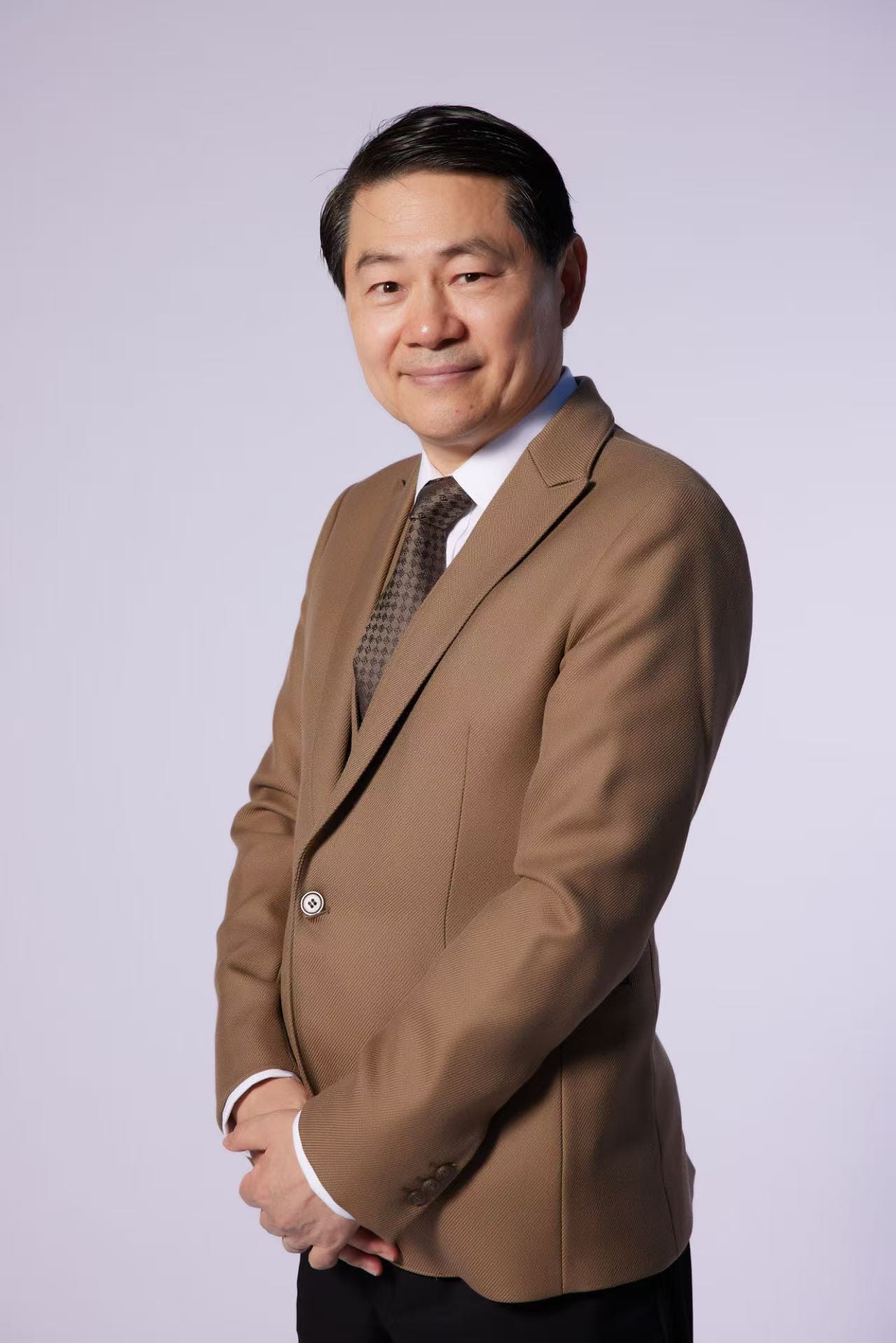
Below is a Q&A with Henry Huiyao Wang, founder and president of the Center for China and Globalization (CCG), ahead of Chinese President Xi Jinping’s latest meeting with U.S. President Donald Trump during Xi’s state visit to the United States.
Q: President Xi Jinping and President Donald Trump are meeting again only a few months after Trump’s visit to Beijing. What has changed in the relationship since then?
Henry Huiyao Wang: Quite a lot has happened in just a few months. The Russia-Ukraine war is still dragging on, tensions in the Middle East remain high, and AI has developed much faster than many people expected.
But I think something has also changed in the China-U.S. relationship itself. During Trump’s first term, the language was often about strategic rivalry. Now we hear about strategic stability.
The differences are still there, of course. But both sides are also becoming more realistic about the fact that neither can fundamentally change the other. I think a new equilibrium is beginning to take shape.
And just having the two presidents meet again so soon after their last summit matters. The image of them sitting down together in Washington and talking about bilateral and global issues sends a signal, in both countries and beyond, that the relationship is not simply heading towards confrontation.
Q: What do you mean by a “new equilibrium”?
Henry Huiyao Wang: Both sides are getting a clearer sense of what they can and cannot do.
The United States cannot fundamentally change China. China is not going to replace the United States in the world. They have different systems, different strengths and different interests, but they are going to have to live with each other.
You can see the same thing economically. After years of tariffs, technology restrictions and retaliation, both sides know they can hurt the other. But they also know the damage does not go in only one direction.
The two economies are simply too intertwined for full decoupling to be realistic. So I think the relationship is moving towards a more pragmatic balance: competition will continue, but both sides have stronger reasons not to keep escalating.
Q: Where could that new equilibrium lead?
Henry Huiyao Wang: During the Cold War, people talked about MAD — mutually assured destruction.
I think China and the United States could now try to move from MAD to what I call MAC — mutually assured construction.
We already know how much damage the two countries can do to each other. The more useful question is what they can build together.
Competition will not disappear. But once both sides accept that neither can eliminate or remake the other, there is more room for cooperation on trade, technology, global governance and international security.
That, to me, is where strategic stability could go.
Q: Trade has been one of the most difficult parts of the relationship. Is a longer-term truce possible?
Henry Huiyao Wang: I think the momentum is quite good.
The two sides have already been discussing tariff reductions on selected goods. If they can begin with around US$30 billion on each side and agree on a list of products, that could be expanded later.
There are plenty of areas where trade does not need to become a security issue: agricultural products, food, pharmaceuticals and many ordinary manufactured goods.
Investment is another area. Trump has talked a lot about bringing manufacturing back to the United States. Chinese companies have an interest in greenfield investment there, and some have already shown they can create American jobs.
After several rounds of tariffs, sanctions, and countermeasures, both sides also seem to have learned that escalation is costly. The repeated extensions of trade truces are a sign of that.
Q: Do you see the relationship moving towards managed interdependence rather than decoupling?
Henry Huiyao Wang: Full decoupling looks much less realistic now. Major American companies still rely heavily on manufacturing and supply chains in China, while Chinese companies also depend on global markets.
The past few years have shown that both sides have economic leverage. The United States can restrict chips and technology. China also has ways to respond.
Once both sides understand that disruption can be mutual, there is less incentive to keep pushing things further.
So I think the more likely direction is pragmatic coexistence: freeze some disputes, reduce some barriers and keep business going where possible.
Q: AI is also expected to come up. What kinds of ideas could enter the discussion?
Henry Huiyao Wang: I see three areas that could be discussed.
The first is the risk of an AI arms race. China has long maintained a no-first-use policy on nuclear weapons. Could a similar idea eventually be explored for AI — for example, no first use of weaponised AI, or some understanding that advanced AI would not be used offensively against the other side?
Of course, AI is not the same as nuclear weapons, and even defining an “AI weapon” would be difficult. But I think the idea is worth discussing.
The second is fragmentation. We are already seeing different international AI initiatives take shape. If they harden into separate American and Chinese camps, we could end up with two AI systems, two sets of standards and very little coordination between them.
There could be room to discuss how those systems interact, and what role the United Nations and other countries could play in broader AI governance.
The third is economic. The United States has put trillions of dollars into AI, but the commercial model is still being tested. China has spent only a fraction of that, while putting much more emphasis on practical applications across industry, healthcare, education, robotics, and other areas. If the U.S. AI boom were to end in a major bust, the impact would not stop at the U.S. economy. China’s huge market and application base could help make AI commercially viable.
Those are different strengths, and in some areas they may be complementary. I would not expect one summit to settle any of this. Even a more regular conversation on AI safety and governance would be useful.
Q: Could closer China-U.S. dialogue make a difference to the wars in Ukraine and the Middle East?
Henry Huiyao Wang: China is already involved, although much of it happens through quiet diplomacy.
China has important economic and diplomatic ties with both Russia and Ukraine. It is also a major trading partner of Iran and the Gulf countries. That gives Beijing channels to different sides.
We have seen Iranian officials in Beijing and Foreign Minister Wang Yi speaking with many foreign ministers during periods of tension. China does not always have to announce that it is mediating.
If there is eventually an agreement involving Russia and Ukraine, or the United States and Iran, a major third party could help make it more durable. China could potentially be a witness, a supporter or, depending on the circumstances, help underpin an agreement.
Trump has made clear that he wants to end wars. China also has a strong interest in regional stability. Their positions may not be identical, but there is still something to talk about.
Q: Taiwan will inevitably be part of the conversation. What would you watch for?
Henry Huiyao Wang: Taiwan comes up whenever the Chinese and American presidents meet because it is the most sensitive issue in the relationship.
I would first watch whether the calmer tone of recent months continues.
During Trump’s visit to Beijing, President Xi made clear that the Taiwan issue has to be handled very carefully because mishandling it could lead to conflict. The United States has said that it does not support Taiwan independence. From China’s perspective, continued adherence to the one-China policy and restraint on actions that could encourage separatism would matter.
There is also a longer-term economic question. I think there could eventually be much deeper economic integration across the Taiwan Strait. You can imagine something like a broader Chinese economic community, just as other regions have developed their own forms of economic integration.
For now, though, the priority is keeping the situation peaceful and avoiding steps that make confrontation more likely.
Q: Do you think Washington’s approach to Taiwan is changing?
Henry Huiyao Wang: I think it has become somewhat more pragmatic. Compared with a few years ago, the rhetoric is calmer. Trump has also made clear that he does not want the United States drawn into another distant war.
But there are always different voices in Washington — in Congress, the Pentagon, the State Department and elsewhere. One president cannot change all of that overnight.
The broader point is that the United States is adjusting to a world in which its share of the global economy is smaller than it once was and China is much stronger than before. That makes coexistence and compromise more necessary.
Q: Trump has also talked about reopening dialogue with North Korea. Could China play a role there?
Henry Huiyao Wang: Renewed dialogue would be positive, and China would inevitably matter because both North and South Korea are China’s neighbours.
The Korean War ended with an armistice in 1953, not a peace treaty. So at some point there is a question of whether the parties can move from an armistice towards a more permanent peace arrangement.
One possibility could be a four-party dialogue involving China, the United States, North Korea and South Korea. China previously hosted the Six-Party Talks. But if the focus is specifically on a peace arrangement for the peninsula, a four-party format could also be explored.
Direct U.S.-North Korea talks could be useful, but any durable settlement on the peninsula would be very difficult without China.
Q: Trump has sometimes used the term “G2”. Could this summit point towards something like that?
Henry Huiyao Wang: China probably would not formally embrace the term “G2”, because it places a great deal of emphasis on the Global South and on a multipolar international order.
But there is an obvious reality: China and the United States are the world’s two largest economies and two of the most consequential powers in many areas, including AI. Whether or not you use the label, what they do together — or fail to do together — has consequences well beyond the bilateral relationship.
If they can work together on peace, global public goods, and economic stability, that would be positive.
That does not mean China and the United States deciding everything for everyone else. It simply recognises that when the two countries are in serious confrontation, the rest of the world feels it too.
Q: By the end of the summit, what would count as meaningful progress?
Henry Huiyao Wang: First, the meeting itself matters. The two presidents are meeting again only a few months after their last summit, and that already gives the relationship some stability.
Then I would look at whether there is practical movement on trade and investment, whether both sides continue to show restraint economically, and whether regular dialogue is becoming more established.
AI may be part of that, especially safety and global governance, but I do not think there has to be a grand agreement immediately.
I would also watch whether China and the United States find more room to work on peace efforts involving Ukraine, the Middle East, and perhaps, over time, the Korean Peninsula.
And there are smaller things that still matter: visas, student exchanges, journalists and other people-to-people contacts.
No single summit is going to settle all of these questions. But if it leaves the relationship more stable, keeps the two sides talking and opens some room for cooperation on difficult international issues, I would regard that as progress.
That would be another step from mutually assured destruction towards mutually assured construction.
