


Former senior official at China’s top economic policy coordination body argues that the services sector should become the next area of reform-led opening up, calling for wider foreign access in telecoms, education, healthcare, and finance.
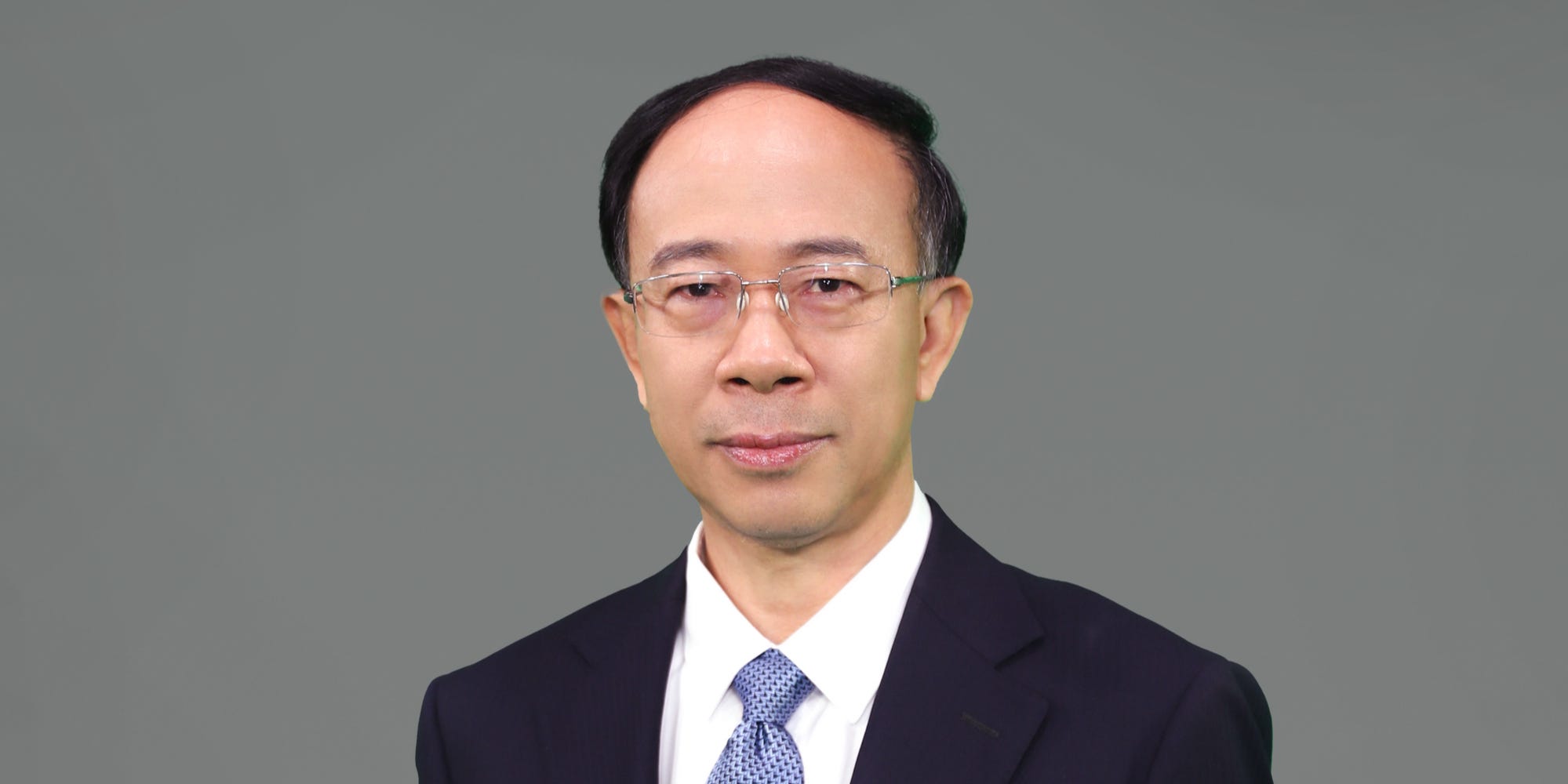
Yin Yanlin is a former deputy director of the Central Financial and Economic Affairs Commission. He currently serves as Vice Chair of the Economic Affairs Committee of the 14th National Committee of the Chinese People’s Political Consultative Conference (CPPCC).
The article was originally published in Exploration and Free Views, Issue No. 3, 2026, on 30 March 2026.
Opening Up the Service Sector: A Key Lever for Institutional Opening Up
服务业开放:制度型开放的重要抓手
The Fourth Plenary Session of the 20th Central Committee of the Communist Party of China (CPC), standing at a new historical starting point, made important arrangements to “expand high-standard opening up and create new prospects for mutually beneficial cooperation.” It also called for steadily expanding institutional opening up, safeguarding the multilateral trading system, and broadening international economic circulation. China’s reform and opening up has now entered a new stage in which institutional opening up plays a central role.
Service consumption is an important component of household consumption and a key direction of consumption upgrading. The key to high-quality development of the service sector lies in reform and opening up. Indeed, reform and opening up may be described as the only viable path for accelerating the development of the service sector.
The service sector is set to become a central priority in China’s push for high-standard opening up. On the reform front, unnecessary pre-approval requirements in areas such as cultural performances and education should be streamlined, more private and social capital should be encouraged to enter the market, and more diversified and multi-tiered service supply should be fostered. Market access should be further relaxed; discriminatory policies in healthcare, elderly care, education, and other fields should be comprehensively removed; and a negative-list management model, under which entry is permitted unless explicitly prohibited, should be implemented to attract more social capital.
China has already made clear that market access restrictions for foreign investment in manufacturing have been fully removed. The main remaining difficulties in market access now lie in the service sector. Services involve the most complex requirements for institutional opening up. They are also the weakest link in China’s reform process and the area where opening up has advanced most slowly. At this stage, therefore, China should use broader service-sector opening up to drive domestic reform in related fields.
I. Progress and Features of Service-Sector Opening Up
Since the 18th National Congress of the CPC, China has relied on various platforms and mechanisms to advance voluntary opening up in the service sector, achieving notable progress.
First, opening up in telecommunications has continued to expand. Telecommunications is a strategic, foundational, and leading sector of the national economy. It is also an important area for attracting foreign investment and advancing high-standard opening up. When China joined the World Trade Organisation in 2001, it opened its telecommunications market to foreign investment for the first time. The measures included opening 6 of 12 basic telecommunications services, with foreign ownership capped at 49 per cent, and opening 4 of 10 value-added telecommunications services, with foreign ownership capped at 50 per cent.
In recent years, China has continued to expand foreign access to value-added telecommunications services. It has opened all 10 such services to capital from Hong Kong and Macao, opened 8 value-added telecommunications services in pilot free trade zones, excluding internet data centres and content delivery networks, and opened 6 value-added telecommunications services nationwide, with foreign ownership caps removed in 4 of them.
In April 2024, the Ministry of Industry and Information Technology issued the Notice on Launching Pilot Work to Further Open Value-Added Telecommunications Services to Foreign Investment. Pilot programmes were first launched in the Comprehensive Demonstration Zone for Expanding Opening Up in the Service Sector in Beijing, the Lingang New Area of the Shanghai Pilot Free Trade Zone and Shanghai’s leading area for socialist modernization, the Hainan Free Trade Port, and the Shenzhen Pilot Demonstration Area of Socialism with Chinese Characteristics.
The pilot measures include removing foreign ownership restrictions in internet data centres, content delivery networks, internet access services (ISP services), online data processing and transaction processing, certain information services, including information publishing platforms and delivery services, and information protection and processing services. Internet news information services, online publishing, online audiovisual services, and internet cultural operations remain excluded. By the end of June 2025, 40 foreign-funded enterprises had received approval under the pilot programme for expanded access to value-added telecommunications services. The cumulative number of foreign-invested telecommunications enterprises had exceeded 2,600, up 27 per cent year on year.
Second, opening up in education has expanded significantly. Opening up is a defining feature and an important driver of educational modernisation. Since the 18th National Congress of the CPC, China has made notable progress in opening up education, with both “bringing in” and “going global” advancing substantially. China has become the world’s largest source country of international students and Asia’s largest study-abroad destination.
Through Chinese-foreign cooperative education, China has introduced a number of high-quality overseas educational resources. By 2020, more than 2,300 Chinese-foreign cooperative educational institutions and programs had been approved or registered by the Ministry of Education, including more than 1,200 at the undergraduate level or above. At the same time, international Chinese-language education has flourished. Confucius Institutes and their online platforms have created favourable conditions for people around the world to learn Chinese and understand Chinese culture.
Third, opening up in healthcare and medical services has expanded steadily. In recent years, China has gradually opened its medical sector wider. In February 2019, the CPC Central Committee and the State Council issued the Outline Development Plan for the Guangdong-Hong Kong-Macao Greater Bay Area, supporting medical and health service providers from Hong Kong and Macao in establishing wholly owned, joint-venture, or cooperative medical institutions in the nine Pearl River Delta cities. At the end of November that year, the first clinic in Hengqin approved to be established by a practising doctor from Macao officially opened.
In December 2023, the National Development and Reform Commission (NDRC) and the Ministry of Commerce issued the Opinions on Supporting the Hengqin Guangdong-Macao In-Depth Cooperation Zone in Implementing Special Measures to Relax Market Access. The document relaxed access restrictions for medical institutions from Hong Kong and Macao, encouraged the establishment of wholly owned and joint-venture medical institutions from Hong Kong and Macao in the cooperation zone, and introduced dedicated policies to support Macao service providers in opening clinics, outpatient departments, and other medical institutions there.
In November 2023, the State Council approved the Work Plan for Supporting Beijing in Deepening the Construction of the National Comprehensive Demonstration Zone for Expanding Opening Up in the Service Sector. The plan proposed supporting eligible foreign doctors and doctors from Hong Kong, Macao, and Taiwan in opening clinics in Beijing. In July 2024, the Beijing Municipal Commerce Bureau, together with relevant departments, issued the Implementation Plan of Beijing for Deepening Opening Up in the Service Sector and Promoting Foreign Investment, further clarifying this policy.
In November 2024, the National Health Commission, the Ministry of Commerce, the National Administration of Traditional Chinese Medicine, and the National Disease Control and Prevention Administration jointly issued the Work Plan for the Pilot Expansion of Opening Up in Wholly Foreign-Owned Hospitals. The plan allows wholly foreign-owned hospitals to be established in Beijing, Tianjin, Shanghai, Nanjing, Suzhou, Fuzhou, Guangzhou, Shenzhen, and across Hainan Island, excluding traditional Chinese medicine hospitals and the acquisition of public hospitals. By April 2025, China had more than 150 joint-venture and wholly foreign-owned medical institutions, mainly concentrated in these pilot cities, and more than 1,500 overseas medical professionals were practising in China on short-term assignments.
Fourth, a multi-channel and multi-tiered framework for financial opening up has begun to take shape. Financial opening up is an important component of China’s broader opening up agenda. In recent years, China has introduced a series of policies and measures to open the financial sector, including the Shanghai-Hong Kong Stock Connect, the Shenzhen-Hong Kong Stock Connect, the Shanghai-London Stock Connect, Bond Connect between the mainland and Hong Kong, and Swap Connect. Chinese bonds have also been included in the world’s three major bond indices.
At the same time, China has removed foreign ownership caps on domestic financial institutions, significantly expanded the business scope of foreign-funded financial institutions, abolished investment quota limits for Qualified Foreign Institutional Investors and RMB Qualified Foreign Institutional Investors, and lifted foreign ownership restrictions in banking, securities, fund management, futures, and life insurance. It has also removed access restrictions in corporate credit reporting, credit rating, payment, and clearing.
By the end of August 2025, 907 foreign institutions had been approved as qualified foreign investors, including internationally known institutions such as the Oman Investment Authority, the University of London Pension Plan, and the UK’s Pension Protection Fund. As of March 2025, all 24 foreign global systemically important banks had established institutions on the mainland, and nearly half of the world’s 40 leading foreign insurance companies had entered the mainland market. In September 2025, the State Administration of Foreign Exchange issued the Notice on Matters Concerning the Deepening of Foreign Exchange Management Reform for Cross-Border Investment and Financing, further facilitating foreign individuals’ use of foreign exchange settlement to pay for home purchases in China.
Fifth, the comprehensive pilot and demonstration program for expanding service-sector opening up has continued to advance. This national program is a major opening-up initiative of the CPC Central Committee and the State Council. It is tasked with exploring new paths for service-sector reform and opening up nationwide. The pilot program was first launched in Beijing in 2015 and has now been in place for a decade, during which it has undergone one upgrade and two rounds of expansion.
The latest expansion came in April 2025, when the State Council approved the Ministry of Commerce’s Work Plan for Accelerating the Comprehensive Pilot Program for Expanding Opening Up in the Service Sector, adding nine cities, including Dalian, to the pilot areas. The program now covers four municipalities, Hainan Province, and 15 prefecture-level cities, forming an opening-up layout that broadly spans eastern, southern, western, northern, and central China. Over the past decade, pilot tasks have covered 12 key sectors, including science and technology, telecommunications, culture and tourism, and finance.
To give full play to Beijing’s leading role in service-sector opening up, the state supported Beijing in September 2020 in building the National Comprehensive Demonstration Zone for Expanding Opening Up in the Service Sector. In 2023, the State Council approved the Work Plan for Supporting Beijing in Deepening the Construction of the National Comprehensive Demonstration Zone for Expanding Opening Up in the Service Sector. This was an upgraded version of the 1.0 plan introduced in 2020 and is commonly referred to as the “2.0 plan.”
The 2.0 plan places greater emphasis on exploring institutional opening up. It introduced more than 170 new pilot measures, including 70 measures related to alignment with high-standard international economic and trade rules, accounting for 40 per cent of all pilot tasks. For example, in optimising the financial services system, the plan proposes exploring ways to improve negative-list management under the capital account, facilitating enterprises’ cross-border capital flows, and promoting financial services for green, low-carbon, and circular economic development. In building a digital-economy institutional framework, it proposes establishing and improving systems and mechanisms for data trading, registration of data rights, valuation of data assets, and data development and utilisation.
Beijing’s 2.0 plan for service-sector opening up represents the latest practice in high-standard opening up. It will provide strong support for China’s efforts to join high-standard economic and trade agreements and to build a high-standard institutional framework for opening the service sector.
II. Difficulties and Problems in Service-Sector Opening Up
In fact, China’s early opening up began, to some extent, in the service sector. International hotels, for example, were among the first fields to allow foreign capital, especially capital from Hong Kong and Macao, to enter and establish a presence. These hotels were high-end and offered strong service quality, meeting the accommodation needs of overseas businesspeople and investors. The problems currently seen in service-sector opening up are, therefore, in essence, problems that have emerged in the course of development.
Overall, many opening-up measures still represent isolated breakthroughs rather than broad-based, systemic opening. Sectors such as wholesale and retail (distribution services), tourism and travel, and transportation are relatively open. By contrast, telecommunications (communications services), finance, Medicare (healthcare and social services), and education remain less open.
In education, opening up still faces many difficulties. Beyond restrictions on Chinese-foreign cooperative education and on the nationality of managerial personnel, problems remain in areas such as the incomplete mutual recognition of academic degrees and diplomas, as well as the lack of official recognition for degree-granting remote cross-border education.
Preschool education, general high schools, and higher education institutions are limited to Chinese-foreign cooperative models, which must be led by the Chinese side and headed by principals with Chinese nationality. Chinese-foreign cooperative educational institutions may not establish branch campuses. Chinese members must account for no less than half of the boards of trustees, boards of directors, or joint management committees. Foreign educational institutions are also not allowed to establish wholly owned vocational training institutions.
At present, there is a significant gap between the current level of educational opening up and domestic demand for high-quality overseas educational resources. Since 2013, at least 400,000 Chinese students have gone abroad to study each year. With per capita expenses ranging from RMB 300,000 to RMB 600,000, at least RMB 100 billion to RMB 200 billion in education consumption flows overseas annually.
In healthcare, opening up still faces many bottlenecks. In addition to access restrictions concerning joint-venture models, foreign ownership ratios, and the nationality of practitioners, the medical services sector also faces problems such as incomplete implementation of national treatment.
In the mutual recognition of professional qualifications, there are objective differences between China’s licensing systems and standards and those of other countries, but domestic regulation also presents certain obstacles. Foreign doctors who come to China to practice on a short-term basis must register their practice. Those seeking to practice long-term must complete access approval and practice registration in accordance with regulations and participate in regular physician assessments.
This level of opening up also falls short of domestic demand for high-quality foreign medical services. A special form of overseas travel has emerged: medical tourism, in which people go abroad for treatment, medication, or surgery. Demand for high-end medical services among high-income groups is strong, but existing domestic supply cannot fully meet it.
In finance, opening up still faces difficulties. Although market access restrictions have been lifted, foreign-funded financial institutions still face constraints in areas such as business scope, lengthy approval procedures, insufficient capital-account opening, and restrictions on cross-border payments and capital flows. The current level of financial opening up does not fully meet the needs of financial internationalisation. It is closely related to the international pricing of renminbi assets, as well as the stability of the real estate market and the stock market.
III. Priority Areas for the Next Stage of Service-Sector Opening Up
Opening the service sector is a priority for institutional opening up. As China seeks to expand domestic demand and facilitate internal and external circulation, the need to open the service sector has become increasingly urgent. The CPC Central Committee has repeatedly emphasised the need to expand service-sector opening up and accelerate related pilot programmes.
On August 19, 2024, a State Council executive meeting called for further relaxing foreign investment access and moving quickly to advance opening up in service sectors such as telecommunications, education, and healthcare. The Fourth Plenary Session of the 20th CPC Central Committee emphasised expanding market access and opening up more areas, in particular in the service sector.
Against this backdrop, I suggest advancing service-sector opening up in the following five areas:
First, high-standard opening up in telecommunications should be further advanced. In the next stage, China should explore relaxing foreign investment access restrictions in basic telecommunications services in the Hainan Free Trade Port to promote the healthy development of China’s telecommunications market and strengthen its international competitiveness.
Pilot programs should be launched to remove foreign ownership caps on internet access services (limited to providing access services to users), and information services (limited to app stores and excluding areas where foreign investment is prohibited). Domestic internet virtual private network (VPN) services should also be opened to foreign investment, with foreign ownership capped at no more than 50 per cent. China should encourage the development of the data annotation industry, improve the data trading market system, support new business forms and models such as cross-border data processing services, and promote the overseas expansion of the gaming industry.
Second, high-standard opening up in education should be further promoted. The Third Plenary Session of the 20th CPC Central Committee explicitly called for advancing high-standard opening up in the education sector and encouraging first-rate foreign universities of science and engineering to develop partner schools and programs in China. The Ministry of Education and seven other departments have issued the Opinions on Accelerating and Expanding Opening Up in Education in the New Era.
In the next stage, China should deepen reform of Chinese-foreign cooperative education and explore appropriately relaxing restrictions on the qualifications of cooperative education entities and on school-running models. Support should be given to the Guangdong-Hong Kong-Macao Greater Bay Area in building an international education demonstration zone, to the Yangtze River Delta in taking the lead and conducting pilot trials, to Xiong’an New Area in creating a new benchmark for educational opening up, and to Hainan in building an international education innovation island.
Except in compulsory education and religious education, wholly foreign-owned operations may be considered in other areas. For example, the Hainan Free Trade Port, the Guangdong-Hong Kong-Macao Greater Bay Area, and pilot free trade zones could take the lead in relaxing restrictions on foreign-funded preschool education, general high schools, and higher education institutions, with reference to requirements for private schools.
At the same time, cooperation with international educational institutions should be strengthened. Mechanisms for mutual recognition of degrees and diplomas should be improved, international student mobility should be enhanced, and education quality should be raised. Degree-granting remote cross-border education should be gradually recognised. Modern information technology should be fully used to raise the level of educational internationalisation, attract more high-quality international educational resources, and support high-quality development in education.
Third, opening up in healthcare should be further expanded. China should formulate a list of overseas professional qualifications to be recognised in health and medical services, and support eligible foreign doctors and doctors from Hong Kong, Macao, and Taiwan in establishing medical institutions in Beijing. Beijing municipality should formulate measures for the filing and administration of clinics and support filing-based administration for eligible clinics from Hong Kong and Macao.
China should explore removing restrictions on joint-venture models and on the nationality of medical management personnel. Restrictions on wholly foreign-owned medical institutions could first be lifted in Beijing, Shanghai, Tianjin, Shenzhen, and other cities before being gradually extended nationwide. Relevant regulations should be improved with reference to the regulatory approach applied to private medical institutions.
China should promote mutual recognition of physician qualifications with developed countries and advance the internationalisation of industry standards and qualification certification. While ensuring data security, it should explore the joint development and sharing of health and medical databases and strengthen the standardisation and inter-hospital sharing of clinical medical data.
Fourth, the pace of financial opening up should be accelerated. China should speed up the development of Shanghai as an international financial centre, improve the pre-establishment national treatment plus negative list management model, and support eligible foreign institutions in participating in financial business pilots. Financial market connectivity should be expanded in a prudent and steady manner, and the Qualified Foreign Investor system should be optimised.
China should align with the financial rules of high-standard international economic and trade agreements, streamline restrictive measures, and make cross-border investment and financing more convenient. Greater support should be provided for cross-border investment and financing by multinational companies. Relying on the integrated domestic- and foreign-currency bank settlement account system, China should optimise settlement services for funds under cross-border trade and investment.
Policies for centralised cross-border fund operations by multinational companies in both domestic and foreign currencies should be upgraded in order to further facilitate group-wide pooling and use of funds and expand the business scope of foreign-funded financial institutions. Capital-market opening is a key focus of market attention. Improving the Qualified Foreign Investor system would allow global investors to share more smoothly and fully in the opportunities created by China’s innovation-driven development, while also bringing long-term, stable capital into China’s capital market.
China should also expand the opening of futures and other financial derivatives markets, introducing more risk-management products to meet the needs of the real economy. In addition, capital-account opening should be advanced. China should make cross-border capital flows under the capital account more convenient, support Pudong in taking the lead in exploring pathways for capital account convertibility, develop financial products related to renminbi internationalisation, expand the range of financial products for offshore renminbi round-trip investment, and promote two-way cross-border flows of renminbi funds.
At the same time, China must strengthen its financial risk prevention and control system, improve risk warning mechanisms, and prevent and resolve financial risks in a timely manner.
Fifth, pilot and demonstration zones should play a stronger exemplary and guiding role in service-sector opening up nationwide. Beijing municipality has focused on modern service industries such as science and technology, telecommunications, and culture, and has implemented more than 120 pilot measures. Since the service-sector opening-up pilot program began in 2015 and the demonstration zone was established in 2020, Beijing, as China’s first national comprehensive pilot and demonstration zone for expanding service-sector opening up, has launched a total of 526 tasks and produced a series of nationally pioneering innovations.
In areas such as expanding service-sector opening up, facilitating trade in services, and improving the business environment for an open economy, Beijing municipality has implemented nearly 50 nationally pioneering policies, launched more than 70 landmark national projects, built more than 90 functional service platforms, and established more than 50 innovative institutional mechanisms. It has taken the lead in exploring a model of industrial opening up driven by the service sector.
On the basis of the Beijing demonstration zone and the practices of other pilot provinces and cities, China should systematically summarise the successful experiences and practical approaches of pilot regions. It should fully leverage the guiding and exemplary role of these pilots in service-sector opening up nationwide and promptly replicate and promote successful practices in other pilot provinces and cities across the country.

Sang Baichuan: China’s struggle with institutional opening up

The concept of institutional opening up was first introduced at China’s 2018 Central Economic Work Conference, and has since become a recurring theme in top-level discussions, including the most recent 2025 Central Economic Work Conference.
Tu Xinquan: China, the WTO, and the limits of autonomous opening up

In this reflection on the 25th anniversary of China’s WTO accession, Tu Xinquan, Professor and Dean of the China Institute for WTO Studies, University of International Business and Economics, argues that external rules, benchmarks, and pressure have often helped China’s opening-up translate more effectively into domestic reform. In that sense, WTO acces…
Huang Qifan says China's opening up has indeed grown "wider"

Huang Qifan, former Mayor of the southwestern metropolis of Chongqing until the end of 2016, traced his career to eastern Shanghai’s Pudong New Area, a signature of China's reform and opening up in the 20th Century. His current title is Executive Deputy Director

China’s real service-sector strategy is not indiscriminate opening. It is the domestic substitution and internationalization of producer services.
These are the services that sit around the manufacturing system: logistics, supply-chain management, industrial insurance, trade finance, factoring, branding, industrial design, certification, intellectual property services, after-sales networks, cross-border settlement, platform services, and overseas channel management.
This is where the real strategic value of services lies.
A country that dominates manufacturing but relies on foreign firms for logistics, finance, insurance, branding, certification, IP protection, and global distribution does not fully control the profit pool around manufacturing. It may produce the goods, but others capture a large share of the margin, standards, customer relationships, risk pricing, and market access.
China’s next service-sector upgrading is therefore not mainly about importing Western consumer services. It is about building Chinese producer-service capabilities that can follow Chinese manufacturing overseas, support Chinese brands globally, and allow Chinese firms to capture more value across the entire industrial chain.
That is a very different agenda from simply “opening the service sector to foreign capital.”
The idea of opening up the service sector sounds attractive in the abstract. But once we look at the specific industries involved, its marginal significance becomes much less obvious.
The first category includes digital services, data services, cloud services, and value-added telecom services. These sectors are inherently sensitive. They involve data security, platform control, information infrastructure, and state governance capacity. They cannot be opened up in the same way as ordinary consumer goods markets. Western countries have not granted Chinese platforms and digital service companies genuinely reciprocal market access either.
The second category includes legal services, accounting, consulting, design, ratings, certification, and intellectual property services. These sectors have already been substantially open to foreign firms for years. China has also long run a service trade deficit in many of these areas. The issue is not that China has failed to learn from foreign firms. The issue is that European and American institutions have already been deeply involved in these markets.
The third category includes elderly care, domestic services, culture, tourism, sports, entertainment, content, and education and training. Most of these industries are not technologically sophisticated. Domestic competition is already intense. Even if more foreign capital enters, the incremental efficiency gain is likely to be limited. The real constraints on these sectors are household income, demographics, regulatory boundaries, and purchasing power, not a lack of foreign access.
The fourth category is healthcare. China’s healthcare system certainly has its own problems. But in terms of accessibility, cost control, basic public health capacity, and large-scale medical service delivery, China is not obviously behind the West. In several respects, it is more efficient. Framing healthcare opening as a way for China to learn advanced service capabilities from the West is therefore not very convincing.
Finally, there is financial services. China has always pursued limited financial opening, and this is not simply a sign of backwardness or conservatism. It is a deliberate institutional choice. China wants finance to serve the real economy, rather than allowing the financial sector to expand without limit, circulate within itself, and dominate resource allocation. Financial opening can continue, but not at the cost of financial sovereignty, capital-account stability, or the ability to finance industrial development.
This is the core weakness of the argument that opening the service sector will expand domestic demand. It turns a seemingly correct macroeconomic direction into a vague policy prescription. At the industry level, these sectors either involve state capacity and security boundaries and therefore cannot be opened dramatically; or they are already open and associated with trade deficits; or they have limited technological content and limited marginal gains; or they are not areas where China’s main problem is a lack of learning from the West.
The real issue is not simply how much further China opens its service sector. It is how China raises household income, improves the fiscal spending structure, strengthens public service provision, and preserves its manufacturing and strategic investment capacity.