


This 2014 article steps into a debate that has only intensified since: as promotion, funding, and prestige hinge ever more tightly on “top journal” outputs, Chinese economics academics are steered towards methodologically neat, data-friendly questions with predictable publication odds, while slower, messier research on China’s most pressing policy and development challenges gets squeezed out. Furthermore, the risk is that China’s economic narrative is outsourced to debates framed by U.S. questions and values.
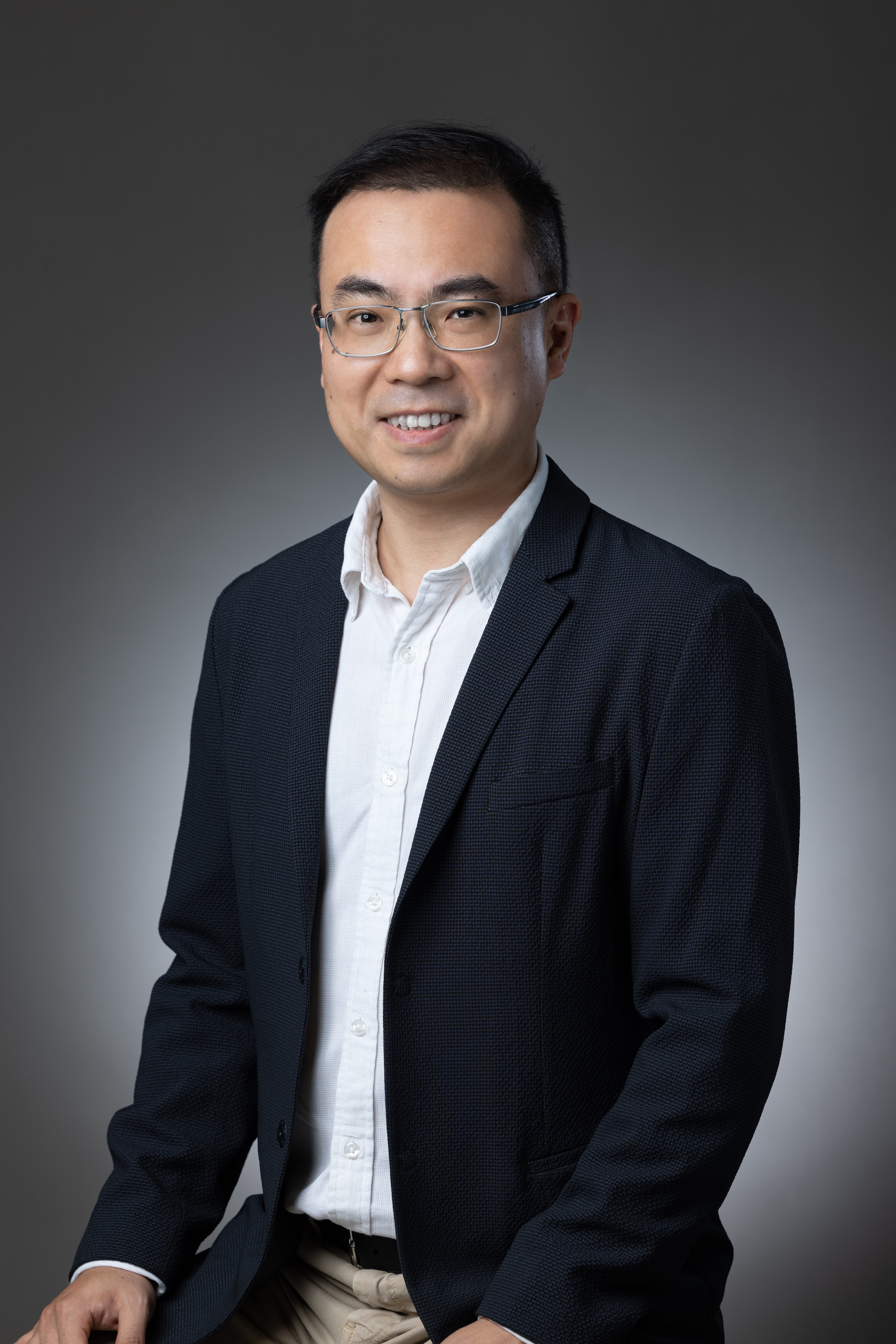
The author, Zheng (Michael) SONG, is Wei Lun Professor of Economics and Head of the Department of Economics at The Chinese University of Hong Kong (CUHK). He holds a BA from the Shanghai Institute of Foreign Trade, an MA from Fudan University, and a PhD from the Institute for International Economic Studies (IIES) at Stockholm University.
Song won the Sun Yefang Prize in Economic Science, the top award in Chinese economics, in 2013. He later developed his award-ceremony remarks into an article published in Hong Kong-based newspaper Wen Wei Po in January 2014, before producing a revised and expanded version for the October 2014 issue (No. 10) of 经济导刊 Economic Herald, a monthly journal run by CITIC Group. This translation is based on the Economic Herald version.
The reason to revisit the piece in 2026 is that the debate has returned with renewed urgency. Recent remarks by Shanghai Jiao Tong University economist Lu Ming criticised the Chinese academic system that over-rewards methodological precision and pushes increasingly elaborate models, often at the expense of China’s real economic problems and institutional context. He also urged scholars not to retreat into “survival mode.” Against that backdrop, this essay by a winner of Chinese economics’ top prize feels less like a period piece than a signpost.
—Yuxuan Jia
宋铮:中国需要什么样的经济学研究
Zheng (Michael) SONG: What Kind of Economic Research Does China Need?
This short essay is a revised and extended version of my remarks at the 15th Sun Yefang Prize in Economic Science Award Ceremony. As a junior scholar in economics, I find it challenging to fully engage with a topic of this scale. However, I believe the subject is extremely important and has already gone beyond the boundaries of purely economic research. With that in mind, I venture to offer some personal reflections in the hope of sparking further discussion.
Let me begin with an international comparison. In economics, as in other social sciences, research can generally be divided into two categories: theoretical and empirical studies. Until about fifty years ago, theoretical studies were a key part of mainstream Western economics and often intertwined with ideological debates. However, over the past five decades, empirical studies have come to represent almost the entire focus of mainstream economics.
Empirical studies can further be divided into problem-oriented research and technique-oriented research. Problem-oriented research is driven either by real-world issues or by theoretical questions, while technique-oriented research is driven by data and methodology. For example, in recent years, a substantial body of research has emerged on the 2008–2009 financial crisis. Most of this falls under real-world, problem-oriented research, while some is technique-oriented, focusing on developing new methods or organising new datasets. Of course, technique-oriented research must ultimately be applied to concrete questions, but the primary reason this type of work is possible in the first place is its technical advantages.
Economics is mainly an applied discipline. Research focused on real-world problems dominates high-quality output in both volume and impact. Research driven by theoretical questions provides the foundation for real-world, problem-oriented studies, while technique-oriented research serves as an important complement. This structure forms the foundation of contemporary economic research in the West.
China shares some similarities with this pattern, but also has its own distinctive features. Twenty years ago, Chinese economics was largely driven by theoretical studies, which addressed a range of fundamental issues related to the economic system and produced some far-reaching contributions. Over the past two decades, with China’s comprehensive marketisation and the internationalisation of economic education and research, empirical studies have made significant strides. The mindset and scientific methods of modern economics have become the common language and primary research tools for Chinese economists across generations. Completing such a transformation of academic language in less than twenty years is an achievement that all Chinese economists should be proud of, and the tolerance and support of the older generation, in particular, deserve recognition.
A vivid example of this is that very few scholars today still emphasise the creation of a so-called “Chinese economics” separate from modern economics. In fact, over the past decade, nearly all major contributions from Chinese economists have been conducted within the framework of modern economics, applying its methodological toolkit to the study of China’s real-world issues. This convergence of understanding has greatly facilitated the development of empirical studies in China.
However, while fully acknowledging this remarkable achievement, it is also important to recognise the shortcomings. These may seem somewhat nitpicky, but objective criticism is, I believe, a key driver of continued progress. In my view, the amount of technique-oriented research in Chinese economics today is somewhat excessive. This includes studies that use new Chinese data to explore Chinese issues, work that applies new Chinese data to U.S.-focused questions, and research that employs new theoretical models to reinterpret specific Chinese issues. As a result, research oriented toward real-world problems appears relatively underrepresented, and many important real-world issues often fail to receive adequate academic attention.
Despite abundant discussion and a constant stream of diverse opinions across various media, genuinely in-depth and systematic research remains scarce. The gap between China and the West in this regard is substantial. In the U.S., when a major real-world issue arises, it’s typically possible to identify several scholars who have conducted thorough research in that area, with valuable reference works available. Even for entirely new topics, one can expect a group of specialists and substantial research findings to emerge within a few years, as seen with the studies on the financial crisis I mentioned earlier.
There are many causes for this contrast, one of which is the insufficient supply of high-calibre economists in China. While many Chinese scholars are highly enthusiastic, they often lack systematic training and critical thinking, leading to superficial research. However, what I would like to emphasise is that a relatively uniform academic evaluation system is also a significant contributing factor.
On the one hand, from the central government to the grassroots level, and from funding allocations to academic title evaluations, the number of publications in leading domestic and international journals has become a key indicator. On the other hand, research oriented toward real-world problems typically spans a broader range of issues, requires longer research cycles, and places higher demands on scholars’ overall capabilities. As a result, young and mid-career scholars face a clear trade-off between effort and output. Technique-oriented research is relatively easier: it takes less time, and the likelihood of publication is more predictable. Under these conditions, the academic value and real-world relevance of research are often forced to give way to the pressures of career survival.
In fact, I would even argue that “the growing demand for research on real-world problems and the increasingly uniform academic evaluation system” is the principal contradiction in contemporary economic research in China.
It is important to acknowledge that, in the early stages of academic development, counting the number of high-quality publications played a constructive role. After all, the publication of high-quality papers itself signals recognition by the scholarly community. Over the past twenty years, the emphasis on high-quality publications has helped address the earlier lack of an objective evaluation system, greatly contributing to the modernisation and internationalisation of economics in China.
However, I would also like to point out that this “increasingly uniform academic evaluation system” is itself a reflection of the globalisation of economics—one shaped by U.S. issues and values. Without a clear understanding of this, it is difficult to identify the downsides built into the system.
There is no doubt that the United States is the leading centre of economic research. If economics were purely a theoretical discipline, such U.S.-centred globalisation would undoubtedly facilitate the creation and accumulation of knowledge. However, economics is mainly an applied discipline that addresses a wide range of real-world issues, many of which have clear ideological dimensions. As a large developing country with a unique political and economic system, China naturally has reason to reflect on this form of globalisation driven by U.S issues and values.
To put it more bluntly: suppose 95% of economists worldwide were focused on studying U.S. issues or so-called theoretical questions derived from those issues, would this truly help enhance global welfare? While I have already discussed the benefits China has gained from participating in globalisation, let me now offer two examples to illustrate its negative impacts.
Three years ago, I visited the Institute of Economics at Academia Sinica in Taiwan, which is home to many excellent economists, some of whom are genuinely world-class scholars. Over the past decade, the internationalisation efforts led by Directors Chung-Ming Kuan and Shin-Kun Peng have yielded remarkable and widely recognised results. During my visit, I hoped to engage with some experts about Taiwan’s economic development over the past fifty years—a topic highly relevant for understanding China’s current situation and assessing its prospects. Unfortunately, I was informed that the entire institute had only one researcher specialising in the Taiwanese economy, and he was away from the island at the time.
Fortunately, an expert on Taiwan’s economy, Henry Wan from Cornell University, was visiting the institute at the time. I had the opportunity to speak with him at length and benefited immensely from our conversation. Of course, Taiwan does have other institutions dedicated to the study of its own economy. However, the fact that Academia Sinica—a premier academic centre that houses many of Taiwan’s intellectual elites—could not provide a single expert on Taiwan’s economy must be seen as a clear example of resource misallocation caused by the globalisation of economics.
One consequence of this form of globalisation is that American scholars (including those based in the U.S.) make up the core of mainstream economics, while non-U.S. scholars are often unconsciously marginalised. Being distant from the United States and unable to engage deeply with U.S.-based real-world issues, many researchers ultimately gravitate toward technique-oriented studies. The negative effect of overemphasising technique-driven research is a diminished ability to make informed judgments about real-world problems, and Taiwan serves as a telling example of this.
Let me provide a more concrete example from China. In recent years, U.S. politicians, media, and even academics have accused China of manipulating its exchange rate to generate trade surpluses. These claims have gained significant traction and placed considerable pressure on the Chinese government and economy. In reality, the alleged connection between exchange-rate manipulation and trade surpluses is neither theoretically sound nor practically feasible. Any student who has studied the first two chapters of macroeconomics would understand that trade surpluses and net savings (the difference between savings and investment) are simply two sides of the same coin, and manipulating the exchange rate to influence net savings is literally impossible.
What is interesting is that, before the publication of my award-winning paper Growing Like China with Kjetil Storesletten and Fabrizio Zilibotti, almost no economist had stepped forward to challenge this obvious fallacy. The silence of Western scholars is understandable, but the silence of Chinese scholars warrants deeper reflection. In hindsight, it becomes clear that U.S. politicians and media often express a certain resentment toward countries with strong economic performance, and the arguments they present are not always supported by convincing logic. The recent criticism of Germany’s trade surplus, for example, is almost laughably unfounded. National interests always take precedence, and superficially plausible theories often serve to claim the moral high ground while defending those interests.
For a country as large and structurally distinctive as China, it is especially important to cultivate a community of scholars who are rigorously trained in modern economic theory and methodology and dedicated to studying China’s real-world issues. While contributing to the development of modern economics itself, such scholars can provide valuable policy advice at home and foster more effective communication abroad, helping to reduce frictions in public debate and to dispel conceptual misunderstandings.
What is even more harmful is a subtler form of “brainwashing.” I recently conducted a study on the performance outcomes of state-owned enterprise (SOE) reforms and found that SOEs have improved their performance rapidly compared to non-SOEs, with the effect being particularly pronounced among large SOEs. Interestingly, when we presented this work, some scholars mentioned that they had made similar findings several years ago. When we asked why they had not pursued the topic further, the typical response was that they had reservations about those results. There may be two reasons for this.
First, the academic community tends to be more receptive to conclusions suggesting a relative decline in SOE performance. Publishing research that challenges mainstream Western views requires greater effort and involves higher risks, which is understandable. But on the other hand, I sensed that some scholars rejected the finding of SOE performance improvement a priori, convinced that there must be something wrong with it.
The issue here is not whether SOE performance has indeed improved, but whether scholars maintain an equally open research attitude toward all possibilities. When one subconsciously favours certain preconceived notions (such as the belief that SOEs must inevitably perform poorly) and adopts an unwarrantedly dismissive stance toward facts that contradict those views, this, I argue, constitutes a form of “brainwashing” by mainstream Western ideas.
Having discussed the various problems with overly technique-oriented research, what kind of research does China actually need today? More specifically, what kind of problem-oriented research is needed? My teacher at Fudan University, Yuan Zhigang, once said that what China needs to pursue is the “localisation of modern economics” and the “internationalisation of China-related issues.” I believe these two phrases provide a highly concise summary of the economic research China needs.
The localisation of modern economics essentially means grounding research in China’s economic realities, using modern economics to study and solve real-world problems, and, on that basis, contributing to and advancing modern economics itself. The framework and methodology of modern economics transcend national borders and political-economic systems. Localisation is simply the application of modern economics in the Chinese context, using Chinese experiences to enrich modern economic theory.
The internationalisation of China-related issues is a broader and longer-term goal. As China’s economy grows and modern economics becomes increasingly informed by Chinese elements, I hope that not only more Chinese scholars will study China’s real-world issues but also that more international scholars will join in this endeavour. China’s economy is already set to become the world’s largest. In the not-too-distant future, it is hoped that China’s economic questions will become a primary research focus for economists worldwide. This would represent a crucial component of China’s soft power development.
How can these two goals be achieved? The first step is to avoid an overly uniform academic evaluation system. Establishing a standardised evaluation system is indeed one way to improve research quality. Its main advantage is that it efficiently distinguishes low-quality studies that use unscientific methods or mechanically apply modern economic tools. Not every “good” piece of research will necessarily be published in top journals, but top journals generally will not accept “bad” research.
However, it is also important to recognise the limitations of a standardised evaluation system, particularly the challenge of publishing research on China’s real-world issues in top international journals. Encouraging research on major real-world problems, extending evaluation cycles, and reducing the emphasis on publication counts can help young scholars focus on big, meaningful, and interesting real-world questions, rather than solving minor U.S. issues that Americans themselves may not care much about.
Equally important is talent development. I have identified four essential attributes for the new generation of scholars: independent thinking, an awareness of real-world issues, solid academic training, and a global academic perspective. The older generation excelled in the first two attributes, while our strength lies in the third. Learning from our predecessors’ independence of thought and sensitivity to real-world issues, while leveraging our own advantages, is crucial for the success of our generation.
Finally, research on China’s economic issues must not be conducted in isolation. Only by maintaining a global perspective can the internationalisation of China-related economic issues truly be advanced.

Yao Yang: Chinese economists have yet to set their own topics, prioritize problem solving, and actively engage with society

The following is an excerpt from the translation of Chapter 8, entitled 中国经济学的过去、现在和未来 The Past, Present, and Future of Chinese Economics, of Yao Yang's 2023 Chinese-language book 经济学的意义 The Meaning of Economics.
Yao Yang's approach to establishing a Chinese school of economics

Hi, this is Jia Yuxuan from Beijing. The East is Read has recently published Part III and Part IV, following Part I and Part II on Pekingnology, of the translation of Chapter 8, titled "中国经济学的过去、现在和未来 The Past, Present, and Future of Chinese Economics", of Yao Yang's 2023 Chinese-language book
Wow, the point about China's economic narrative being outsourced to U.S. questions really stood out to me. Thank you for this incredibly insightful analysys. It's crucial how academic incentives can hinder addressing real-world problems. Your perspective is essential for fostering genuine progress.