


From 2019 to 2025, Michael Jinghan ZENG was Professor of China and International Studies at Lancaster University and Director of Lancaster’s Confucius Institute, leading a team of nearly 30 staff. His work once sat at the centre of a widening debate in global higher education over language teaching, cultural influence, and the governance of academic exchange.
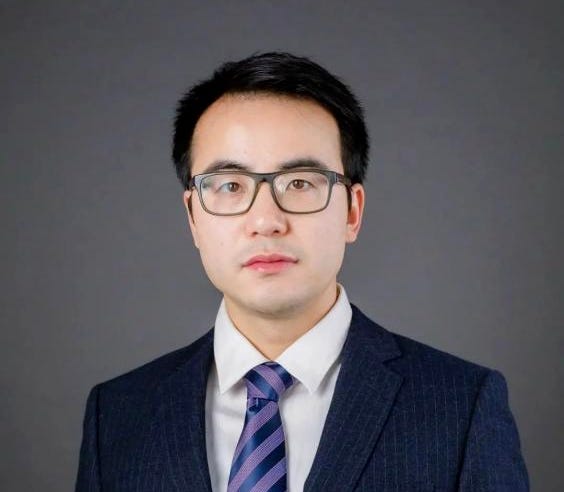
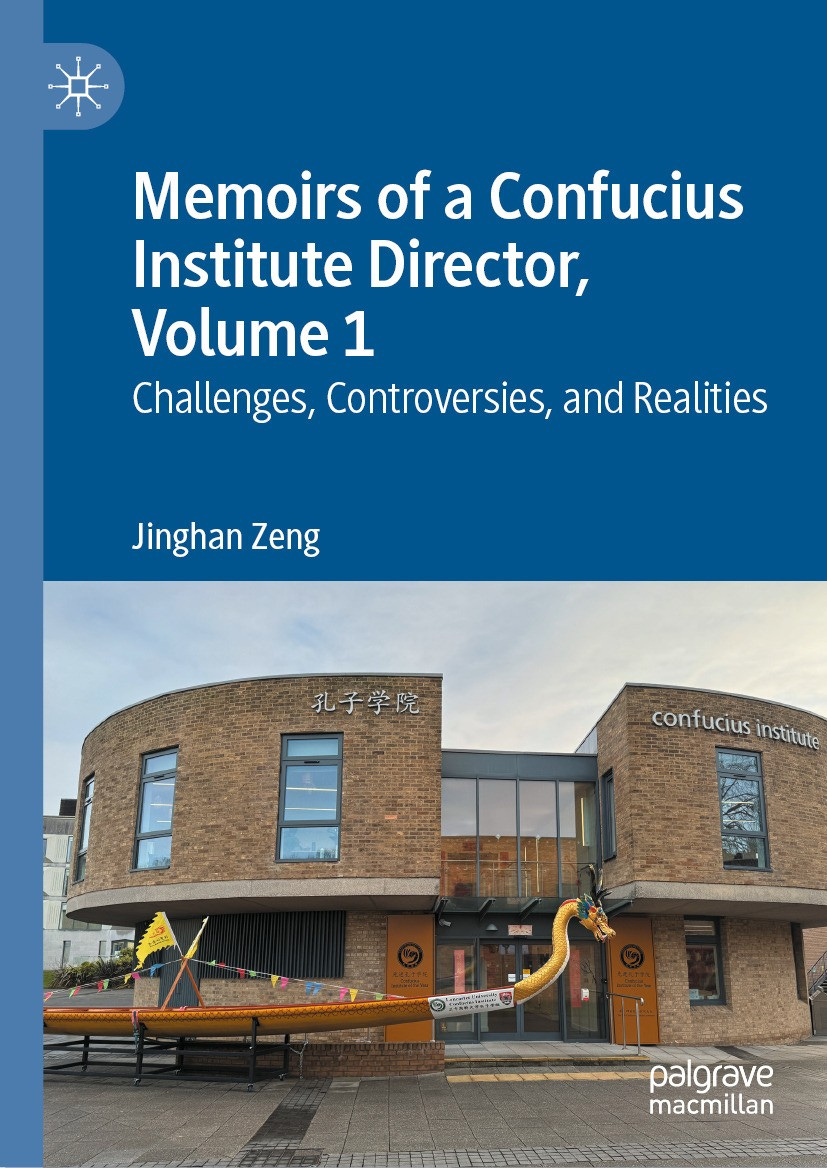
Now a professor in the Department of Public and International Affairs at City University of Hong Kong, he has published Memoirs of a Confucius Institute Director, Volume 1: Challenges, Controversies, and Realities, an unprecedented personal account written in the wake of that period of scrutiny.
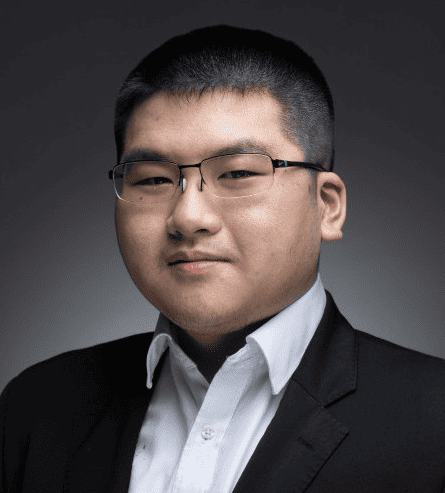
The following is a transcript of Zeng’s conversation with Brian Wong, HKU-100 Assistant Professor in Philosophy and Fellow at the Centre on Contemporary China and the World, the University of Hong Kong, and Oxford Global Society fellow.
The Oxford Global Society is an independent, non-political think tank based in Oxford, UK. Its founding members include academics from Oxford University and other universities, and members of research centres, and policy-institutes in the UK and elsewhere.
The podcast was uploaded to the Oxford Global Society’s official YouTube channel on 28 December 2025.
The East is Read published another of Zeng’s dialogues on the same book on 3 October 2025. Zeng also recorded another podcast with Jiang Jiang, author of Ginger River Review.
China’s propaganda machine? The controversies and reality around the Confucius Institute
Brian Wong
Welcome to another episode of the Oxford Global Society podcast. You’re listening to Brian Wong, who’s an assistant professor in philosophy at the University of Hong Kong and also fellow at OXGS. And I’m delighted to be joined by Professor Michael Zeng Jinghan, a professor at the City University of Hong Kong and also a fellow at the Oxford Global Society.
A highly accomplished scholar in China studies, Michael previously served as the director of the Confucius Institute at Lancaster University where he was also a full-time academic. He has penned a fascinating book titled Memoirs of a Confucius Institute Director, Volume 1 on which we will be speaking today.
Thanks for joining us, Michael. Thanks for being here.
Michael Jinghan Zeng
Thank you for having me.
Brian Wong
So, I greatly enjoyed this read, in part because it fused together the personal and the academic in a way that’s really quite professional and seamless. But if you wouldn’t mind, I’d like to probe you on a more personal front for starters. And that is: to what extent did you view this book as a cathartic exercise of healing? And did writing it prove helpful for you in addressing a lot of the misconceptions and undue allegations that were thrown your way by your critics and cynics during your time in the UK?
Michael Jinghan Zeng
Well, I think when I wrote this book, I didn’t have a specific agenda. I think there were a lot of people probably saying that I wrote this book to defend the Confucius Institute, or that I wrote this book for something else. I think, mostly for me, if I can achieve anything, it’s to really show an honest account of what has been happening the past six years’ time when I served as Director of the Confucius Institute, and how we achieved some success, and how we managed to overcome some crises. I think that’s all I need to do.
To me, this is very much a reflection of what has been happening in my personal life over the past six years’ time, and how this links with a wider picture of what we often talk about: China and global cultural diplomacy, and the Confucius Institute, which lies at the centre of this media, academic, and political debate. So, for me, the purpose is very straightforward. It’s a reflection and an honest account, showing people what I have observed.
Brian Wong
I want to talk a bit about definitions, you know, and defining Confucius Institutes, of course, for a lot of the audience here. What exactly is a Confucius Institute? Do you think it’s possible to define it in a way that doesn’t necessarily give rise to positive or negative connotations? And perhaps that could be the foundation upon which we then sort of establish this conversation and get our conversation going. So, what is a Confucius Institute in a sort of value-neutral definition, if you will, so to speak, Michael?
Michael Jinghan Zeng
Well, OK. First of all, I think the negative or positive meaning, or the kind of feeling we associate with the Confucius Institute, depends on the political context where you’re situated, right? In many parts of the world, especially in Western society, many media and political narratives have associated Confucius Institutes with a very negative narrative. But in a larger part of the world—in Asia, Africa, and many other places—it is an entirely different picture. So, number one: this is socially constructed.
And number two: there is no clear definition of Confucius Institutes because they have very different ways of organisation and different structures. So I would very much define a Confucius Institute as a cultural and language initiative to promote cultural exchange between China and the host country, and also cultural understanding between China and the host country.
Another thing to mention, in terms of misunderstandings, is the Confucius Institute concept. If you really go back to it, the first one was in 2005, in Uzbekistan, and later in Korea and in the Western part of the world. Basically, we’re talking about a concept and an idea that has been evolving for 20 years. A lot of current discussion hasn’t really noticed these evolving dynamics—how the Confucius Institute was, and is, and will be.
One clear example is in 2020, as mentioned in the book, the Confucius Institute went through a fundamental transformation. Before that, it was managed and supported by Confucius Institute Headquarters. So basically, you had a central agency in Beijing coordinating all Confucius Institutes and supporting them. But after 2020, it moved towards a decentralised working model which is managed by the Chinese International Education Foundation, which is an NGO and does not really provide hands-on management. So, the point I’m making here is: the idea of Confucius Institutes has been there for 20 years, and it’s constantly evolving, and we should really have updated knowledge about it. Otherwise, we may easily misread what a Confucius Institute really is, and that is the case in many media and political narratives in the West.
Brian Wong
Absolutely. And we’ll return to the Confucius Institute discussion shortly, but I want to turn to your own professional career, because throughout your introduction, you highlight the complex multitudes comprising your own identity. You’re a Chinese national, you’re a UK-based director, you’re a manager, and you’re a politics scholar—to name just four of the many hats you wear, so to speak. To what extent have you found these roles mutually reinforcing in a constructive manner? And in what ways have you found them pulling at you from different directions and pushing you to go in different directions? Can you tell us a bit more about your reflections upon your identity, or your identities, in relation to each and every one of these fronts, and then some?
Michael Jinghan Zeng
Well, I think this is actually a very good question. Sometimes, the more I write about this volume of the memoirs—and also the second volume—the more I start to reflect quite a bit. As you mentioned, those four identities in many ways are relevant and overlap a bit, but also sometimes can pull people in very different directions. Like the fact that I’m a Chinese national but serving as a foreign director is confusing to many people—in China and other places—because they don’t know why a foreign director can be a Chinese national. They think it must be a foreign national, so to speak. That’s even the case for people in the Confucius Institute community.
And I think, in many ways, the fact that I am Chinese, I understand China very well, and I studied in the UK and also in the U.S.; I worked there; I have the essential language skills and cultural skills to do the job, which makes things a lot easier. Having said that, the fact that I am a Chinese national, and Chinese is my native language, means sometimes I don’t really understand the struggle of learning Chinese as a second language, as many of our learners in the Confucius Institute do. So sometimes those kinds of identities gave me some advantages, but sometimes also took away something.
And in terms of where this has been pulling me in different directions, I think some examples are given specifically in the book. One of the most prominent examples is the way that I have been viewing things. As an international relations scholar, we talk about China’s rise, the age of AI, U.S.-China confrontation, and the new world order, things like that, every single day, and the Confucius Institute sits in the very picture of it.
So it provides a bigger picture and a good understanding of where we should be perceiving this kind of higher education exchange. Having said that, 99% of the day-to-day job is about very institute-level personnel matters, which are not necessarily relevant to the bigger geopolitics. So as someone directing an institute with 30 people, basically, our job is to keep things going and focus on what we do. If we’re looking to the sky every single day, worrying there might be rain or there might be a crowd coming, then you cannot achieve anything. So you do have that kind of split identity.
And also, the way that I have been saying things is very different. As a politics scholar, I might interpret something as quite positive and understandable, or I would be recommending that. But as an insider, as a manager, or someone directing it, I would argue against it. So you do see this kind of struggle and split identity, which has been demonstrated in different parts of this book.
Brian Wong
Now, these are roles that you’ve identified yourself in curating and also narrating your own history through this book. But for the person listening back at home, who wants to get to know you and your history, could you tell the audience briefly: how would you describe your own upbringing, and the story and the journey you’ve had thus far that’s gotten you to this very point? Is that sort of personal background perhaps incredibly helpful in helping situate your own journey and reflections upon your tenure as a CI director as well? So, what would you like to share with us, perhaps briefly, about your roots and your origins, and how you became the successful academic that you are today?
Michael Jinghan Zeng
Well, I think my personal story very much reflects the bigger picture. In my generation, a lot of Chinese students aspired to study in the U.S. and in the UK as well, and I was one of those Chinese students who aspired to go to study in the U.S.—which I did. Also, at that time, I think I was very keen on cultural diversity and cross-cultural understanding—different environments, trying to learn. So I travelled to the U.S. for my master’s degree, and after that, at that time, I studied public administration, and I very much viewed that as—when I was in my early 20s, I thought promoting world peace was a very cool thing to me at that time, and then I chose the United Nations in New York as my first workplace.
I wasn’t really planning an academic career at that time, so I went to the United Nations and worked there for a while, and realised that the UN is a very different kind of organisation from what I originally thought, and its role in the international order is also very different from what I understood. So I decided to go to England and further my studies, and try to understand the politics of China and the world a bit more. That’s what brought me to the UK.
After I studied at the University of Warwick for my PhD, I stayed in a few places—as many academics who study Chinese politics and China in general do—before taking this job.
So, I think in many ways my personal journey reflects, and overlaps with, a lot of what Confucius Institute is aimed to acheive—bringing people from different backgrounds together, understanding different cultural contexts, language contexts, and also different higher education contexts. But what is probably slightly unique is that you don’t really have a lot of Confucius Institute directors who are also Chinese politics scholars, because those two sometimes tend to align in interesting ways, or push against each other in interesting ways. And I think that’s what is unique about this book and the kind of perspective I offered here.
Brian Wong
You know, obviously your own career trajectory and pathway up till this point has meant that you’ve largely, by and large, worked almost at the intersection—and the fault lines—conjoining different tectonic plates of power, if you will. At the UN, it’s a melting pot, it’s a smorgasbord. And inevitably, as you’ve highlighted subsequently in reflecting upon your more recent years, you’ve experienced the challenge of being viewed with suspicion—not just by both sides, but by all sides. So maybe the Chinese think you’re too Westernised, and the Brits think you’re too fervent and too affectionate towards China. Then the Americans think, well, you’re too Asian anyway, so you’re not sufficiently qualified to be an impartial observer. All of these allegations, and all of these perceptual judgements, right? I’m sure this is something that you’ve experienced, and actually a small but important minority of us—folks like us—we can most certainly empathise with you here.
Now, you framed your responses to these sorts of conditions through the lens of having an intercultural background, which has prepared you to handle the mental shifts with “adaptability and resilience.” What does this mean though? What do adaptability and resilience mean in the face of, concretely, folks who obviously see you through very reductionist lenses—whether it be your skin colour, or your political beliefs, or your academic scholarship—in a way that’s not reflective of you as a multi-dimensional being?
Michael Jinghan Zeng
Well, I think there are several angles to this. Number one, as you mentioned, you have seen suspicion in both directions, right? In the book I also talk a little bit about it: it’s incredibly challenging in a deglobalised world. If you go back to the golden era—we talk about the UK-China golden era at the time—the background of being Chinese-based in the UK and having connections with China was viewed as an asset. That’s something people valued and cherished.
But when bilateral relations became worse and geopolitical tensions rose, that became a liability. Your connections began to be viewed with suspicion, and you became problematic, and people viewed you in different ways, even if you were still the same person. So, in a polarised world, it’s more and more difficult. Academic debate in a polarised world about China is more and more difficult to stay in the middle and be neutral, because you will be attacked by both sides. I’m sure a lot of people share the same feeling with a similar background. That’s number one.
Number two, outside the academic community, for all those cross-national organisations, in the context of geopolitical tension between China and the West, that’s what we’re going to see with Chinese companies—Huawei and all the EV companies, etc.—cultural organisations, educational organisations, and all sorts of entities. When you are based in two countries that develop geopolitical tensions, you’re supposed to stay neutral and balanced, but that balance is harder and harder to maintain, and you will be attacked by both sides.
So I think that’s not a unique phenomenon to academics, but also something we are going to see for all sorts of cross-national companies and organisations in the current world, where we have seen a lot of geopolitical tensions, decoupling, and a polarised world order.
Brian Wong
Right. And obviously, you speak aptly to many of the challenges and predicaments that folks who engage in cross-cultural ambassadorship and also communication, would inevitably experience. It’s just that perhaps the challenges are often easy to intellectualise about. So we can talk about this from a distance. We frame it through conceptual tools and frameworks, and bridging, and inter-positionality—doing all sorts of interesting intellectual acrobatics about it—and yet when we come to experience it, there’s almost this kind of “I can talk about it, but can’t apply it in practice” inertia or helplessness, perhaps, which I don’t think you necessarily experience as described by the book—but I certainly think is a germane phenomenon, and also a salient phenomenon, that many experience at large.
On that note, let us now perhaps delve into the story that you tell in your book itself, and some of the specific moments. I think the audience would benefit from hearing more from you, Michael. The first moment concerns the pandemic per se. Now, the riveting but also very harrowing chapter that you wrote on the pandemic featured quite prominently the teachers and the faculty who staffed the institute. Many of these individuals chose to move to the UK from abroad and to dedicate themselves to teaching Chinese culture and language to students in the UK, despite some very adversarial circumstances, especially considering not just the pandemic, but the politicisation of it. Why did these individuals choose to do so? What motivated them, in your view? And can you tell us a bit more about that?
Michael Jinghan Zeng
I think what motivated them is very similar to what motivated me, or perhaps you as well. Why do we decide to go to another country in a different part of the world to study—get away from your family, from your parents, from your comfort zone, right? Why do we go there?
I think a lot of them are committed to Chinese international education. Not only because they are willing to take the job or to teach, or because they very much like the idea of cultural understanding and cultural exchange. A lot of them specifically chose the UK because of British soft power, because they have been learning English from the very beginning, and have been reading a lot of British literature, and watching a lot of British films, and know a lot about British society.
Some of our teachers actually used to be scholars who studied Shakespeare, for example. For them, having the opportunity to go to the UK, not as a visitor, not as a tourist, but to stay there for a couple of years and actually work in a British university, understand its culture, and be able to communicate and work as a team—that’s a very great idea for people who like intercultural understanding, and who are very much into British society, and like British values, British culture, and the British language.
Brian Wong
And of course, on top of that, there’s also the interesting element of doing all of this during the pandemic. As we both know, returning to China, as you said, was deeply difficult in the first 9 to 12 months of the pandemic, with very strict exit and entry controls, and huge amounts of uncertainty. And of course morale was low, as you described, especially in the early 2022 to perhaps late 2023 period. Those two years were incredibly challenging.
What were some of the key means and ways by which you tried to raise morale amongst your staff? And was it easy—or were there moments when you thought, “Gosh, I can’t take this any more. I’m done. I’m getting out of here.”
Michael Jinghan Zeng
Well, I think it’s not easy, first of all. The most challenging time was the first few months—literally the first two months—especially March. At that time, generally speaking, on campus, the Chinese community—Chinese students, Chinese faculty—had read a lot about how the pandemic had been developing in China. We were reading a lot of Chinese-language news, getting a lot of inquiries from families, and influenced by the anxiety coming from our family ties in China. They were saying this is something very serious, be very careful, buy masks where you can, stay away from people. So you got that feeling: this is something very serious.
Meanwhile, in the UK, generally speaking, they didn’t take it very seriously, and people still viewed Chinese people wearing masks as something very weird, and the narrative system wasn’t really willing. The political narrative—even Boris Johnson—wasn’t really taking it seriously. I mean, he was one of the first leaders in the world to get infected.
So you had this very big gap: a very sensitive, very anxious Chinese community, while the general public in the UK wasn’t really receptive. A lot of them came to me for solutions and things like that—that was the context. And in March, when the pandemic eventually spread in the UK, leading to national and campus closure, that month was probably the most challenging month.
Essentially, we had several problems. Number one: our staff were very anxious and could not really focus on work. They were isolated at home and facing mental challenges. How am I going to deal with that? We didn’t know, because normally, every day people come to the workplace, you can check whether they’re fine or not fine. If they don’t come to the office, you don’t know how they are. You don’t know what they’ve been facing. Even if they got sick at home, who is going to help them? You don’t have that information.
Another thing is: if they became quarantined or needed help, who is going to do that—help them, right? Those are very practical challenges. Also, a lot of them wanted to leave. When they finished the term, they wanted to leave, but they were unable to secure flight tickets. And in the book I talk about one specific example: a very lucky teacher who secured tickets and was already on the plane in Manchester was asked to leave the plane because she simply coughed. Imagine—she had already checked out of her flat, took all her luggage, ready to go back home, and then was asked off the plane, with no Plan B. Where is she going to stay? And at home, her parents were worried sick about her.
So these were the challenging moments we faced, and we didn’t know what we were going to do about it. In the book, we talk about some of the measures we tried to mitigate that. For example, we had weekly meetings—not always formal, but in a social way—to make sure they had someone to talk to, so they didn’t have to isolate in one room, facing a computer every single day, worrying what they were going to do, and not wanting to go out because of the possibility of contracting the virus.
There were other managerial issues as well. Some of our team were based in local schools—they continued working even during national lockdown, but others did not. How was I going to make sure it was fair to everyone, and not affect those who were working? So there were lots of small challenges here and there. I wouldn’t say it was easy. Even for me, I was very worried about the situation, and you couldn’t clearly see when you could get out of it.
Brian Wong
So I want to take a step back, Michael. Of course those were very harrowing initial days in a pandemic that you had to contend with—the whiplash and the implications of it—but on the other hand, when it came to the politics unfolding, say, in Westminster and also in London, that was another storm brewing unto its own. And just before we delve into the politics of all of that: the most common allegations we hear, especially in British or American media, about Confucius Institutes is that they are bases for espionage; that they are sources of attempts to infiltrate and interfere with the operations of universities; and that some would even say they are part of the “United Front” strategy adopted by the Chinese. These are accusations that you had to deal with yourself.
Now, you position the book as an attempt to refute these allegations. What is your sort of five-minute elevator pitch on each of these allegations? Perhaps we can then take it from there, so to speak. What’s wrong or untrue about these allegations, and what’s true about them too?
Michael Jinghan Zeng
Right. Well, I think it’s very difficult, and probably challenging, to give a five-minute pitch on it. There are so many allegations, and for anyone who is seeing it, it might take a long time. But there are several things I want to make clear in this book, and also, I want to leave the audience with some motivation to read the book.
I think there are several types of allegations. It’s important to take them one by one and give a rigorous answer, rather than saying they’re all wrong—that’s not what my book is trying to say.
For some allegations, like spying, and also surveilling Chinese students, I think a lot of them are based on misinformation and disinformation, and some reasons are mentioned in the book. Others, like propaganda and Chinese influence, often misrepresent what we understand as legitimate cultural activity. We have the British Council operating in China, also in Hong Kong. A lot of British universities open campuses in China as well, working with Chinese universities. When we talk about influence, what do we mean by influence? Influence is a by-product of interaction, right? That’s natural and legitimate. The British Council is also promoting British influence in China. When British universities operate campuses in China, teach British curricula, reflect British values, and teach English, are they not promoting British soft power?
When we have American Hollywood movies widely watched in China—Avatar 3, I mean, I very much look forward to watching it, by the way—in many ways it promotes American soft power and American values, right? Is that necessarily a bad thing? Do we need a national policy to ban Hollywood movies in China?
So I’m not saying those allegations are wrong; I’m saying they misrepresent legitimate cultural and global interaction. That’s the second type.
Third, there are some legitimate concerns—for example, to what extent Confucius Institutes might affect academic freedom or institutional autonomy. But I have to say: Confucius Institutes are just like other external funding in many universities. You have funding from the British government, from the British defence industry—those can raise the same issue: that they might affect academic freedom or undermine institutional autonomy. So the argument I make, in the book and based on my experience, is: those issues are legitimate concerns, but number one, don’t single out Confucius Institutes—they’re just one of many forms of external funding; number two, this is entirely manageable. In my experience, and in the book, I talk about how we were able to manage the Confucius Institute in a way that aligned with the values and integrity of the university, and addressed those legitimate concerns.
So what I’m saying is: for those concerns, we do not need a national policy to intervene in universities, because that is counterproductive to academic freedom and institutional autonomy. Institutions themselves can manage it well. We have to separate those allegations, because there are too many.
Brian Wong
Thank you for that. What undergirds many of the allegations raised against CIs in general, and what indirectly responds to your responses just then, is this idea that China is different from the U.S., different from the UK—Hollywood is not the same thing as Ne Zha 2, and DeepSeek is not the same as OpenAI, which is obviously so much more transparent than DeepSeek—I’m being sarcastic here. Anyway, there’s this sort of reverse exceptionalism narrative, right? That: “OK, I can grant whatever you’re saying, Michael. All these other countries do it too, but China shouldn’t do it because China is politically different. It is structurally distinctive from the UK It is not—unlike the U.S. and the UK, according to many of these voices, an open and robust democracy. And therefore everything you said might be true, but still, this does not justify, in the views of cynics, the existence of CIs.”
To what extent did you find yourself having to deal with such challenges, especially from parliamentarians or politicians who submitted Freedom of Information requests just to dig out or uncover the “links” between CIs and whatever it is that Beijing is pursuing as a global political agenda? Is this something you had to contend with—the reverse Chinese exceptionalism narrative, which ironically feeds off and plays into the more positive propagandistic Chinese exceptionalism narrative that pro-China propagandists put out themselves, where they say China is special, China is unique.
On the other hand, in the U.K., you hear claims that no, China is special, and therefore we have to oppose CIs as opposed to letting them exist, which strikes me as, by all means, a reasonable option, so to speak. What do you make of this?
Michael Jinghan Zeng
Well, I think you summarised it very well. A lot of that is very much double standards, and some points are also shared in the higher education sector in the UK as well. I’ve been hearing senior leaders talking about the same thing, right? When you have the British Council actively promoting across the world, operating in China, and when you read their reports they are very proud that they play a key role in promoting British soft power, and that the UK is very proud it is among the top soft power countries in the world. I do agree there’s something for them to be proud of. The UK is no longer the British Empire with unchallenged hard power; soft power is really something people cherish and like. It’s also why I decided to come to the UK to study—because of soft power. So I think they are right to do that.
But then, exactly as you summarised, when it comes to the Confucius Institute, or something wrong about it. In the book I do some comparison. What I find really interesting is: British influence in China is very high. I grew up in Chongqing and started to learn English—it’s mandatory for all Chinese students in my generation in junior school, and you have to learn it for so long, and to enter university you have to pass your English test. We read Shakespeare, watch British movies and films. So British influence, British soft power in China is very high.
If you look at the UK, how many British students really know Chinese? How many know Cao Xueqin or Li Bai, in comparison with Shakespeare? You’ll see that awareness of Chinese culture is quite low in the UK. And the Confucius Institute is starting from a very low bar. It’s quite ironic from my point of view that you have very high British influence, very low Chinese influence in the UK, and yet people look at Chinese influence and say there’s something wrong about it and we need to stop it. That’s number one.
Number two: a lot of that political narrative is basically about sentiment. They do not like China, for sure, and a lot of them are China-haters, and they just want Confucius Institutes crushed, but they don’t really want to say: what’s a back-up plan? A lot of British universities have Confucius Institutes for a reason—they need to provide Mandarin programmes to the UK society. What’s the back-up plan? There’s no back-up plan, basically.
So that is something I have been dealing on a frequent basis. The Freedom of Information requests, as you mentioned, come in regularly—sometimes a couple of times every month. A lot of them are very boring, honestly—they keep asking the same questions: where does your funding come from, how much is the funding, so you provide the same answer to multiple FOI requests. Some go further. Some have encouraged undergraduate students, when they do their undergraduate thesis, to get first-hand data. They file an FOI request on the Confucius Institute to get feedback as first-hand data to complete their thesis. Well, I would say: good for your thesis, but this is a waste of time and administrative resources in the higher education system in the UK. But that’s where we are.
Brian Wong
Let’s take a step back, you know, because I take your point, right, Michael, in highlighting the fact that very often there’s this deeply seated, deeply rooted fear, consternation, concern—what have you—in reaction to China. And when you speak of China in the UK today, the reception and reaction you get is very different from the attitudes you’d get 10 years ago, during what you said to be the golden period—where you had, of course, Cameron, Osborne, and to some extent I guess Theresa May and Philip Hammond as well, right? That was the sunset, the dusk of the golden period and era.
Fast forward 10 years: under the Labour administration that we now see, there’s still a strong emphasis upon China as a strategic rival. And of course, amongst three prior prime ministers through to the current one—Boris Johnson, Liz Truss, and also Rishi Sunak—China, to put it mildly, was not portrayed in the most positive light, so to speak, by the powers that be in both Westminster and also Whitehall. What exactly has been going on in Sino-British relations? And without taking a blame-assigning stance in this matter, what are the primary causes that could explain the decline in trust, the deterioration in perceptions, and frankly the pretty rapid intensification of hostility towards China in British politics and beyond?
Michael Jinghan Zeng
Well, I think there are many factors affecting this, and you can see similar patterns across almost all Western countries. They share the same kind of pattern and point to the same phenomenon: U.S.-China relations. You see geopolitical tension between the U.S. and China ever since 2016, when Trump became president. That was really a period that changed and shifted U.S.-China relations, and that spread across the world. As the U.S.’s special ally, the UK’s debates about Confucius Institutes and about China reflect American influence in many ways. So that’s one of the most important factors.
Another thing is: I sometimes feel it’s a bit unfortunate that in 2016 you had this “UK-China golden era” idea. I agree the British society or policy community didn’t have that consensus—it was very much a slogan held by the Cameron government. But it did show commitment: they were pointing in the same direction. Then we got Brexit, and that immediately crashed the leadership that had been committed and had bet so much on China. If Brexit had happened two or three years later, that probably would have given more time to consolidate UK-China relations—or it might not have happened at all—and things might have been quite different, despite American influence.
And then, of course, the elephant in the room is a series of tensions between China and the West on a wide range of issues: Xinjiang, Hong Kong, and the South China Sea. Those issues came out one by one, and also the pandemic. Combining all those things together, that’s where we are seeing the shift from a golden era to what Rishi Sunak called “anything but” a golden era, and now, in a way, we don’t really know how to summarise it.
Brian Wong
Yeah, I think you’ve highlighted underlying occurrences that are replicable across wide swathes of the West, so to speak. But just to apply some pressure on that thesis: some people in the audience might say there are distinctive elements that are only applicable to the Sino-British relationship. You talked about Hong Kong, of course, which has become pretty an enduring point of contention given the historical ties between Hong Kong and the UK. But another angle in perspective that’s been raised a lot relates to select Chinese technological companies and actions in the UK, and more recently, the opprobrium over the mulled-over embassy. You often hear allegations in Britain that the Chinese pose unique threats to privacy and data through espionage or surveillance and so forth. Setting aside the merits and demerits of that, because that’s really not the point of this conversation, how have you found dealing with these allegations that you were sort of in on this conspiracy” to eavesdrop on the UK? How did you deal with these criticisms—or you might even say mudslinging—towards you, presiding over really just a CI at a university in the Midlands, UK?
Michael Jinghan Zeng
Well, I think this probably goes back to one of your first questions about my identities, right? As a scholar who works on Chinese politics and international relations, you really have to engage with those allegations on a daily basis and study: what is the new narrative from the U.S. about Confucius Institutes? One day they designate Confucius Institute centres in the U.S. as foreign agents and then ban them; another day they come up with spying allegations, things like that. As a politics scholar, I really have to follow it and engage with it intellectually and think what it means.
But as a director of a Confucius Institute, I do think—and a lot of my colleagues would agree—that paying too much attention to those narratives would distract you, right? After all, our day-to-day job is in the north-western part of England, and not everybody follows politics so closely. They don’t really care that much about political narratives.
One thing that was remarkably interesting—one example mentioned in the book—is that despite a massive campaign in 2022 launched by the Conservative Party pledging to close all Confucius Institutes in the UK, and you see hostility in Westminster, the following year the Spring Festival was the largest Chinese New Year celebration we ever organised in Lancaster, and across the UK. So you still see warmth and passion and interest in Chinese culture, and there is a disconnect with politics.
Local people, especially in the north-western part of England, still like Chinese culture. When we promote Chinese New Year with Lancaster City Council, you have a lot of support, and children like it. Think about the panda, the dragon, the calligraphy. In many cases, we have politicised Confucius Institutes too much that we almost forgot what this really is about. This is really about education. This is about language. This is about culture. It can be a-political at the ground level.
If you pay too much attention to narratives in Washington or London, that can fundamentally distort and disrupt the real work. So in many ways, I’ve been fighting these two identities: one, as a director, I should focus on the work, heads-on not get too distracted; and at the same time, as a scholar, I remain intellectually engaged and follow what’s happening in capitals and how things are going.
Brian Wong
We’ve talked a lot about the British side of things and the state of British politics and Sino-British relations through those lenses. But I want to now turn over to the Chinese bureaucracy, because when I was reading the section about renewal of the agreements and the possibility that all CIs would be closed in 2022, you exhaustively detailed the challenges of going back and forth between Lancaster University leadership and South China University of Technology leadership, but also the dismay expressed in private by Chinese diplomats over what they perceived to be the failure of higher education leaders in the UK to push back against politicisation and avert attempts to castigate education dialogues and engagements.
Looking back at it, what would be the biggest takeaways you drew about the Chinese bureaucracy from your interactions with these bureaucrats across different departments, bureaus, and divisions? What was going on there, and what can you summarise from your stint and dealings with these various officials in your official capacity directing the Confucius Institute?
Michael Jinghan Zeng
Well, I think there are a lot of insider stories, as you mentioned, in the book. I’m trying to be as honest as I can. Because as I mentioned, I don’t have a specific agenda—I just want an honest reflection of what’s going on.
But I do think China learned a hard lesson from the massive closures in the U.S. If you look at the original response from Confucius Institute Headquarters to the potential closure of the Confucius Institutes in the UK at the very beginning, they were quite angry, and in many ways, hawkish, and threw out a lot of hard words, saying that this was unacceptable. However, when you see the massive closures, I think they started to learn that this wasn’t really working. They also started to accept the fact that this cannot be stopped, and then asked: what do we want to do about it?
So in many cases, stakeholders of Confucius Institutes brought that lesson from the U.S. and used it to deal with cases elsewhere, including the UK. So the key stakeholders of Confucius Institutes were not calmly discussing the situation or forseeing different scenarios going on. But you also had different sectors and governmental functions who did not really want to accept that this could happen in the first place.
So clearly, there were diverse views about how to deal with Confucius Institutes and how to respond. You see different voices from China. Number one. Number two: within the UK, it’s the same case, but more transparent. Within higher education, different universities have different views. Even within the same university, you have very different views, and different approaches to dealing with it. You see different responses from different Confucius Institutes and different universities, as you saw in the U.S.
I find this remarkably interesting. I can talk about it now in a calm manner, but a few years ago, when I was facing enormous challenges, the possibility of closure, expectations from my team, and enormous uncertainty—I wouldn’t have been so calm and relaxed in addressing this.
Brian Wong
Now turning over to some summative reflections—thank you very much for that detailed and candid account. You frame this book as a response to, and also an attempt to clarify, the truth by busting a lot of myths. What do you see as potentially valid myths, if any at all, and commonly held perceptions about Confucius Institutes that do in fact have more than just a grain of truth to them? And how exactly do you think Confucius Institutes, as an institution, should seek to evolve and adapt in light of these criticisms and allegations? What’s something that you think CIs can most definitely do in order to answer a fair share of criticisms from fair critics?
Michael Jinghan Zeng
Well, as a professor of Chinese politics, I think in many ways you see a lot of misperceptions about China. For Confucius Institutes, I find it remarkably interesting because they are right within the national borders of Western countries, and governed by local universities, and yet you still have a lot of misperceptions—which I find remarkably interesting.
In the book I talk about why most directors chose to ignore those allegations and didn’t want to address them. I also list reasons why I decided to come out and talk about it. I certainly believe there is a lot to discuss, and something needs to be addressed about this misperception.
You ask: what really matches reality? I think when we talk about Confucius Institutes potentially promoting Chinese influence, promoting Chinese soft power, and possibly undermining institutional autonomy. I think in many ways, those concerns are not entirely wrong. But the challenge lies in people thinking Confucius Institutes are uniquely different, as if this is not something that happens elsewhere or is not a practice of Western governments or Western society. That is wrong.
We discussed how British universities might be able promote British soft power in China and British influence in China. Those are clearly there. In the book, I talk about those legitimate concerns and how I was able to mitigate and address them. I argue that this can be done at university level and even institute level, and should not be escalated to national-level legislation, banning institutes in the name of national security, or using extraordinary legal actions. That would invite further state interference from the UK government, and it would undermine academic freedom.
Brian Wong
Right. So on that: a trade-off that inevitiably every university leadership these days has to grapple with—whether in the UK, the U.S., or indeed China, for that matter—is this seemingly inevitable trade-off between having a degree of certainty and security about one’s education partnerships, and the openness of said partnerships.
Some might view this as a necessary trade-off, as I’ve termed just then. Others would say, no, it’s really a false dichotomy: the concept of securitisation—the push and drive towards securitisation—is loaded with vested interests in and of itself. And then, still thirdly, there’s a view that openness really doesn’t matter in the face of defending academic freedoms and values, and shielding ourselves from foreign influences.
Where do you stand on this equation? Where do you stand on this question? Do you see this trade-off as a legitimate competition, or is it really less binary than people might think it is?
Michael Jinghan Zeng
Number one: when I served as a director of the Confucius Institute, I think what I did—and what many other Confucius Institute directors would agree—is that we need to be as open as possible, and as transparent as possible. So we did encourage each other: when we receive Freedom of Information requests—although they’re very boring, and sometimes ask a lot of questions which we find slightly dumb—we need to address them as much as we can, and show that we are transparent, that we are open, and that we do as much as we can, right? That’s something that, as a director and a manager, we should be doing, even if, intellectually, I’ve sometimes been thinking otherwise.
Number two: now, when I think back, and also write the book, I do think that what can be done by the Confucius Institute at the institute level can do very little to change perceptions, honestly. As a scholar, that’s what I’m honestly thinking now. Take the example of the Confucius Institute Headquarters transition to the Chinese International Education Foundation: the very idea of dissolving Confucius Institute Headquarters was to cut the Confucius Institutes’ ties with the Chinese government, so it would become more like the British Council—a decentralised partnership managed by a non-government organisation. From an organisational point of view, this has really achieved what it wanted to achieve. The outcome has been remarkably painful. This is something I want to write about, and am currently writing about.
But how much has this addressed perceptions? Very little. Ever since 2020, closures of Confucius Institutes have still been happening in the U.S. and many other places. In the UK, we are having the same conversation we were having before 2020, right? So although they did undertake a very painful and real organisational change to align the Confucius Institute more with international practice like the British Council, and cut the state ties, this hasn’t really changed perceptions of Confucius Institutes.
Why is that? I think a lot of it is less about what Confucius Institutes and more about China. People imagine China will do this; imagine China will do that; and then assume that Chinese people, Chinese organisations, and Chinese companies operating in the UK will behave accordingly. What they actually do matters a lot less. They can change very little of the general perception because of wider geopolitics.
So this is why, when I look back, I think we did the right thing in my role as a Confucius Institute director: we needed to be as open and transparent as possible. But looking back as a scholar, it’s just unfortunate how much effort you put in, and how little outcome it produces.
Brian Wong
Now, coming to the end of this very enjoyable conversation: you’ve now relocated to Hong Kong, which is a stone’s throw away from where you pursued your undergraduate studies in Macau. Why Hong Kong, and what plans do you have in the pipeline whilst you’re here in Hong Kong?
Michael Jinghan Zeng
Well, I think in many ways the idea of Hong Kong was very much linked to the Confucius Institute. You asked me what the Confucius Institute really is: I think it is a bridge—a bridge between China and the world. The tie is language exchange and cultural exchange. And what is Hong Kong? Hong Kong is also a bridge: a bridge between China and the rest of the world, and a bridge between the West and East. So I think there are a lot of similarities between the two.
Also, my own academic judgement is that we are now seeing deglobalisation already taking place—decoupling between China and the West—and this is going to last for quite some time. In a world where China is decoupling and disconnecting with the West more and more, and the gap is wider and wider, Hong Kong’s role has become more and more crucial as a bridge—because you are, basically, burning a lot of other bridges. Hong Kong, because of its unique history, its unique background, its unique context, and also “one country, two systems”, is going to play a very unique role in bridging China with the rest of the world in the current great-power politics era. And I think its role is going to become more permanent.
For anyone who is interested in cross-cultural understanding, and interested in promoting cross-cultural understanding, I can probably do more in Hong Kong than I can do in the UK. A lot of that has shaped my decision to move to Hong Kong. Also, I should mention that we have a very passionate leader, and people have very brilliant ideas and great vision, which I think attracted me to come to Hong Kong.
Brian Wong
And to be clear, the leader you’re referring to is a leader of your university—is that right?
Michael Jinghan Zeng
Yes. In my university, for example, we recently created a new Institute for Global Governance and Innovation for Shared Future. And I think the Hong Kong government, and Hong Kong as a whole, are very keen to be a bridge between China and the world, and also between the West and East. A lot of that is very attractive. We’re saying Hong Kong is probably going to play a more important role as a platform for China to engage in international organisations, and to take advantage of and leverage its unique values. I think a lot of that speaks to my academic past, my career, and what I want to do and achieve.
Brian Wong
Well, on that very note, once again, thank you very much for joining us today. Michael, what a real pleasure. You’ve just heard from Michael Jinghan Zeng, who is a wonderful, wonderful author who has just published his latest collection, Memoirs of a Confucius Institute Director, Volume 1, on which we’ll hopefully be seeing more volumes going forward into the future. Thank you once again for your time, Michael, and you’re listening to the Oxford Global Society. Please be sure to stay tuned, and also follow us for more updates and more upcoming podcast episodes. Thank you.
Prof. Jinghan Zeng on Confucius Institute and China’s Soft Power
Palgrave Macmillan has recently published Memoirs of a Confucius Institute Director, Volume 1: Challenges, Controversies, and Realities, the first insider memoir from a Confucius Institute director during a time of growing global controversy, by Michael Jinghan ZENG

Thanks for highlighting this book. I did an MA thesis on the Confucius Institutes way back in the day. A lot of stuff he was saying is similar to what I saw then. Ill have to check out the entire book.
Interested in learning how well received the Confucius Institute is in the Global South countries.