

Zhong Shanshan 钟睒睒, the founder of Nongfu Spring 农夫山泉 and once China’s richest man, recently spent 42 minutes on Chinese state television talking about business, agriculture and jasmine flowers. A few minutes were enough to start a much bigger argument.
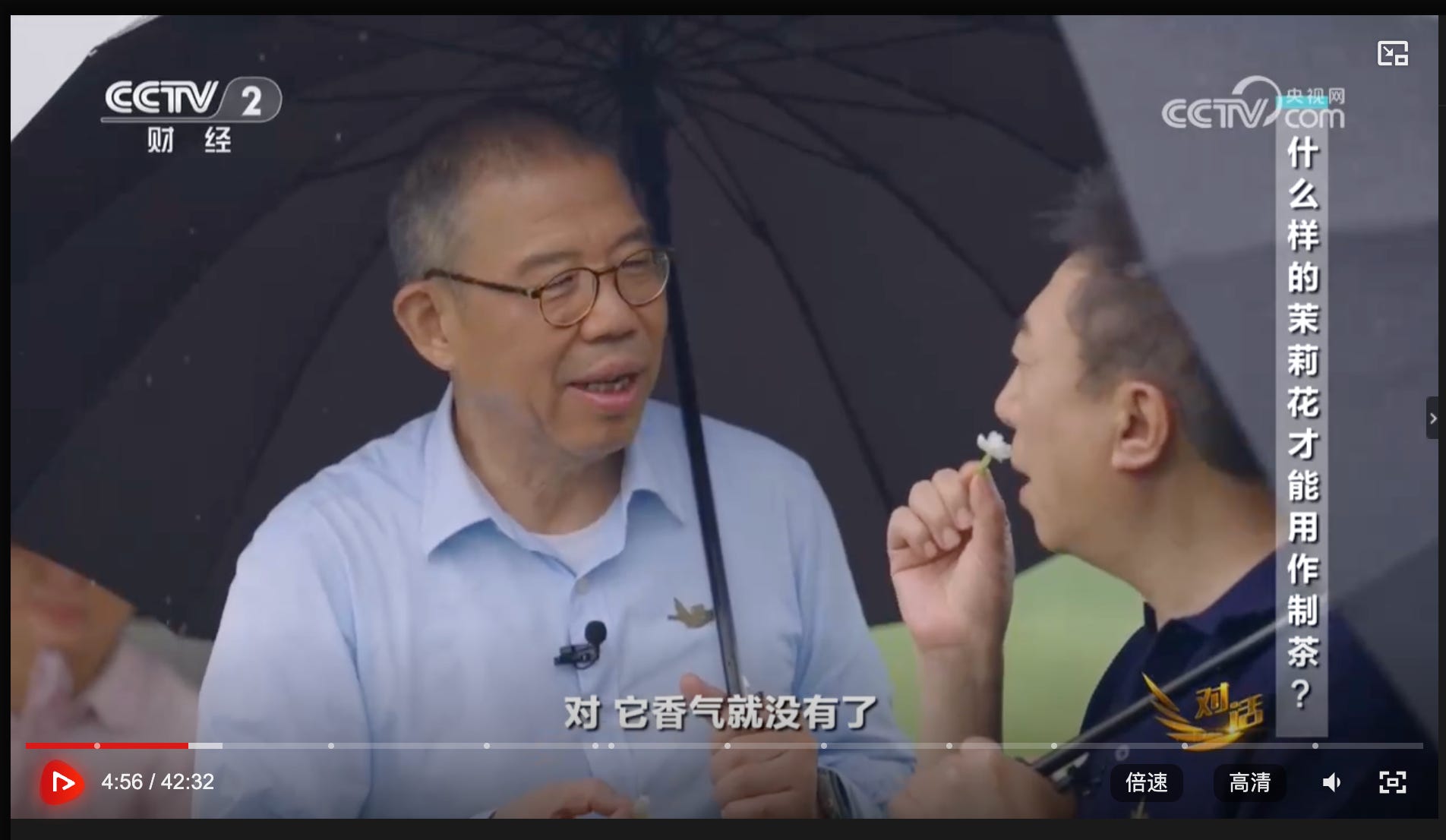
Appearing on China Central Television’s business channel, Mr Zhong turned his fire on e-commerce platforms. They had promised to eliminate middlemen, he argued, only to become an even more overbearing breed of middleman themselves. By manipulating traffic and prices, they squeeze retailers and suppliers, encourage ruinous price competition and damage the “real economy”. E-commerce, he suggested, has even impoverished urban life. People used to stroll past shops, see a shirt and buy it on impulse. That sort of spontaneous, emotional consumption is disappearing.
The remarks were mauled online, though not universally. Some distributors and small merchants, whose already meagre margins can become thinner still when prices collapse online, understandably applauded. Nor is everything Mr Zhong says foolish. China’s platforms can be opaque, capricious and bullying. An algorithm that determines whether a merchant is seen at all gives considerable power to its owner. Rules can change suddenly; subsidies can distort prices; traffic can be allocated in ways that sellers struggle to understand. Such power deserves scrutiny and, where necessary, regulation.
It is also worth being fair to Mr Zhong. His complaints about e-commerce made up only a small part of a long interview, much of which was considerably more sensible.
When discussing agriculture, for example, he showed little nostalgia for the smallholder economy. Raising farmers’ incomes, in his telling, requires scale, capital, technology, standardisation and industrial organisation. A company can connect scattered farmers with processing, branding and national markets; industry can make an agricultural product more valuable and return some of that value to the countryside. This is not the language of a man who fundamentally distrusts markets. On agriculture, Mr Zhong sounds like a fairly orthodox capitalist.
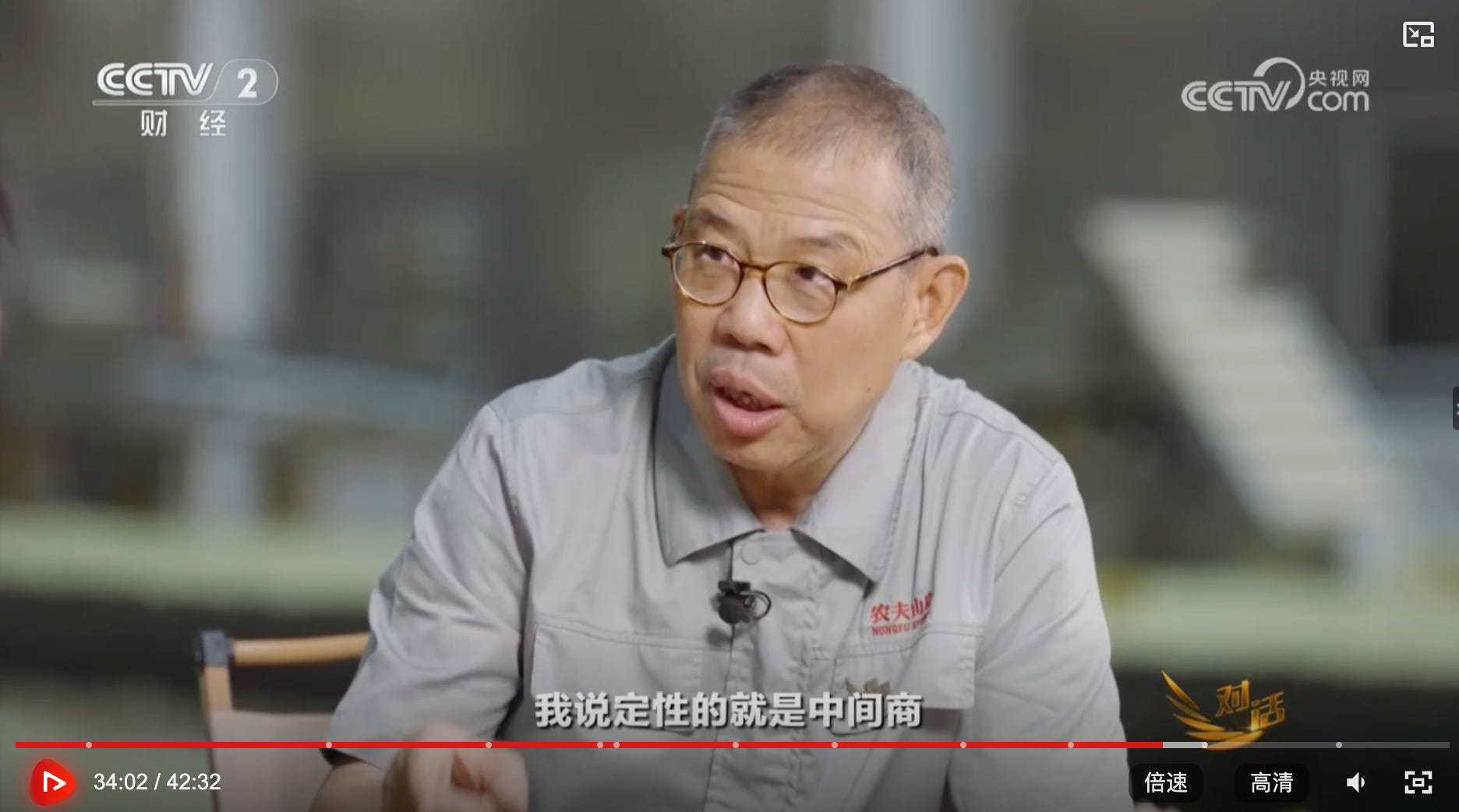
Which makes his excursion into the evils of middlemen all the more interesting.
“Middleman”, in Mr Zhong’s telling, is not merely a description of an economic function. It is an accusation. And that is a dangerous word for a bottled-water tycoon to throw around.
China has heard the accusation before. In the traditional hierarchy of the “four occupations” 士农工商, merchants came last, beneath scholars, farmers and artisans. Commerce was necessary but faintly disreputable. The farmer grew something. The craftsman made something. The merchant merely bought, moved and resold it—and somehow ended up richer than either.
This was never a complete description of Chinese commercial life; imperial China produced plenty of sophisticated merchants. But the moral hierarchy mattered. The productive man transformed nature. The merchant appeared merely to insert himself between producer and consumer, profiting from scarcity, information and circumstance. To “hoard and profiteer” remains an unusually vivid Chinese accusation.
Karl Marx provided this suspicion with a much more elaborate theoretical wardrobe. He did not argue that merchants perform no useful function. But in Marxist political economy, pure circulation does not itself create new value or surplus value. Commercial profit ultimately represents a portion of surplus value generated in production. Chinese students still encounter these distinctions in the Marxist political economy taught in schools and universities.
Modern China has, of course, travelled a very long way from the crude conclusion that only somebody standing beside a machine creates economic value. The Communist Party’s own economic doctrine recognises capital, technology, knowledge, management and data as factors of production whose contributions can be assessed by the market. The actual economy has travelled farther still.
Yet the older instinct remains remarkably durable. Somebody who grows something is productive. Somebody who manufactures something is productive. Somebody who sells it begins to look slightly suspicious. Someone who writes an algorithm to sell it looks more suspicious still.
Add a commission, a recommendation engine and a billionaire founder, and the Confucian moralist and the Marxist lecturer can find themselves unexpectedly sharing a table.
Mr Zhong is a particularly comic recruit to their cause.
Few Chinese fortunes demonstrate the value of commercial activity more vividly than his own. Nongfu Spring did not make him enormously rich by discovering H₂O. Its triumph was to build a brand, an extraordinary distribution system and the habit, repeated billions of times, of a thirsty customer opening a refrigerator and reaching for one bottle rather than another.
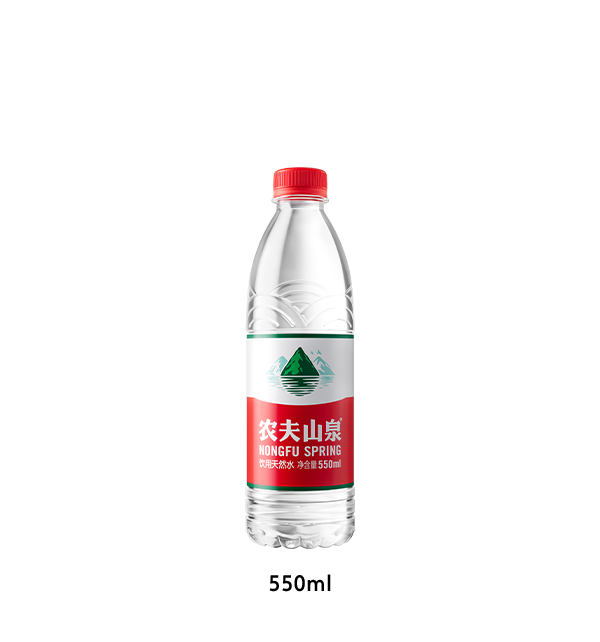
The company famously described itself as merely a “porter of nature” 大自然的搬运工.
Quite. And very profitable portering it turned out to be.
That is not a criticism. It is the point. The water inside a bottle may be cheap; getting consumers to recognise, trust, find and pay for that bottle is not. Branding creates value. Logistics create value. Shelf space, advertising, distribution and inventory management create value. So does the judgement of an entrepreneur deciding where to put all of them.
But once that is conceded, it becomes difficult to see why the principle should stop at the edge of a smartphone screen.
Taobao does not manufacture shirts. Douyin does not grow oranges. Pinduoduo does not assemble frying pans. They organise information, attention, payments and transactions. They allow a tiny producer to find a distant customer and a customer to compare products that once sat in different provinces. Sometimes the platforms charge too much for doing this. Sometimes they abuse their position. That does not mean they do nothing.
Mr Zhong’s irritation makes more sense as business strategy than as political economy.
Nongfu Spring’s formidable offline distribution network is a competitive advantage. Shelf space matters. Refrigerators matter. Retail relationships matter. So does keeping prices reasonably orderly across a vast country. If every shopkeeper and distributor earns enough from selling your bottle, they have good reason to stock it prominently and replenish it quickly.
E-commerce makes some of those advantages less secure. A new beverage can reach consumers without reproducing the same army of distributors. Excess inventory in one province can suddenly appear online at an inconvenient discount in another. Consumers can compare in seconds what once required visiting five shops. A brand that has spent years constructing a carefully tiered system of prices and channels may discover that the internet treats those tiers with insufficient respect.
The internet did not abolish middlemen. It changed which middlemen were powerful.
Mr Zhong’s lament about the death of “emotional consumption” is stranger still. Chinese shoppers do not appear to have become Vulcans since acquiring smartphones. Livestreaming, flash sales and midnight Meituan orders provide ample evidence that irrational purchasing remains in excellent health.
Nor is cheapness evidence of social decay. China remains a country in which many households are highly price-sensitive. A student choosing the cheaper meal is not engaged in destructive “involution”. A family comparing prices online is not betraying Chinese manufacturing. Sometimes consumers buy cheap things because they have less money than former richest men.
Indeed, one of e-commerce’s greatest contributions has been to make markets larger rather than merely cheaper. A small factory can reach consumers nationwide. A farmer can sell beyond his county. A niche product that could never support a physical shop can find enough scattered buyers online to survive. Residents of smaller cities can choose from goods once concentrated in Beijing, Shanghai or Shenzhen.
The irony is that this is not so different from the story Mr Zhong tells about agriculture.
When capital, technology, processing and distribution organise farmers more efficiently, he sees value creation. Quite rightly. But when software, logistics and digital marketplaces organise merchants and consumers more efficiently, he suddenly sees a domineering middleman.
Perhaps the most revealing response to Mr Zhong, then, is the ridicule he has received. It suggests that decades of market life have changed Chinese common sense more thoroughly than either ancient prejudice or ideological vocabulary might imply. Millions of people now take it for granted that organising a market can itself be economically useful. They learned this not from Adam Smith but from parcels arriving at their doors.
There is something reassuring about that.
China had unusually fertile soil for suspicion of commerce. Merchants once occupied the bottom rung of the conventional social hierarchy. Generations of students have been taught a political economy that draws a sharp distinction between production and circulation. Even today, denunciations of “capital”, “middlemen” and excessive profit can acquire a moral force that arguments about efficiency rarely match.
And yet this same country somehow produced Alibaba, JD.com, Meituan, Pinduoduo and ByteDance. E-commerce sank roots not merely in rich coastal cities but in county towns and villages. Millions of merchants built businesses on it. Millions more found work delivering its parcels, operating its warehouses, writing its software and appearing in its livestreams. Consumers acquired choices that would have seemed preposterous a generation ago.
The platforms have created plenty of abuses worth correcting. Correct them. Monopoly, opaque pricing, coercive rules and unfair treatment of merchants are proper subjects for regulators.
But that is rather different from resurrecting the old suspicion that commerce becomes less worthy as it moves farther away from the factory floor.
A country in which merchants were once ranked last, whose students still encounter Marx’s distinction between production and circulation, has somehow built the world’s most exuberant e-commerce economy. And when a man who became a billionaire through branding, distribution and the organisation of markets complains that somebody else is merely an overmighty middleman, a great many Chinese consumers can recognise the contradiction immediately.
Forty years of markets, it seems, have taught them something.
Mr Zhong seems to have learned it too—at least when the middleman is himself.
A Key Pentagon Claim Behind WuXi AppTec’s Chinese Military Listing Was Based on a Retail Mutual Fund

When a U.S. federal judge on Friday blocked the Pentagon from enforcing its designation of WuXi AppTec as a “Chinese military company,” he identified a remarkably basic error.

China now has more billionaires than the US. So why does he think there is still a problem?
He isn’t wrong. And you aren’t wrong to point out the colorable hypocrisy of his position. Synthesis: property law which allows owners to hoard money and pricing power needs to be reformed to eliminate both.