


Announced on 28 February 2026 via the WeChat blog of Liu Hu 刘虎, a veteran investigative journalist, the winners of the 7th Journalists Home News Prize offer a rare guide to some of the strongest Chinese journalism still being produced today. In stark contrast to the state-run China Journalism Award, organised annually by the state-run All-China Journalists Association, the grassroots, non-governmental journalism award created by journalists themselves outside the state honours system this year recognised reporting on rape, domestic violence, toxic pollution, rural pensions, medical waste, and unjust coercive practices in the handling of criminal cases.
Liu provided a citation for each winner, and The East is Read has excerpted and translated the winning pieces beneath each citation.
—Yuxuan Jia
第七届“记者的家”新闻奖获奖名单:真实推动社会进步
The Winners of the 7th Journalists Home News Prize: Truth Moves Society Forward
Dear colleagues and friends:
Our prize may be a modest one, but it continues to attract wide attention across journalism, academia, and broader society. And today, a new edition is out again.
This year’s list was originally due to be released earlier this month, but a set of unforeseen circumstances delayed the selection process until the end of the month.
Truth moves society forward. The Hong Kong fire was the most serious public disaster of 2025, and this year, the judges selected two winning works in different genres in recognition of reporting on that tragedy. The final list also includes works that lay bare the harsh realities of the marriage market in China’s counties, including reporting on the Datong engagement rape case; pieces that revisit the origins of the COVID-19 pandemic; reporting on the pension plight facing China’s rural elderly; investigations into environmental pollution; and works focused on the course of legal reform and individual cases. Together, these entries make up this year’s winners’ list. Among the biggest winners were the traditional media outlet Southern Weekly and the independent platform The Aquarian.
In view of the exceptional quality of the entries, the judging panel decided at the last minute to add four shortlisted prizes, bringing with them nearly RMB 50,000 in additional prize money.
Finally, let us thank the four judges for their hard work. For this year’s prizes, they made time to read more than 500,000 words of submissions and supporting materials, consulted a large body of additional reference material, and worked together to decide which entries and authors would ultimately stand out.
Below is the list of winners and the reasons for their selection:
Nonfiction Reporting Prize
Grand Prize
Luo Ting 罗婷, “The Rape in the Marital Home 婚房里的强奸案” (19 April 2025, Daily People)
Citation:
The engagement rape case in Yanggao County, Datong, Shanxi Province, was selected by the Supreme People’s Court as one of the “Top Ten Cases of 2025 Advancing the Rule of Law in the New Era”, underscoring its landmark significance. Reporting this story was exceptionally difficult. The case drew intense public attention and became highly controversial because it sat at the intersection of bride price practices and sexual violence, making meaningful reporting especially hard to carry out. Yet the author arrived on the ground at an early stage and became the only journalist to gain access to both families. Drawing on extensive court files, audio recordings, video materials, and interviews with both sides, she reconstructed the core facts of the case in a comprehensive and balanced way.
The report not only reconstructs what happened during the three crucial hours in which the crime took place, but also traces what happened afterwards in a case shaped both by law and by human relationships. It shows how the case reached this point, how the two families manoeuvred against one another, and, in the process, lays bare the harsh realities of the marriage market in China’s counties.
They were newly engaged: he was 27, she was 24. The day before, the two families had held an engagement banquet. On the day of the incident, they shared another meal, this time hosted by the woman’s family in keeping with a Datong custom known as “inviting the son-in-law”. After lunch, the couple went to the flat the man had prepared as their future marital home. At 10:52 that night, however, the woman called the police and said she had been raped by her fiancé.
What happened inside the flat became the central question of the case. In police interviews, both sides agreed on the broad outline at first: after arriving, exhausted from the engagement arrangements, they took a nap. At around 5 p.m., the man suggested they have sex. From there, their accounts split sharply.
The woman said she refused. The couple had agreed not to have sex before marriage. She said that when she resisted, she hid in the corner of the room, but he snatched away the quilt she was holding. She screamed, kicked the wardrobe, and tried to fend him off; he told her not to shout. She then hid behind the curtain, but he pulled it down. After forcing himself on her, she tried to leave, but he stopped her. In desperation, she set fire to a cabinet in the bedroom and a curtain in the sitting room. While he went to check the fire, she ran out. When the lift failed to arrive, she headed for the fire stairs, but had only gone down one floor before he caught up with her. “I shouted for help,” she said, “but no one responded.”
The man gave a very different version. He said she did not resist at all, and that the fire and her attempt to flee happened only afterwards, when she had become emotionally unstable.
...
Several months later, the Yanggao County People’s Court ruled at first instance that the man had acted against the woman’s will and was therefore guilty of rape, sentencing him to three years in prison. As public controversy grew, the court also issued a statement answering reporters’ questions. The judge said that although the couple were engaged, the woman had clearly expressed opposition to premarital sex, and that the man had nonetheless forced her to have sex that day. “Although there was negotiation between the two sides afterwards, this does not affect the finding that the man’s conduct constituted the crime of rape.”
...
Much of the public debate, meanwhile, revolved around the 188,000 yuan bride price. Online speculation quickly took on a life of its own. Some assumed the money was meant to help marry off her three brothers, though in fact all three were already married. Others argued that the deeper issue was the bride price itself: that when a man’s family stretches its finances to secure a marriage, he may come to see the woman as someone over whom he has rights of disposal. In that reading, the case laid bare not just one crime, but a wider structure in which women’s dignity and autonomy can be eroded even before marriage begins.
Finalists
Wang Wenqing 王雯清, “Mengcun Village, Hebei: The Death of a ‘Perfect Wife’ 河北孟村,一个“完美妻子”之死” (September 5 2025, Phoenix News) [The original article was later removed by the publisher, but has survived in reposts elsewhere.]
Citation:
On the evening of August 24, 2025, a fatal domestic violence case in Mengcun Village, Hebei, shocked the country. Amid heavy restrictions on information, the author rushed to the scene at the earliest opportunity and, going beyond the official account, reconstructed in depth the full course of the tragedy that befell a so-called “perfect victim”.
The strengths of the piece are threefold. First, it achieved an on-the-ground reporting breakthrough: the author reached both the residential compound where the incident took place and the victim’s hometown, and succeeded in interviewing key relatives, classmates, and neighbours, uncovering important first-hand details. Second, it brought real analytical depth: rather than stopping at a straightforward denunciation of violence, the report contrasts the victim’s social image—as a “perfect wife” and a seemingly glamorous county-town woman—with the reality of her life, exposing both the hidden nature of domestic violence in close-knit small-town society and the structural predicament faced by women. Third, it had a clear social impact: within a week of publication on WeChat, the story had been read more than 140,000 times and shared over 11,000 times. Although it was ultimately deleted because of the sensitivity of the subject, the legal debate it sparked provided important material for a more serious public reckoning with domestic violence and the protection of women’s rights.
The death of this young mother spread quickly across the Chinese internet. People mourned the shocking destruction of a young life that had seemed so full of promise: she was beaten to death by her husband, with his parents helping him. Some saw their own fate in her—a woman who loved life, gentle by nature, trapped in an abusive marriage yet afraid to leave. Others, reading through all of her Weibo posts from the husband’s point of view, could not comprehend how the husband could have acted with such brutality. “A girl this gentle is almost unheard of,” one wrote. “Is a wife like this really so easy to find? She was only 25. She hadn’t even grown old.”
…
Just a week before her death, on 13 August, Liu Yuqing [the victim] had messaged the owner of a restaurant on WeChat to ask about a job opening. It was a steamed-bun shop about a 20-minute walk from her home, working on shifts, and if she took the morning shift, she would still be able to pick up her child. “I don’t know how to make steamed buns. Could I learn after I start, sis?” she asked. She agreed over WeChat to take the job. The pay was only 10 yuan an hour, but she said she would begin work once she had dropped her child off at nursery. Not long afterwards, however, she found an excuse to turn it down. The bun-shop owner later learned from news reports that her husband had refused to let her go, saying it would be embarrassing.
...
Her efforts to find work may have reflected a growing awareness of how important financial independence was within marriage. Last winter, while having dinner with a friend in Mengcun Village, Liu said she really liked the trousers her friend was wearing, but had already spent too much recently and could not afford to buy any more. She said that in the month after moving into their new home, she had spent 5,000 yuan, and her husband had become angry, telling her that because she did not earn money herself, she had no idea how hard it was to make it. She also said that she felt worthless, that staying at home to care for the child counted for nothing.
That change in her thinking became unmistakable in a Weibo post she wrote in February 2025: “In future, I must be financially independent.” A woman who had always put others first was beginning to say something else: “Please always put yourself first.”
Wang Huanrong 王焕熔, “After the Hong Kong Hung Fuk Court Fire, Both Bereaved Families and Ordinary Citizens Need Healing 香港宏福苑大火后,丧亲者和普通市民都需要疗伤” (11 December 2025, Guyu Lab)
Citation:
Hong Kong’s social work system is highly developed and responded with notable speed. In the aftermath of the fire, social workers acted as both witnesses and bridges, linking survivors with the media and the wider public. Yet post-disaster recovery is never only about rebuilding homes and restoring material life; emotional recovery matters just as much. For Hong Kong, this fire was a collective traumatic event.
Told from the third-party perspective of frontline social workers, this piece not only captures the circumstances of survivors, bereaved families, and ordinary citizens but also focuses on the question of relief: what kind of support is truly effective, and what language, attitudes, and actions can genuinely help people in Hong Kong. In doing so, it creates a space in which grief can be expressed, the dead can be mourned, and the living can be comforted.
Giving families a farewell that carries meaning and a sense of ritual is an important part of healing trauma after disaster. In the course of speaking with social workers, some bereaved relatives voiced a need that had not initially been anticipated: they did not want their loved ones’ bodies to be cremated.
Chan Muning, Director of Hospice Services at the Hong Kong Sheng Kung Hui Welfare Council, explained that many of the victims’ bodies had suffered burns, and some families could not bear the thought of their relatives going through anything resembling that pain again. Instead, they hoped to arrange a burial. Although burial is not the mainstream funeral practice in Hong Kong, social workers did their utmost to coordinate resources and help make appropriate arrangements.
One young man was killed in the fire, and his family’s first question to social workers from the Sheng Kung Hui Welfare Council was whether it might be possible to hold a funeral in a Japanese style. He had loved Japanese manga and music, and his home had been filled with anime figurines. The social workers told the family that the funeral could be personalised around his interests and the way he had lived. The answer brought them comfort. “In the end,” Chan said, “they were still able to put thought into it and send him off properly, in a way he would have liked.”
Yuan Lu 袁璐, “Abusive ‘Psychological Counselling’: A Girl’s Final Thirteen Days 越轨的“心理咨询”:一个女孩的最后十三天” (13 June 2025, The Paper: People)
Citation:
This work reconstructs, in full, a case in Shijiazhuang, Hebei Province, in which an in-house publication editor and psychological counsellor working within the local education system exploited the counselling relationship to exert psychological control over a female university student. He repeatedly engaged in sexual relations with her and ultimately drove her to take her own life.
According to consultation recordings left by Li Bingyao [the victim], on 2 October, 2024, she met Wang Shuguang [the counsellor/perpetrator] at his workplace. During that session, Wang told her a series of things: that she was “naïve and inclined to oversimplify matters”, that she was “easily controlled”, that “the desires in your heart are very strong”, and that she possessed “tremendous energy”. He advised her to “be independent and refuse help from your parents”. At one point, he added that “sometimes there is also physical communication. That is part of the function of face-to-face counselling”. He told her to “treat me as somewhere safe to confide in”, described her mother as “strongly manipulative”, urged her to “distance yourself from your parents”, and characterised himself as “a guide who leads you onto the right path”.
Among the materials Li Bingyao left behind were 27 consultation recordings with a total duration of nearly 30 hours. In most of them, Wang does the bulk of the talking, analysing Li’s psychology and telling her that she must “feel and experience things”. Li largely listens to his interpretations, occasionally responding with brief acknowledgements such as “mm”, “ah”, or “oh”. At times, before Li finishes speaking, Wang steps in to summarise her thoughts. In addition to the consultation sessions, Li also recorded personal monologues and classroom audio. Li’s father said she may have recorded the sessions partly so she could review what the counsellor had said. In her “Psychological Growth Diary”, Li wrote that Wang sometimes listened back to the consultation recordings together with her.
During the 2 October session, Wang also suggested telling her fortune, proposing to combine “the I Ching with psychology” to “see what her destiny looked like”. He asked whether there were problems in her relationship with her boyfriend, and “how far things had developed” between them, adding that “he does not really understand you.”
Public Service Prize
Grand Prize
Xie Chan 谢婵, “Back to Wuhan: The Untold Story from Five Years Ago 回到武汉:五年前没有说完的故事” (8 April 2025, The Aquarian)
Citation:
On the fifth anniversary of the Wuhan Covid-19 outbreak, the author returned to the city to revisit journalists, artists, volunteers, and ordinary citizens concerned with public affairs, reflecting with them on the memories the pandemic left behind: the chaos of the early lockdown, the fear bred by incomplete information, the helplessness caused by an overwhelmed medical system, and the way grassroots civic action, mutual aid, and trust helped people survive their most desperate moments.
By recovering a missing layer of social memory from a public disaster, the report highlights journalism’s vital role in public service, historical preservation, and collective reflection.
The night Dr Li Wenliang died was perhaps the moment during the pandemic when public anger on the Chinese internet burned most intensely.
Part of that anger stemmed from the fact that, as early as December 30, he had warned former classmates in a WeChat group to take precautions, only to have his message treated as a rumour and himself reprimanded by the police. Another source of outrage was the confusion surrounding the timing of his death. Wang Jiaxing and another reporter stayed at the hospital until the very end that night, as conflicting accounts of the time of death kept circulating. Looking back, Wang said: “People had no right to speak, and not even the right to die.”
That anger soon turned into action.
Two young people, Zhang Wei and Yan Senlin, were members of the same music-fan chat group. All night, people in the group were furious and wanted to do something—“We couldn’t let this just disappear silently into the long river of history.”
Zhang Wei, one of the participants, recalled that he began by taking a photograph of a handwritten message: “A healthy society should not have only one voice.” To him, the phrase meant that the spread and worsening of the epidemic had something to do with controls on speech. He felt he had to take the lead: once someone stepped forward, others would follow.
After some discussion, the memorial-cum-protest quickly took shape. The group announcement read: “We want to make some waves, so we are calling for a photo protest/memorial action.” Participants were invited to write phrases such as “freedom of speech” or “I will not desist, I do not understand” on their masks, and to hold up a sheet of paper carrying further demands or a message in memory of Li Wenliang.
It was a form of action that would be rare today: openly organised, openly shared, and explicitly encouraging participants to post their photos on as many social-media platforms as possible and invite others to join.
Yan Senlin does not remember whether the group discussed security very much when the call first went out. “Everyone knew the internet would leave traces, and everyone knew there was definitely some risk,” he said. “People just needed an outlet. Maybe no one thought too much about it, especially when you’re in a group. Once it starts, it starts.” There was, however, some discussion about using old masks, partly because masks were still scarce at the time, and partly because they covered people’s faces.
The response from fellow group members and from strangers online was overwhelming. Photos poured into the submission inbox like snowflakes. Before long, they had been assembled into a composite image featuring 100 participants.
Finalists
Zhao Jiajia 赵佳佳, “My Child Is Dying. Can They Have Peace at Last? 我的孩子就要死去,能否让他最后安宁” (13 April 2025, Nanfeng Chuang)
Citation:
This report examines the end-of-life predicament faced by terminally ill children under five in China. In many cases, hospitals that admitted these children and provided palliative care were criticised by higher authorities because doing so pushed up the district’s under-five mortality rate. As a result, many of these children were left to die at home in pain.
Through interviews and close reading of official documents, the author gradually identifies the crux behind this dilemma: the under-five mortality rate as a governance indicator. Originally intended to safeguard children’s right to health and survival, the metric became entangled in the logic of bureaucratic management. Once tied to local government assessments and hospital evaluations, it began to affect the interests of all parties involved, and in the process hardened into a formidable barrier within the healthcare system.
The piece also documents the efforts of individual medical workers, hospitals, and charitable organisations to carve out room for change despite these constraints, pointing towards potentially workable structural solutions.
In December 2025, the report was selected as one of the year’s ten best cases in the Solutions Journalism Case Library.
Xu Yali, now a doctor at Chongqing No. 13 People’s Hospital, said that more than 20 years ago, when she was working at a county-level people’s hospital, she had already heard that if a child aged between 0 and 5 died in hospital, staff would have to complete a large volume of reporting paperwork. To avoid that risk, once a child’s condition worsened, doctors would tell the parents that the hospital could no longer treat the child and urge them to transfer the child as quickly as possible to a specialist children’s hospital in the city. If the parents were unwilling to leave, she said, the hospital would sometimes take the initiative and send the child away by ambulance.
In recent years, Xu has begun developing palliative care services at Chongqing No. 13 People’s Hospital. For a long time, however, even when dealing with patients whose deaths were clearly inevitable, she remained wary of this indicator. She once told a social worker at a partner charity: “We only admit children over five. We absolutely do not take those under five.”
Her concerns were not unfounded. The operations director of a private medical institution in a first-tier city told Nanfeng Chuang that in 2015, the hospital set up an end-of-life care department and, without fully realising the implications, admitted a number of children under five over the following two years. In 2017, she said, the local health commission approached the hospital’s medical affairs department and repeatedly criticised it verbally. “Every time they came for an inspection, they would give us a dressing-down,” she said. From that point on, the hospital no longer dared admit children under five, and at one stage even printed the age limit on its promotional leaflets.
Originally, such children had accounted for about 10 per cent of the hospital’s patients, most of them referred from the local children’s hospital. Once the hospital stopped accepting them, the children’s hospital gradually stopped referring patients as well. “We used to have a paediatrics department, but paediatrics was never a money-making department,” she said. “After the door was closed on children under five, we simply shut the paediatrics department too.”
Lu Yaxuan 吕雅萱, “A Railway Running Through the Village: A Western Hunan Village and 17 Train-Pedestrian Collisions 铁路穿村而过:一个湘西村庄与17起火车撞人事故” (12 May 2025, Jiemian News)
Citation:
This report documents the grim reality in Songjiawan Village, Zhangjiajie, Hunan, where the Jiaozuo–Liuzhou railway cuts directly through the village and has, over the years, claimed at least 17 lives in train-pedestrian collisions. The author travelled to the village and conducted door-to-door reporting, not only verifying the number of victims, but also unpacking the multiple factors behind the repeated deaths: the railway’s many bends, the lack of basic protective fencing along the line, and the risks villagers take in crossing the tracks as part of ordinary life.
The report generated a strong public response. It was republished by outlets including China National Radio Online and China News Service, and circulated widely online, with multiple posts surpassing 100,000 views. Commentaries followed from a range of major media outlets, including Beijing News, The Paper, Chengdu.com, and Upstream News. In the wake of the coverage, the Zhangjiajie Engineering Section of China Railway Guangzhou Group installed protective fencing along six sections of the Jiaozuo–Liuzhou railway.
The value of the piece lies not only in exposing a long-neglected safety hazard but also in showing how investigative reporting and sustained public attention can push the authorities to respond quickly and adopt meaningful corrective measures, improving safety for residents living along the railway.
For four generations of Song Sanding’s family, their fate has been bound up with this railway. In the 1980s, his father, Song Shaotong, was crossing the tracks with a basket on his back on his way up the mountain to farm when he was struck by a train. He was still alive when he was taken to a nearby county in Cili for emergency treatment, but he did not survive.
In 2005, Song Sanding, his son, and his daughter-in-law were all working in Guangdong, leaving his two-year-old grandson, Song Yixin, in the village in the care of his grandmother. When the adults were not paying attention, the child climbed onto the railway and was hit and killed by a speeding train. Song Sanding collapsed on the spot when he heard the news. His daughter-in-law, unable to bear the blow after returning to the village, developed a mental illness; whenever she saw a train, she would pick up stones and throw them at it.
Most of the villagers live at the foot of the mountain, but nearly half of their farmland lies uphill, and some of the fatal accidents occurred as people travelled back and forth between the two. One morning in 2005, Zhang Cuiying’s father, Zhang Hongliang, went up the mountain to work at daybreak. At around seven or eight, he was on his way back down for breakfast when he was struck and killed while crossing the railway.
Liu Suiwei 刘思维, “Behind Two Lawsuits, a Megacity Faces the Challenge of Disposing of Tens of Thousands of Tonnes of Medical Waste 两起官司背后,超大城市面临万吨医疗废物处置难题”(5 September 2025, Beijing News)
Citation:
This report turns its attention to medical waste in the magacity of Chongqing, a crucial yet often overlooked part of the urban public health system. Drawing on detailed data, professional analysis of disposal processes, and multiple well-sourced interviews, it clearly reveals the risks of infection and environmental pollution that can arise when disposal capacity is operating at or beyond its limit.
The piece also offers a penetrating examination of the contradictions built into the concession model in practice. While such arrangements can help ensure the stable operation of essential infrastructure, they may also suppress competition, weaken service quality and efficiency, and dampen market vitality. The report presents, in a balanced way, the positions and constraints of multiple stakeholders—the government, concession holders, rival firms, and medical institutions—and in doing so brings into focus a deeper governance question: how the provision of public services in megacities can evolve and balance efficiency and fairness. As such, it provides a valuable case study and a strong basis for public discussion and policy reflection.
Wang Chen (pseudonym), an operator of several private medical institutions in central Chongqing, told Beijing News that the hospitals he runs have signed annual contracts with Tongxing for the collection and disposal of medical waste for more than a decade. But Tongxing, he said, often failed to collect waste in a timely manner, sometimes coming only once every one or two weeks. Hospitals had to phone repeatedly to chase them, and the collection staff were often poor in their attitude as well.
Wang said he had reported these problems to the health authorities, but nothing came of it. Although he wanted to switch to another provider, failing to renew with Tongxing would mean “you can’t pass the hospital’s annual review”. Yet if medical waste was not collected on time, the hospital could also be fined and still fail that same review. Wang found himself in an impossible bind.
It was not only private hospitals that faced such difficulties. Chongqing People’s Hospital, a large public institution with multiple campuses and a substantial volume of medical waste, had also considered changing providers because of delays in collection by Tongxing. In July 2024, the hospital publicly released its procurement plan for medical waste disposal services for 2025 to 2027, indicating its intention to replace the supplier. A member of the hospital’s logistics department told Beijing News that the hospital had long worked with Tongxing, but that “their service quality during the Covid period was infuriating”. Delays in collection occurred from time to time, sometimes stretching to “three or four days”. “Because they were the only provider, with no competition, they were hard to manage,” the person said.
Outstanding Journalist Prize
Grand Prize
Zhou Zhimin 周智敏
Citation:
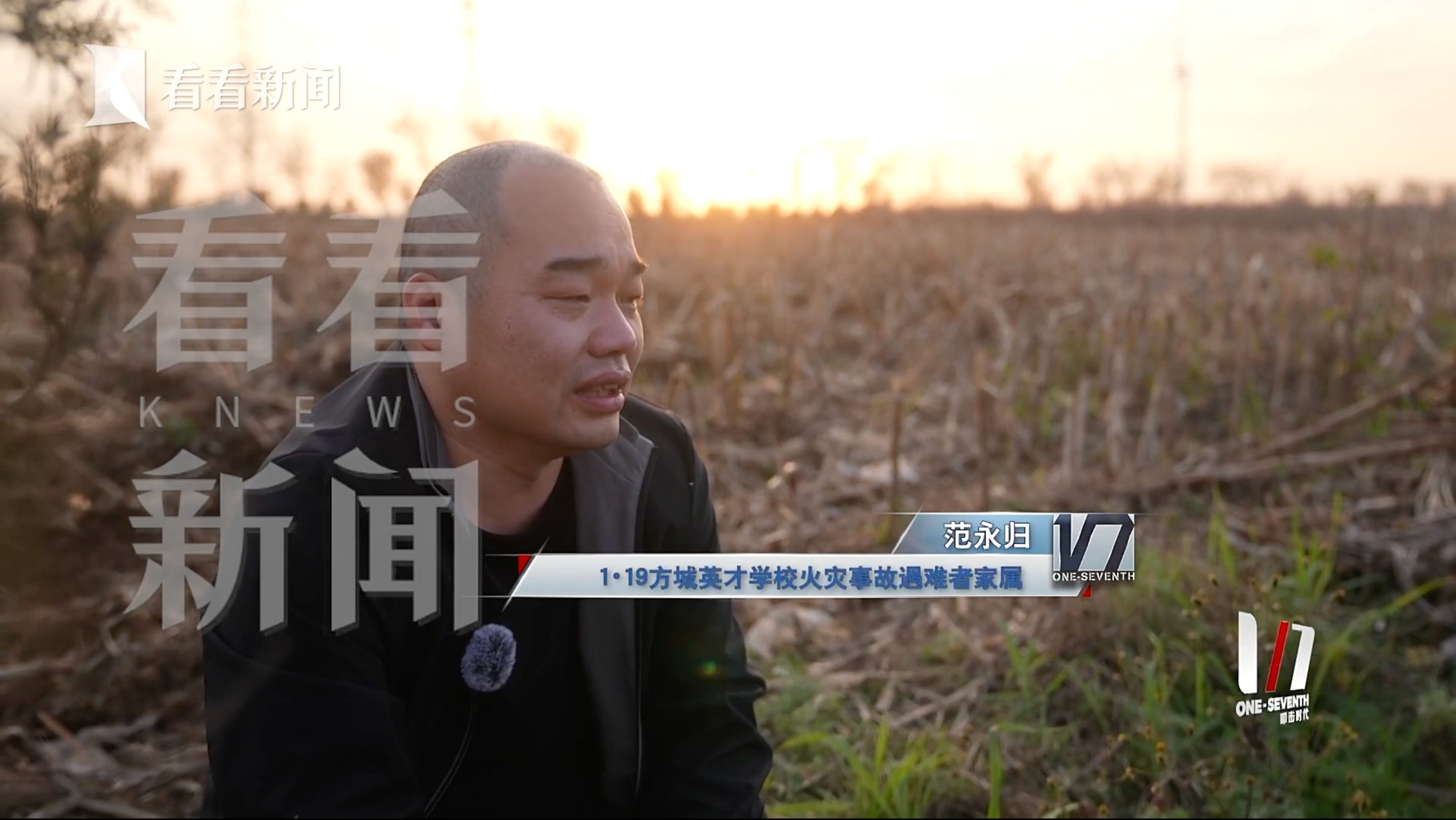
Zhou Zhimin, born in 1989, graduated from the Television Department of the Communication University of China and is a senior reporter with Shanghai Media Group. Zhou has won the China Journalism Award, the Shanghai Journalism Award, and the Golden Angel Award for Best Television Documentary of the Year at the Chinese American Film Festival. Zhou’s work has consistently been marked by a commitment to the public interest. Zhou’s most recent major work is “680 Days of Relatives Demanding an Investigation Report After 13 Primary School Students Died in the Fangcheng School Fire 13名小学生火灾遇难后 亲人追问调查报告的680天” (video report, KNews, 8 December 2025).
After the school fire in Fangcheng County, Henan, on January 19, 2024, local authorities promised that the investigation results would be released “promptly”. Yet 16 months later, no report had been made public. Zhou travelled to Henan to interview several bereaved families, and also interviewed two criminal law professors and a criminal defence lawyer in Shanghai, producing a 24-minute in-depth video report.
Two spin-off short videos each drew more than 100,000 likes and shares on WeChat Channels, WeChat’s short video service, with over 1,000 comments. Chao News, under Zhejiang Daily, published an excerpt that received 478,000 likes and 82,000 comments; Phoenix News drew 442,000 likes and 63,000 comments. Beijing News, Guancha.cn, Shandong TV’s “Investigation” programme, Jiangxi People’s Radio, Harbin Daily, Xi’an Evening News, Jinan Daily, Qilu Evening News, and dozens of other outlets helped push the story back into the centre of public debate. For several days in a row, it topped trending lists on platforms including Weibo and Douyin.
That renewed attention in turn drove wider commentary. Building on the reporting, multiple outlets published follow-up opinion pieces, and the question “Why has the investigation report not been made public?” became one of the most closely followed issues online.
Nine days after the report was published, the investigation findings were released through Xinhua News Agency and China Media Group. The court also changed what had originally been designated a non-public hearing into an open trial. The three defendants, charged with the crime of a major safety accident at educational facilities, all pleaded guilty in court and accepted punishment. After more than 700 days of persistent questioning, one father finally received a substantive answer.
The work not only brought solace to the dead and gave due weight to the demands of the living; it also served as a warning to society as a whole, pressing all sides to learn the lessons in full and do everything possible to prevent such a tragedy from happening again.
Finalists
Zhu Wenqiang 朱文强
Citation:
Born in 1981, Zhu Wenqiang graduated from the Journalism Department of Hebei University in 2004. Zhu has worked for media outlets including Yanzhao Metropolis Daily, Insight China, The Economic Observer, and Sohu. In recent years, Zhu has been running a personal media account, Empty Bottle 空瓶子.
In April and May 2025, Zhu published three consecutive articles about Dong Xiying of Peking Union Medical College Hospital: “Compared with the 4+4 Programme, the Mistress Scandal Is the Least of China-Japan Friendship Hospital’s Problems 比起4+4,小三小四的瓜是中日友好医院最小的”, “Ms Dong Has Been Protected Far Too Well 董小姐被你们保护的太好了”, and “Who Is Helping Ms Dong Falsify the Record? 谁在帮董小姐造假?” These pieces shifted attention away from salacious gossip towards the deeper issues surrounding the “4+4” Medical Doctor (MD) pilot programme.
In July, Zhu turned to the lead-poisoning case involving preschool children in Tianshui, Gansu, publishing a series of reports: “233 Preschoolers Suffer Lead Poisoning—The Children Had Been Fed Coloured Paint 233名幼儿血铅中毒,他们给孩子吃的竟然是彩绘颜料”, “Twenty Years On, Lead Poisoning Returns to Gansu—The Real Focus Should Be Falsified Blood-Lead Tests 20年后,甘肃“铅中毒”再现,血铅检测造假才是提及调查重点”, and “In the Tianshui Lead-Poisoning Case, Blood-Lead Test Data Was Indeed Tampered With 天水“铅中毒”事件果然篡改血铅检测数据”. These reports showed how independent media, with its agile and flexible style, can bring major social issues vividly into public view.
In October, Zhu published “Eleven Shijiazhuang Police Officers Sentenced for Beating to Death a Detainee Held Under Residential Surveillance at a Designated Location 打死“指居者”,石家庄11名警察获刑”, the most detailed account of the verdict to appear. In November, Zhu published “A Case Within the Tangshan Anti-Corruption Case: The Suspicious Bribe-Giver 唐山反腐案中案——蹊跷的行贿者”, an exclusive report exposing how Tangshan’s disciplinary authorities had fabricated a false case. The report quickly drew official attention in Tangshan and prompted intervention; the case has since been remanded by the court for supplementary investigation.
On December 12, Zhu published “The Home of a Retired Shandong Vice-Governor Was Burgled—More Than RMB 2 Million Worth of Maotai and Wuliangye Was Sold Off 山东一退休副省长家被盗,茅台、五粮液卖了200多万”. For an independent media account, reporting on officials at the provincial or ministerial level carries substantial risk. As an exclusive and ambitious attempt, this report achieved strong results and was widely reposted online.
In the early hours of July 7, 2022, officers from the Shijiazhuang Public Security Bureau, the Xinle Public Security Bureau, the Yuhua branch of the Shijiazhuang police, and other members of the “May 25 Task Force” detained Bao Jizhong, Bao Jiye, Bao Yanqiang, Bao Qinrui, Bao Jitao, Gao Aili, and others on suspicion of “picking quarrels and provoking trouble”, then placed them under residential surveillance at a designated location (RSDL) at the Xinle Hotel.
Between July 7 and July 19, task-force officers allegedly used torture to force confessions from the Bao family. According to later accounts, detainees were slapped, beaten on the soles of their feet with PVC pipes, and shocked with an old hand-cranked telephone.
The turning point came on the night of July 19. At the RSDL site, Bao Jiye overheard security guards muttering: “Shit—they’ve shocked him to death.”
Four days later, officers from the criminal investigation unit of the Xinle Public Security Bureau told him that his son, Bao Qinrui, was dead.
After Bao Qinrui’s death, the case fell silent. Others detained in the same case were gradually released on bail pending trial, and those bail measures were later lifted altogether. The official explanation was that it had been “determined that criminal responsibility should not be pursued”.
The Bao family later told the media that all of them had suffered beatings and electric shocks to varying degrees while under RSDL. What haunted them most was the old hand-cranked telephone: wires were clipped to both hands, and as the handle was turned, current ran through the body, causing uncontrollable trembling and convulsions.
For more than a year afterwards, the family petitioned and sought accountability over Bao Qinrui’s death.
Only at the end of 2023 did the case begin to move. Eleven members of the Shijiazhuang “May 25 Task Force” were placed under the cross-regional jurisdiction of Baoding and subjected to compulsory measures designated by the Baoding People’s Procuratorate. In early 2024, those involved were arrested on charges including intentional injury and torture to extract confessions.
The case was later split in two. Eight police officers from the Xinle Public Security Bureau were prosecuted by the Lianchi District People’s Procuratorate in Baoding, while three officers from the Yuhua branch of the Shijiazhuang Public Security Bureau were prosecuted by the Wangdu County People’s Procuratorate in Baoding.
On September 28, 2025, verdicts in both cases were delivered on the same day.
—“Eleven Shijiazhuang Police Officers Sentenced for Beating to Death a Detainee Held Under Residential Surveillance at a Designated Location 打死“指居者”,石家庄11名警察获刑”, 28 October 2025
Fu Yibo 傅一波
Citation:
Born in 1993, Fu Yibo previously worked as an investigative reporter for Phoenix Deep Dive at Phoenix News and for the social affairs desk of Xiaoxiang Morning Herald. He is now a reporter with Mammoth Studio at The Time Weekly and has won the SOPA Awards twice.
His recent work includes “A Life Lived 0.8 Metres from the Tracks: 44 Years On 离轨道0.8米的生活,他过了44年” (23 May 2025), “After 38 Days of Drought, Farmers in Zhumadian, Henan Finally Get Rain 干旱38天后,河南驻马店农民等来了一场雨” (9 August 2025), “In Yinle’s First Month in Office, What Has Changed and What Has Not at Shaolin Temple 印乐上任首月,少林寺的变与不变” (29 August 2025), “Hong Kong’s Tai Po Fire Is Largely Under Control; Foam Insulation May Have Been the Deadly Culprit, Originally Used to Protect Exterior Window Glass 香港大埔火情已基本受控,发泡胶或成致命元凶:原为保护外墙窗玻璃” (27 November 2025), and “‘Reviving’ Shuisi Tower: A New Chapter in Dushan’s RMB 40 Billion Local Debt Story “复活”水司楼:独山400亿地方债的新故事” (28 November 2025).
On his way back, Xu Shoujun saw vast stretches of maize scorched yellow by the sun. The ground was mottled and cracked, and in some plots the crop was almost dead from drought. Only a few scattered patches of green remained, belonging to the village’s bigger farming households—the ones close to the wells, with enough labour on hand to keep irrigating. “To use your city people’s language, they’re the ones with capital,” he said.
The Xu family had little capital of their own. Their land lay more than 500 metres from the village’s drought-relief well, and anyone drawing water had to follow the pecking order of “same extended family, same surname, same village”. Xu Shoujun, relying on his youth and strength, would hurry over early just to get the hose connected first.
Watering the fields was gruelling, labour-intensive work. Once more than 500 metres of pipe had filled with water, it became extremely difficult to move. Without shutting off the flow, it could irrigate less than a mu [0.16 acres] of land. To tend the next mu, they had to stop the water, lift the pipe section by section to drain it, then shift it forward bit by bit. By the time two mu had been watered, an entire night and half the next day had already slipped by. And by the end of that other half-day, the land they had just irrigated was already drying out again.
Xu Shoujun scooped up a handful of soil. It trickled through his fingers like sand. The maize still drooped. Drought has a way of snuffing the life out of everything green, and the Xu family found themselves confronting a suffocating despair: they kept working, kept trying, and yet nothing changed.
—“After 38 Days of Drought, Farmers in Zhumadian, Henan Finally Get Rain 干旱38天后,河南驻马店农民等来了一场雨”, 9 August 2025
Xiang Kai 向凯
Citation:
Born in 1991, Xiang Kai received a master’s degree in journalism from Jinan University in 2017. He has since worked as a reporter for the “Origin” section of Jiefang Daily, the in-depth reporting desk of Beijing News, and Caixin’s South China News Centre. He is now a freelance writer.
His reporting has long focused on public safety, the Covid-19 pandemic, and investigations into law and justice. His series on Sun Xiaoguo won Beijing News’s 2019 Gold Award for Exclusive Reporting, while his coverage of the Xiangshui explosion received the paper’s 2019 Gold Award for Breaking News Reporting.
On 6 December, 2025, his investigation into the Hung Fuk Court fire in Hong Kong, “Mainland Testing Exposed: Undercover Inquiry Shows ‘Passing Reports’ Can Be Obtained in Two Hours for RMB 1,000 Without Submitting Samples; Even the ‘Official’ Verification Website Is Fake 內地檢測|放蛇實測 無需送樣、付千元兩小時獲「合格報告」 供查核「官網」同屬冒牌”, revealed that the cause of the deadly blaze and the unusually rapid spread of the fire may have been linked to substandard scaffold netting. Some of the netting involved had been produced in the Chinese mainland and came with purported inspection certificates. But such “inspection reports” could in fact be fabricated out of thin air and bought cheaply online, while both the certificates themselves and the websites supposedly used to verify them were counterfeit.
In less than two hours after submitting the required information and making payment, the reporter received a flame-retardancy test report certifying the product as “compliant”—without ever having to send in a sample. The document purported to have been issued by Jilin Zhongfu Testing Technology Service Co., Ltd., and bore CMA (China Metrology Accreditation) and CNAS (China National Accreditation Service for Conformity Assessment) logos, along with a report number.
Ten minutes later, the seller sent over a “preview version” of the report and said revisions could still be made. The document fabricated a sample receipt date of 2 December, despite the fact that no sample had been submitted, and listed the testing period as running from 2 to 5 December. It also provided detailed results for six testing items, including flame-retardant performance, oxygen index, insulating properties, and fire-extinguishing performance. Under the fire-extinguishing test, for instance, it claimed that “the flame was extinguished within 12 seconds; after 17 minutes of continuous observation, no re-ignition occurred; and the blanket body showed no sign of burn-through”. The report concluded that “all tested items meet Class A flame-retardant standards and relevant technical requirements, and the product is therefore deemed compliant.”
—“Mainland Testing Exposed: Undercover Inquiry Shows ‘Passing Reports’ Can Be Obtained in Two Hours for RMB 1,000 Without Submitting Samples; Even the ‘Official’ Verification Website Is Fake 內地檢測|放蛇實測 無需送樣、付千元兩小時獲「合格報告」 供查核「官網」同屬冒牌”, 6 December 2025
Major Public Affairs Reporting Prize
Grand Prize
Han Qian 韩谦, “Can the New Rules on Residential Surveillance at a Designated Location End the Disorder? “指居”新规,能否终结乱象?” (5 November 2025, Southern Weekly)
Citation:
Beginning with a September 2023 report on an individual case of residential surveillance at a designated location (RSDL), Han Qian spent more than two years producing over a dozen reports that turned the distortion of RSDL in practice from a specialised legal topic into a narrative the broader public could understand. Following Southern Weekly’s reporting on the death of Bao Qinrui while under RSDL, multiple police officers involved in the case came under investigation. In 2025, eight people were sentenced on charges including intentional injury and torture to extract confessions.
A further report published in July 2024, “Multiple Deaths Under RSDL Raise Questions Over Whether the System Should Survive 多名被“指居”者死亡,背后的制度陷存废之争”, moved beyond individual cases to focus on the system itself. It examined why RSDL had become so badly distorted in practice, and what possibilities there might be for future reform. The report drew wider public attention to the issue and also helped push legal scholars to engage more deeply with the question.
As the public came to see how judicial procedures were warped in practice, the judiciary itself also came to realise the loopholes in the system. In October 2025, a new set of RSDL rules jointly issued by the Supreme People’s Procuratorate and the Ministry of Public Security began circulating among lawyers, though the document was never formally released through official channels. After confirming the information through multiple sources, Han published “Can the New Rules on Residential Surveillance at a Designated Location End the Disorder? “指居”新规,能否终结乱象?”, becoming the first journalist to report on the new rules. Many other outlets followed with their own coverage.
This body of reporting stands as a strong example of how rigorous journalism can help drive institutional reform, and of the enduring value of a press that remains committed to public accountability.
A former political instructor at a police station in Jingjiang, Jiangsu, once told Southern Weekly that, from the standpoint of criminal investigation, RSDL is indeed a “convenient” system.
The designated locations are typically hospitals, hotels, or guesthouses, where the guards and interrogators are managed by the same investigative team. In practice, that means the suspect remains under the team’s control around the clock.
If, by contrast, a suspect is held in a detention centre, investigators have to work around the centre’s office hours when arranging questioning. There is also a lunch break, and sometimes a single interrogation lasts only an hour or two. In Qiu’s view, that was “very inconvenient” for investigators.
Chen Yongsheng, a professor at Peking University Law School...noted that the general provisions of the new RSDL rules require a separation between case-handling and custodial enforcement. The detailed provisions go further, specifying that personnel responsible for investigation or supervision may not take part in custodial enforcement, and that investigators may not enter the designated location itself.
In his view, if this separation mechanism can be implemented to a standard comparable to that of detention centres, it could play a substantial role in supervising and preventing torture and forced confessions under RSDL.
—“Can the New Rules on Residential Surveillance at a Designated Location End the Disorder? “指居”新规,能否终结乱象?”, 5 November 2025
Finalists
Huang Siyun 黄思韵, “Hong Kong Fire” Series
“Hong Kong Fire Survivor: Windows Were Sealed with Foam, and the Alarm Did Not Sound Until Half an Hour Later 香港火灾亲历者:窗户被发泡胶粘住,半小时后报警器才响” (28 November 2025, Caijing Magazine’s official WeChat blog)
“Strangers in the Hong Kong Fire 香港火灾中的异乡人” (4 December 2025, Caijing Magazine’s official WeChat blog)
“Hong Kong’s Healing Process 香港疗伤” (8 December 2025, Caijing Magazine)
Citation:
The first report was among the earliest by Chinese mainland media to interview multiple survivors from Hung Fuk Court and add substantial new reporting. Arriving at the scene on the second night after the fire, the reporter was able, at an early stage, to piece together a relatively clear account of how the disaster unfolded. At a time when public debate was centred on bamboo scaffolding, the report drew attention instead to the role of foam insulation and delayed fire alarms, building a fuller chain of evidence through first-hand reporting.
The second report focused on foreign domestic helpers, a group that remained largely at the margins of coverage of the fire. They attracted limited public attention, faced language barriers during rescue efforts, and were left grappling with job loss and visa insecurity. The reporter spent a full day accompanying the workers as they searched for missing compatriots and sought help with work visas. The piece also secured interviews with three survivors and added the perspectives of third-party rescue organisations as well as the broader social context of foreign domestic helpers in Hong Kong. Closely observed and carefully reported, it brought an important and often overlooked group perspective into mainland coverage of the fire.
The third report offered a fuller overview of the disaster and its aftermath, incorporating the perspective of volunteer rescuers and further information on post-fire recovery and support. It showed that the impact of the blaze extended far beyond Hung Fuk Court itself, reaching into Hong Kong society more broadly.
In news reports, they were cast as “heroes” who had risked their lives to save their employers. But having lost their passports and identity documents, they spent the entire day shuttling between migrant labour NGO booths, relief supply stations, community centres, and various government offices, filling out forms and trying to replace their papers.
At a migrant workers’ organisation booth, a volunteer named Shiela told Caijing that most of the affected foreign domestic workers were still on the job. They had no time to process their trauma. Even when they managed to rush over, they often came only in the afternoon or late at night, filled in a form, picked up a few daily necessities, and left again.
For foreign domestic helpers, no job means no home. One volunteer helping Mariz said they had wanted to visit her earlier, and had thought they might be able to see her at 9 p.m., but her employer did not want to be disturbed, leaving them little room to talk.
—“Strangers in the Hong Kong Fire 香港火灾中的异乡人”, 4 December 2025
Lin Ling 林灵, “Thallium Sinks to the Bottom, Awaiting Oblivion 铊沉入水底,正等待被遗忘” (26 May 2025, The Aquarian)
Citation:
This report is a deep investigation into thallium pollution in the Leishui River basin in Chenzhou, Hunan. Through on-the-ground reporting, cross-checking of multiple sources, and professional analysis, the author systematically reconstructs the origins of the contamination, the official response, and the risks left behind.
Drawing on the perspectives of villagers, construction workers, local officials, and environmental experts, the piece not only traces the source of the pollution—thallium-laden dust released during the dismantling of an old production line at the Liangtian cement plant and washed into the river by rain—but also exposes serious flaws in the emergency response and the opacity surrounding it. Large quantities of thallium sulphide settled on the riverbed and were left uncleared; villagers helped build emergency containment ponds without protective equipment; local officials concealed key facts from the public; and residents remained unaware of the dangers posed by the pollution.
The report also pushes beyond the immediate incident to examine deeper structural problems in the industry: cement plants using tailings as raw materials without monitoring for thallium, environmental impact assessments that fail to account for heavy-metal risks, and regulatory standards that lag behind real-world sources of contamination.
Drawing on expert interpretation, the piece makes clear that the sedimentation method used in the emergency response did not eliminate the thallium but merely transformed it into thallium sulphide deposited on the riverbed, creating a new form of hazardous waste. In that sense, the emergency measures may themselves have introduced fresh risks of secondary pollution and ecological accumulation.
Thallium is classified as hazardous waste, not ordinary solid waste. Handling hazardous waste properly requires additional licences, as well as greater technical capacity and financial investment. Although the industry generally accepts the use of solid waste as input material in cement plants, it tends to overlook the possibility that hazardous waste may be present, and almost never invests in production lines equipped to handle it.
Environmental filings for the Liangtian cement plant show that its new production line uses tailings—including tungsten tailings slag and iron-bearing corrective materials such as waste slag from ironworks—as key raw materials. In on-site reporting outside the plant, The Aquarian observed a raw-material storage area labelled “tungsten tailings slag”, but found no indication anywhere that the material might contain thallium.
According to the National Pollutant Discharge Permit Management Platform, there are 976 enterprises nationwide whose wastewater pollutant profiles include thallium. Not one of them belongs to the cement industry.
...
That points to a deeper problem: under the current system of industry regulation, cement plants are not regarded as being associated with thallium at all. Yet research published as early as 2019 had already shown that “coal combustion and cement production are another important anthropogenic source of thallium”, and that “global annual thallium output is about 10 tonnes, while cement plants likewise release significant amounts of thallium into the environment.”
Wu Xiaofei 吴小飞, “Behind a Judge’s Defence of His Mother: Three Generations of Upheaval in a Family Accused of Organised Crime 法官为母辩护背后,被控涉黑家族的三代喧嚣” (27 May 2025, Southern Weekly)
Citation:
In March 2025, after Judge Bi Qiqi made the highly unusual decision to appeal publicly online, Wu Xiaofei first followed the story as breaking news and then went on to produce an in-depth feature of more than 11,000 Chinese characters on the judge’s attempt to defend his mother. Wu continued to follow the case closely, reporting on issues including the splitting of the criminal cases, Bi Qiqi’s subsequent detention, and the revocation of his right to act as a defender.
It is exceptionally rare for a judge to speak out publicly to defend a parent. Once the report appeared, the case quickly prompted wide discussion, not only about the family’s alleged ties to organised crime, but also about the long-contested practice of splitting criminal cases, and the question of whether family members should be allowed to defend their relatives.
The case is still being heard in court. Its twists and reversals, the often striking turns it has taken, and the tactical contest between the authorities and the defence team after the case entered formal proceedings have been unusual by recent standards. Just as importantly, the case lays bare the enforcement logic and institutional mindset of local judicial actors. What it reflects is not merely a problem in one city, Nanyang, but a revealing window onto the workings and the strains of local justice in China.
The indictment states that even after the government abolished fees on individual businesses in 2008, after merchants collectively complained in 2014 that the charges were unreasonable, and after a 2018 township government inspection found unlawful fee collection in the market, Ji Tingmei still instructed the establishment of a property-management company to continue charging fees. The money collected was never brought under the financial supervision of the village. All spending was decided personally by Ji Tingmei: some of it was used to cover the village’s tax obligations, some for routine personnel expenses, and some for meals, entertainment, and hospitality.
...
In early 2025, some media outlets published findings from a defence team survey of merchants in the case. Hundreds of merchants from the markets said they had paid the fees voluntarily and had not been coerced. Some also said that, because the jade market had once attracted a large volume of customers and shopfronts were hard to come by, people had in fact competed for a place there. Among those surveyed were merchants whom the police had identified as victims.
“Of course, as a merchant, you’d rather not pay management fees if you could,” one merchant, who was interviewed twice by both sides, said. “But that was never realistic. All the surrounding markets charged fees, too. Does that make it coercion? I don’t see myself as a victim.”
Commentary Prize
Grand Prize
Peng Yuanwen 彭远文’s Commentaries on China’s Rural Pension Problem
Citation:
Peng Yuanwen, formerly a producer and editor in the commentary department at CCTV News, has published a sustained series of opinion pieces on China’s rural pension problem since January 2025. Covering more than 30 articles, the series ranges from basic explanatory pieces and rebuttals to common counterarguments to commentaries tied to current news events. Taken together, it represents an unusually persistent effort.
Representative essays include “Eight Reasons to Raise Farmers’ Basic Pension to RMB 800 提高农民基础养老金到800元的8个理由”, “The Next Time Someone Says ‘Farmers Didn’t Pay into Social Security’, Throw This Article in Their Face 再有人拿“农民没交社保”说事,请把这篇呼他脸上去”, “Who Says the State Cannot Afford to Raise Farmers’ Basic Pension? 谁说“国家没钱”提高农民基础养老金的?”, “If Farmers ‘Have Land’, Does That Mean Their Pension Should Not Be Raised? Is It That Farmers Have Land, or That the Land Has Farmers? “农民有地”就不应该提高养老金吗?是“农民有地”还是“地有农民”?”, “Basic Pensions Should Offer Help in Hard Times, Not Merely Add Comfort to Those Already Secure 基本养老金要“雪中送炭”不要“锦上添花””, “Ten Questions and Answers on Farmers’ Pensions 农民养老金十问十答”, “Nine Reasons China Should Adopt a Universal Basic Pension 中国应该实行普惠养老金的九个理由”, and “The Five Deadly Sins of China’s Excessively High Social Security Contribution Rates 中国社保高存缴比例的“五宗罪””.
[Peng Yuanwen’s personal WeChat blog, where the articles above were originally published, has been blocked. He has since started a new WeChat blog, where he continues to publish commentary, including on farmers’ pensions. The links above point to versions of these articles Peng posted on other platforms or preserved by secondary sources.]
Across these pieces, Peng argues that raising rural pensions would help reduce old-age poverty, promote fairness, boost domestic demand, ease destructive competition, support childbearing, improve elderly care, respond to population ageing, and strengthen the legitimacy of public policy. As he suggests, “it is hard to think of another single policy measure that could deliver so many benefits, each one addressing one of the central strains in China today. That is why using commentary to spread basic facts, rebut misconceptions, and gradually build social consensus matters: it helps create the public foundation on which policy change becomes possible.”
In 2025, calls to raise rural pensions grew steadily louder, and the number of voices joining the debate increased. Advocates included economists such as Zheng Gongcheng and Xiang Songzuo, as well as social security specialists, legislators, CPPCC members, and government officials. A broader consensus now appears to be forming quickly. Raising rural pensions no longer looks impossible; it may arrive sooner than many had assumed.
What I find especially hard to understand is this: if they are so worried that farmers will lose their basic security once they lose their land, why do they never propose raising the basic pension for farmers? If farmers who lose their land could still enjoy a basic livelihood guarantee, wouldn’t the problem largely disappear?
Yet the moment someone suggests raising farmers’ pensions by just one or two hundred yuan a month, they immediately jump out to warn about unbearable fiscal pressure and the dangers of a “welfare trap”. They say things like: farmers don’t really need money; money isn’t everything; farmers have little desire for material consumption; they have not been “corrupted” by urban consumerism, and so on...
Remember this: what they truly fear is not that “farmers might lose their land”. What they fear is losing the convenient excuse that “farmers still have land”, which allows the state to wash its hands of farmers’ unemployment and old-age security. That, in their words, is China’s “unique institutional advantage”. And this so-called “protective urban–rural dual structure”—how different is it really from the “separate but equal” doctrine during racial segregation in the United States? There is nothing new under the sun.
They have never regarded farmers as independent individuals. In their eyes, farmers are ignorant and short-sighted, people who need the guidance of their own supposedly enlightened minds. They claim that if farmers were truly given ownership of land, they would simply sell it off to drink and gamble. Of course, such people exist in rural areas—but are they the majority? Aren’t there plenty of wastrels in the cities as well? Why not call for taking away their right to sell their property?
And then there are those influenced by these ideas: people who have gone to the cities, seen a bit of the world, picked up a few fashionable terms, and before even washing the mud off their shoes, begin looking down on the farmers back home—returning only to lecture them and decide what is best for them, as if they were entitled to play the role of their fathers.
—“If Farmers ‘Have Land’, Does That Mean Their Pension Should Not Be Raised? Is It That Farmers Have Land, or That the Land Has Farmers? “农民有地”就不应该提高养老金吗?是“农民有地”还是“地有农民”?”
Finalists
Lin Feiran 林斐然’s Commentaries on the Dong Xiying–Xiao Fei Affair at China-Japan Friendship Hospital
When the Dong Xiying scandal at China-Japan Friendship Hospital erupted in late April 2025, Lin Feiran responded quickly and persistently. Writing on the personal WeChat blog Like a Ray of Light 像一道光, the author published a string of sharp commentaries, including “A Privileged Life Tailor-Made for Dr Dong 为名医董小姐定制开挂人生” and “Investigating Ms Dong Is Not a Task the National Health Commission Can Handle Alone 查董小姐的任务,卫健委还真揽不下”, questioning the health authorities’ capacity to conduct a credible investigation and calling for a far more rigorous and far-reaching inquiry.
After the authorities issued an initial update, Lin continued with “The Silence Reserved for the Ms Dongs 专属于董小姐们的沉默”, arguing that the case was not an isolated aberration but the product of a system in which routine assessment and academic review had long ceased to function as meaningful checks. It was this wider institutional decay, the author argued, that had allowed someone like Dong to move unchallenged through the system for years.
When the final official findings were released on August 15 2025, Lin followed up with “No One Ordered It—Everyone Willingly Helped Ms Dong Cheat 无人指使,大家自愿帮董小姐舞弊” and “The Nineteen Names Hidden in Ms Dong’s Web of Corruption 藏在董小姐窝案中19个名字”. Refusing to accept an official account in which 19 people appeared only as anonymous placeholders, the author painstakingly reconstructed the network behind the case, using the positions and careers of those involved to show how each had played a role in moving Dong from an unqualified outsider to a PhD at Peking Union Medical College and, ultimately, into the operating theatre. Widely circulated across multiple platforms and reaching millions of readers, it also came at a high cost: the complete disappearance of the author’s WeChat blog.
[Links to Lin Feiran’s commentaries are likewise sourced from Lin’s own posts on other platforms or secondary sources.]
And so the National Health Commission issued a statement saying that it had set up an investigation team and, in line with the principles of seeking truth from facts and maintaining objectivity and fairness, would work with relevant parties to carefully investigate Xiao, Dong, and the institutions involved, and would deal seriously with any disciplinary or legal violations uncovered.
On paper, the language sounded thunderous and righteous. In practice, it served mainly to carve the problem up neatly, narrowing the focus to Dr Xiao and Ms Dong and preventing scrutiny from reaching the deeper issues beneath the scandal.
What the authorities still seem not to understand, even now, is that the public no longer cares much about Dr Xiao, nor about the stream of lurid personal episodes attached to him. What people care about is how many supposedly elite Peking Union Medical College doctors, their credentials padded through the “4+4” route, have made it all the way to the operating table. They care about how such dissertations ever passed blind review, and how the authors of such work could end up as white-coated arbiters of life and death. They care about why the company where Ms Dong’s father worked was able to take on the supervision of construction projects for the institutions where Ms Dong and her mother worked, as if the whole affair had been kept within one family. And they care about how these academic clans manage, generation after generation, to keep a hereditary grip on power, turning even people whose doctoral theses may well have been ghostwritten by relatives or students into untouchable heirs dancing on the grave of the public interest.
If the matter were faced head-on—laid bare, properly investigated, and dealt with—the public would surely welcome it. But instead, after rummaging around in its trouser pocket for half a day, the system has produced the weakest possible player: the National Health Commission. And beyond deflection and damage control, what exactly can it solve?
—“Investigating Ms Dong Is Not a Task the National Health Commission Can Handle Alone 查董小姐的任务,卫健委还真揽不下”
Lu Yijie, “Behind the Punishment of a ‘Courtroom Observer’: Revisiting Three Issues in Judicial Openness “旁听士”被罚背后,重温司法公开的三个议题” (17 September 2025, Jimen Decision Forum, the official WeChat blog of the Public Policy Research Centre at the China University of Political Science and Law)
Citation:
In September 2025, a citizen courtroom observer surnamed Wu was given five days of administrative detention for “fabricating facts to disrupt public order”. The authorities said Wu’s conduct violated Article 29(1) of the Public Security Administration Punishments Law, which prohibits “intentionally disturbing public order by intentionally spreading rumours, making false reports of dangerous situations, epidemics, disasters, or warnings; or by other means”. Whether Wu’s attendance at the hearing was illegal, and whether Wu’s courtroom notes amounted to “rumours”, has put the legitimacy of the punishment under scrutiny and revived debate over judicial openness.
Before entering legal practice, the author spent many years as a legal affairs reporter and had first-hand experience of how difficult it can be to attend court hearings in certain cases. Drawing on that background, this commentary revisits three issues in judicial openness.
First, it asks why Wu could attend only in the capacity of a family member, pointing to the ways in which some judicial authorities artificially create obstacles to public observation. Second, it considers whether ordinary members of the public have the right to write and publish accounts of what they observe in court, analysing from both the perspective of legal text and legal principle. Third, it examines whether the decision to detain Wu was justified, arguing that any finding of “spreading rumours” must respect the principle that subjective and objective elements should be assessed in combination, and insisting that state authorities bear a duty to show a reasonable degree of tolerance towards citizens’ expression.
A useful point of reference is the Supreme People’s Court’s Understanding and Application of the Court Rules of the People’s Courts of the People’s Republic of China. In discussing whether courtroom observers may take notes during a hearing, it states that “what is not expressly prohibited by law is permitted”, and goes on to note that “courtroom note-taking is a legitimate extension of the right to observe. When members of the public make necessary notes while attending a hearing, they lay the groundwork for accurately understanding and supervising the court’s trial activities. In other words, allowing citizens to observe while forbidding them from taking notes amounts only to formal openness, not substantive openness.”
Although this passage speaks specifically about note-taking in court, what it really makes clear is that the substantive aim of protecting the right to observe is judicial openness. People do not take notes in court simply to go home, write a diary, and lock it away in a drawer. They have a legitimate need to discuss and exchange views with others. As a matter of legal principle, if a hearing is public, then such discussion and exchange should not be prohibited. And if discussion and exchange are permissible, there is no sound reason to forbid one particular form of them — namely, publishing a public written account.
Seats in the public gallery are always limited, and many people who have a legitimate interest in observing a case will inevitably be unable to attend in person for one reason or another. To confine knowledge of a case to the small number of citizens who can physically fit inside the courtroom is, in effect, to deprive many more citizens of their right to know and their right to supervise.


"The night Dr Li Wenliang died was perhaps the moment during the pandemic when public anger on the Chinese internet burned most intensely". Really?
12/26/2019. Dr. Zhang Jixian reported the first Coronavirus patient to her Wuhan hospital and the CDC.
12/27. Beijing specialists, CCDC arrive Wuhan.
12/30. Dr. Li PMs mass-texts to former schoolmates: "7 SARS patients. Be careful!"
12/31. Alerted by Dr. Li's message, 150,000 residents flee Wuhan.
12/31. China warns WHO, CDC of 'a coronavirus of unknown origin'.
1/1 Dr. Li's hospital warns him about creating public panic.
1/3 Police warn Dr. Li not to spread rumors ask him to sign an agreement not to repeat it. Dr. Li returns to work.
Dr. Li was a good man who subsequently died of Covid, and he made a momentary slip. It's consequences were not dire, nor was he punished for it.
Thank you for putting it out.