


The East is Read and Pekingnology have published several articles featuring Mei Yonghong, Director and Executive Vice President of China’s private BGI Group, one of the world’s leading life science and genomics organisations. Mei has consistently championed a shift from traditional, university-centred research towards “big science”: large platforms, big datasets, interdisciplinary teams, and business-led innovation, with enterprises rather than universities taking the lead in turning scientific advances into practical applications.
In this latest article, Mei takes his long-standing argument further, issuing an urgent warning that China’s traditional approach to technological catch-up is no longer sufficient. He highlights fragmented coordination between universities, research institutes, and businesses; underdeveloped capital markets; inadequate intellectual-property protection; and an academic culture that places too much emphasis on titles and credentials rather than genuine scientific achievement. This stands in contrast to the United States, which is increasingly placing technology entrepreneurs, corporate research, and business-led innovation at the centre of its national innovation strategy.
Mei calls for a fundamental shift in how China organises and supports scientific research, warning that without it, China risks losing the initiative in what he calls the contest of the century with the United States.
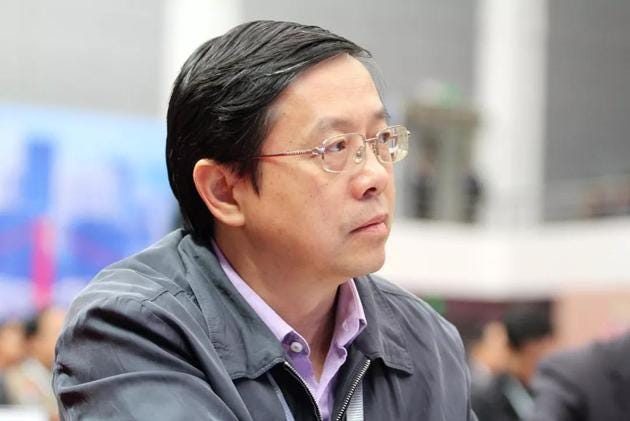
Immediately before joining BGI, Mei was Mayor of Jining, Shandong Province, between 2010 and 2015. Before that, he served as Deputy Director-General of the General Office, Director-General of the Research Office, and Director-General of the Policy, Regulation, and System Reform Department of the Ministry of Science and Technology (MOST).
The following remarks were originally published on the official WeChat blog of Huagu Biotechnology and Bioindustry Research Institute, a non-governmental, non-profit thinktank set up in 2023 by biotech and agricultural companies in China, including BGI’s affiliates.
梅永红:下半场,比的是创新生态
Mei Yonghong: The Second Half of the Game is About the Innovation Ecosystem
Over the past 40 years, since the launch of the National 863 Programme in 1986, China has largely been in catch-up mode in science and technology, following the lead of Western countries. During this period, it made enormous progress, significantly narrowing the gap with the technological frontier.
Some fields have already entered the world’s leading ranks. Examples include the BeiDou Navigation Satellite System and the Tiangong-1 space station in space technology; large aircraft and fifth-generation fighter jets in aviation; high-speed rail and new energy vehicles in transport; photovoltaics and nuclear fusion in energy; tunnel-boring machines and etching equipment in advanced manufacturing; aircraft carriers and crewed submersibles capable of reaching depths of 10,000 metres in marine technology; 5G and quantum communications in telecommunications; gene sequencing and biopharmaceuticals in biotechnology; and data storage and DeepSeek in semiconductors and AI.
In virtually every high-technology field, only two countries today have capabilities of this breadth: China and the United States.
The reasons for this progress include institutional and structural factors such as the whole-of-nation system, opening up, human capital, and a comprehensive industrial base. Another important factor was the ability to seize a historic “window of opportunity”. Choosing a catch-up path substantially reduced the time and risk involved in innovation. Once the direction in many fields had become relatively clear, investing additional resources in iterative development was often enough to narrow the gap quickly, enabling leaps from nothing to something, and from small scale to large scale.
This is what I call the “first half” of China’s scientific and technological development: arguably the most successful catch-up model among late-developing countries.
The world is now undergoing changes unseen in a millennium, with science, technology, and innovation emerging as the greatest sources of uncertainty. On the one hand, relations between major powers in science and technology have shifted from cooperation as the mainstay to all-round competition and even confrontation. As a result, the previous model, based primarily on learning from and absorbing advances elsewhere, will be difficult to sustain. China’s science and technology will have to venture into “uncharted territory” and explore new horizons of its own.
On the other hand, the rapid development of AI is transforming the very paradigm of scientific and technological progress. A new form of science and technology, driven by big data and large models, is taking shape, posing a fundamental challenge to an institutional and policy system centred on targeted technological breakthroughs.
China’s science and technology are about to enter the “second half”, a period that will require systemic change and reconstruction.
First, there is no one to show the way in the “second half”.
International geopolitics has changed dramatically in recent years. Although China has consistently sought to move with the tide of globalisation, scientific and technological exchanges and cooperation between China and the United States have suffered a broad retreat since Donald Trump’s first term.
According to incomplete statistics, more than 1,300 Chinese institutions have been sanctioned by U.S. government departments, including nearly 1,000 companies. Those affected include Huawei and SMIC in semiconductors; BYD and CATL in new energy; Baidu and Alibaba in the internet sector; and BGI and WuXi AppTec in biotechnology. The list covers virtually all of China’s leading high-technology companies that have entered the international arena.
Restrictions have extended beyond industry. Basic research, academic exchanges, education, and talent development have also faced widespread obstacles. The notion that “science knows no borders” has been thoroughly undermined. For example, the latest NSF restrictions stipulate that U.S. scholars and institutions receiving its funding may not cooperate with Chinese institutions on the BIS Entity List. The restrictions cover even purely basic research, joint meetings, collaborative data analysis, and co-authored papers.
[Yuxuan’s note: NSF announced in July 2026 that it plans to prohibit the use of NSF funding for research collaborations with entities on U.S. restricted-party lists, including those on the BIS Entity List. However, the document does not explicitly enumerate joint meetings, collaborative data analysis, or co-authored papers as prohibited activities.]
In biomedicine, NIH rules in principle prohibit the transfer of biological samples and sensitive human-related data to China and other “countries of concern”. Funding arrangements for joint China-U.S. projects and subprojects no longer readily accept Chinese institutions as subcontracting partners. Ohio, Florida, and several other states have also passed laws requiring state universities to scale back academic cooperation with China.
The U.S.-led drive to “de-China-ise” science and technology is spreading across the West. Japan, Britain, Germany, France, and some Nordic countries have followed suit, aligning with the U.S. approach in sensitive fields such as quantum technology, AI, advanced semiconductors, and synthetic biology.
For example, Britain’s National Security and Investment Act allows the government to block Chinese investment in university spin-offs and sensitive laboratories, as well as joint research and development. The Trusted Research Evaluation Framework (TREF) requires all research groups receiving UK Research and Innovation (UKRI) funding to pay particular attention to “talent programmes” identified by the United States. [I could not find an official source confirming this specific requirement under TREF.]
Australia’s Group of Eight requires security due diligence for all research cooperation with China. [I could not find an official Group of Eight policy confirming this specific requirement.] Universities are scaling back joint projects with Chinese defence-related institutes and key laboratories, while police are conducting targeted intellectual-property investigations. The chilling effect is becoming increasingly evident.
The trend towards scientific and technological “decoupling” between China and the United States will be difficult to reverse, as a result of deepening structural contradictions between the two countries’ economies and scientific and technological systems. The West has long treated high technology and its industries as an exclusive preserve, protected by a high degree of monopoly that generates excess profits. China, once confined to the lower end of the vertical division of labour, has become a competitor across the board. Under a law-of-the-jungle mentality, that shift is difficult to tolerate or accept.
As Thomas Friedman, author of the American bestseller The World Is Flat, once put it: “When China sold us only shallow things, politically speaking, we didn't care whether China was authoritarian, communist, libertarian or vegetarian. It didn't matter because you were just selling us shallow goods.”
For most Chinese science and technology fields, accustomed to benchmarking against others and following their lead, the question is now: where to go when there is no longer anyone ahead to follow? Entering uncharted territory is far more than a change of route. It is a fundamental transformation, from ideas and models to organisation and the innovation ecosystem.
Second, the “second half” brings a paradigm shift.
U.S. science and technology policy is undergoing major changes in both its foundations and its direction. Two recent developments illustrate the shift and deserve close attention.
The first is the report Science: A New Golden Age, submitted by Michael Kratsios, Director of the White House Office of Science and Technology Policy. Compared with Vannevar Bush’s Science: The Endless Frontier, published 80 years ago, the report signals three major shifts: from prioritising support for universities to funding teams working on major research challenges; from the open-ended pursuit of scientific discovery to “monetising science”; and from the state acting as a funder to the state acting as a portfolio allocator. Its central message is to mobilise the resources of the entire nation, harness superintelligence to accelerate scientific discovery, establish merit-based pathways for talent, and relaunch national research missions.
Several underlying conditions and trends are driving this transformation.
First, the linear model of “basic research → application → development” no longer adequately describes contemporary science. Feedback between basic theory, engineering practice, and commercial application is becoming more frequent, while traditional university laboratories are not equipped to support interdisciplinary teams or sustained engineering iteration.
Second, the sources of research funding have changed. U.S. companies invest US$700 billion a year, more than three times the combined investment of the government and higher-education institutions. Basic research is increasingly taking place in corporate laboratories and innovative companies.
Third, AI has become both a foundation for and a partner in scientific research. Through the “Genesis Mission”, the United States is building a “science and security platform” and placing AI at the heart of future research. Purely academic reasoning is giving way to computing power on an industrial scale.
The emergence of AI for Science, or AI4S, is a major backdrop to the transformation of U.S. science and technology policy. Since its introduction in 2018, AlphaFold has fundamentally changed how protein structures are predicted, transforming a field whose research methods had remained largely unchanged for half a century. It has expanded the database from around 200,000 experimentally determined structures to more than 200 million AI-predicted structures, a thousandfold increase. It has also greatly advanced related drug research and development, synthetic biology, and pathogen research, ushering in a new era in fundamental biology.
Even more strikingly, OpenAI released 722 leading mathematics papers in a single batch, “leaving the last sacred ivory tower of pure human intellect reeling”. The development has been described as “commercial computing power overwhelming the academic community through an entirely different order of capability”. From generative AI to agentic AI, from experimental verification to data-driven research, and from trial and error to intelligent search, this paradigm shift is likely to reach every discipline before long. This means that the language, tools, evaluation criteria, boundaries, and underlying logic of scientific research are all changing.
With its considerable advantages in computing power, vast datasets, large models, and commercial AI, the United States is unlikely to let this historic opportunity to redefine the future pass it by.
An even bigger factor is the rapid rise of Chinese science and technology. In an article entitled The Tech High Ground: What It Will Take to Gain the Advantage Over China, veteran politician and former U.S. National Security Adviser Jake Sullivan argues that technology has become the central battleground not only in U.S.–China competition but also in the broader contest to shape the world. China, he writes, has moved beyond simply catching up with American innovation. In sector after sector, it has established, or is establishing, dominant positions in many of the foundational layers underpinning the modern economy.
For the first time in a long while, the United States is facing a genuine peer competitor. This assessment has become a consensus shared among political and business elites in Washington and on Wall Street, reinforcing the perceived need “to translate technological advances into applied capabilities across its economy and national security enterprise.”
Meanwhile, the “tech right”, represented by Silicon Valley’s technology giants, is becoming increasingly embedded in the structures of state power. Beyond the military-industrial and medical-industrial complexes, a third centre of power is taking shape: the technology–industrial complex, whose defining ideology is technological nationalism.
The second development came on 9 October, when the U.S. president awarded all four National Medals of Science to entrepreneurs, an unprecedented move in the history of American science and technology. Established by Congress in 1959, the medal is the highest honour the United States bestows on scientists and engineers. Traditionally, scientists have been the main recipients, although a small number of entrepreneurs have also received it, including Steve Jobs of Apple, Robert Noyce of Intel, Bill Gates of Microsoft, and Gordon Moore of IBM. This time, however, all four medals went to leaders of technology companies: Elon Musk for space and engineering, Sergey Brin for algorithms and models, and Jensen Huang and Lisa Su for chips and computing power.
I agree with this observation: the way a country defines its “heroes of science and technology” directly shapes its innovation environment and sets the limits of its development. More importantly, the awards signal a redefinition of the country’s strategic scientific and technological forces. In the contest over superintelligence and hard technology, laboratories are no longer the only key players in frontier breakthroughs. Technology entrepreneurs have become part of the country’s strategic resources and are now key forces in foundational and frontier innovation.
This marks a paradigm shift in the U.S. innovation system and a reshaping of national values: engineers, entrepreneurs, and innovators working on hard technological challenges are becoming central to the country’s future. Such a system requires respect for market-driven commercial innovation and the mobilisation of the country’s full capacity for business-led innovation.
The shift in the U.S. science and technology system and its policies is both a declaration about the future and the world, and a blueprint for maintaining technological dominance. A country that has long occupied the commanding heights of global science and technology is now deliberately seeking to remake its underlying structures in a painful process of self-renewal. It may be too early to predict the outcome, but the transformation is bound to have a profound impact on the global contest over science, technology, economics, and geopolitics. At this historical turning point, as the old gives way to the new, China must not remain a spectator. It must be among those riding the crest of the waves.
Third, the “second half” requires an innovation ecosystem.
Compared with developed countries in Europe and North America, modern science and technology in China arrived from abroad, and began roughly 200 years later. As China’s scientific and technological system evolved, it has benefited from the “latecomer dividend”: in key fields, it could benchmark against advanced capabilities and concentrate resources to achieve breakthroughs. At the same time, however, it has neglected the patient, painstaking work required for sustained and healthy growth: ensuring that every part of the scientific and technological system works in concert, and that science and technology both depend on and contribute to the social system.
Cultivating the “soil of science” has never been a central objective in building China’s scientific and technological system. As a result, the innovation ecosystem still has many weaknesses. If the “first half” was a race for speed, measured by technological breakthroughs in individual fields, the “second half” will be about building a system across the board. It will test the underlying strength that determines how far and how steadily China can advance.
For example, in business-led innovation, seven of the world’s ten biggest corporate R&D spenders in 2025 were American. Huawei was the only Chinese company on the list, and its R&D spending was around half that of the top-ranked company, Google.
Among Nobel laureates worldwide, the United States has 425, Britain 144, and Japan 33; China, by contrast, has so far had only one, Tu Youyou.
In collaboration between industry, universities, and research institutes, China has spent years trying to overcome the disconnect between technological development and the economy. Yet the different parties often remain poorly coordinated, with responsibilities fragmented across multiple authorities.
In capital markets, the United States has a complete investment chain, a sound legal framework, a full range of supporting ecosystem participants, and vast pools of capital drawn from around the world. China remains several orders of magnitude behind in both function and scale.
Intellectual-property protection is another weakness. The United States and other Western countries generally place great emphasis on intellectual property as a private property right. Strong intellectual-property protection has become a cornerstone of their innovation systems, enabling individual innovators to protect and develop their ideas through patents. China’s intellectual-property protection system, by contrast, remains far from mature, and many innovative companies face persistent violations of their intellectual-property rights.
Innovation culture deserves particular attention. Many people have discussed the “Qian Xuesen question”: why has China failed to produce more world-class talent? Many have also raised the question of disruptive innovation: why has China yet to produce an Elon Musk? The answer, in my view, must also be sought in the soil and ecosystem in which innovation takes place.
A society too focused on quick results and immediate gains cannot nurture great innovations. How many people in China are willing to dedicate ten years to developing expertise in a single field? How many are genuinely ready to applaud young people who challenge convention? And how many are willing to support and treat kindly those whose innovative or entrepreneurial ventures fail? In an academic system that is highly administrative and hierarchical, how much room is there for the critical spirit that science requires? When academic titles and honours are sought after and flaunted, genuine scientific research and innovation are increasingly taking a back seat.
Frontline researchers have the most direct experience of the innovation ecosystem. Nature recently published a global survey of researchers’ job satisfaction covering 133 countries. Chinese researchers recorded a satisfaction rate of just 51 per cent, the lowest in the ranking and ten percentage points below the global average. At a time when competition between China and the United States in AI is intensifying, many talented young people from China are working in the laboratories of major AI companies in Silicon Valley. As one observation has it: “One major reason Americans believe they can decisively beat us in AI is that their Chinese are smarter and more capable than our Chinese.”
These figures and comments may present only part of the picture, but they suggest that many researchers are dissatisfied with the current research environment in China. They can accept modest means, long nights, and even failure, but they have rejected working under this set of rules.
The China–U.S. contest in science and technology will be the contest of the century, and it is a contest over the country’s future. There will be no quick route to victory. In the “second half”, systems will determine the outcome, and ecosystems will provide the foundation. This historic turning point starts now. There is no window of opportunity to wait for. Only by redefining innovation and the innovation system, and by building an ecosystem that is among the best in the world, can China secure the initiative in an age of uncertainty and in the competition across the endless frontiers of science and technology.

Mei Yonghong on Scaling Discovery

The 20th Central Committee of the Communist Party of China (CPC) convened its fourth plenary session in Beijing from October 20 to 23 and approved its recommendations for the 15th Five-Year Plan; formal passage of the plan must wait til the National People’s Congress in March. In the meantime, we are offering some interesting expectations published on 1…
BGI's Mei Yonghong on China's past, present, & future in science & technology

Mei Yonghong is Director and Executive Vice President of China's private BGI Group, one of the world's leading life science and genomics organisations that, in recent years, has become a prime target in the U.S. The Center for Security and Emerging Technology
Government grip on crop breeding threatens both yield and innovation: research

Over the past decade, China has dramatically increased its focus on the seed industry, presenting it as a crucial pillar of food security for its 1.4 billion citizens. Despite multinational corporations accounting for just 3% of China’s seed market and imports making up only 0.1% of the total annual supply,