


More than a decade after publishing a set of predictions on China and the world through 2023—which he later reviewed and found to have an accuracy rate of 82.3% — Yan Xuetong has now turned to the next decade. The Tsinghua University professor’s new book, Inflection of History: International Configuration and Order 2025–2035 历史的拐点:2025-2035国际格局与秩序, sets out a forecast for how great power relations, the international order, and China-U.S. competition may evolve by 2035.

The article below, originally published on the WeChat blog 时政国关分析 on 10 January 2026, is Yan’s own summary of one of the book’s central arguments: China-U.S. strategic competition will remain intense, but the risk of direct war will be low.
The real contest, Yan argues, will increasingly move to cyberspace, digital technology, AI, and artificial general intelligence. China and the United States may compete for dominance in these fields while also developing rules to prevent technological rivalry from producing catastrophic consequences for humankind.
Yan also predicts that by 2035, the United States’ international strategic credibility may be lower than China’s, while China’s international political and economic influence may be comparable to that of the United States. Brazil and Russia may move closer to China, France and Germany may hedge more neutrally, and Japan, India, and Britain may remain closer to the United States but become less willing to actively join U.S. containment of China.
—Yuxuan Jia
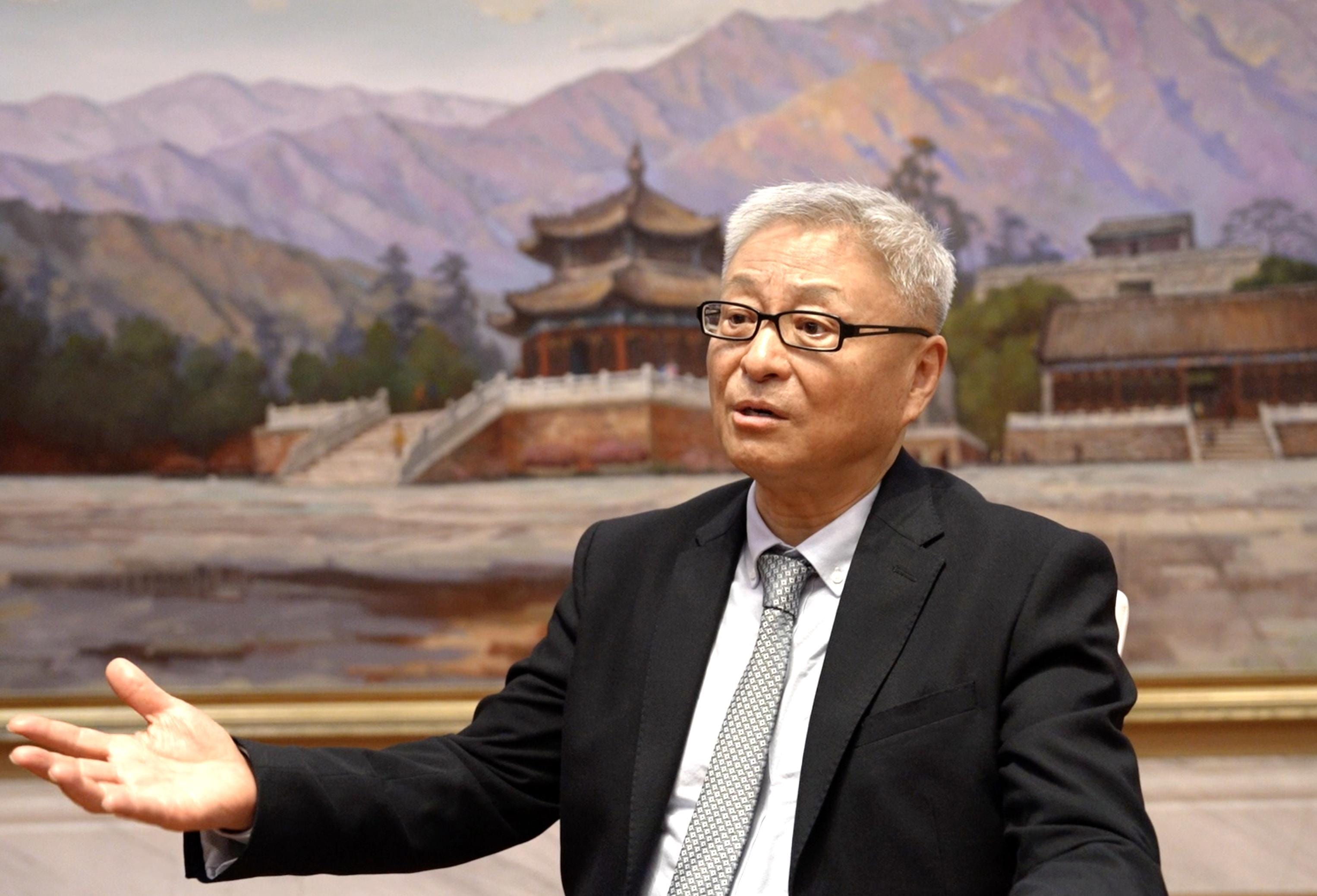
This translation has been reviewed by Yan himself before publication.
阎学通:中美战争风险小,但真正较量在这个新战场
Yan Xuetong: The Risk of China-U.S. War Is Low, but the Real Contest Is in a New Arena
China-U.S. strategic competition may become very intense, but a relatively effective mechanism for managing competition may already have been established, leaving little risk of direct war. The United States will lose its obvious advantage over China in strategic relations among major powers.
China’s strategic relations with Brazil and Russia will be better than those of the United States with these two countries. Germany and France will adopt relatively neutral hedging strategies in the China-U.S. competition. India, Japan, and the United Kingdom will have better strategic relations with the United States than with China, but their willingness to take the initiative in joining U.S. containment of China will decline. By then, the United States may have lost its international leadership.
Even if U.S. administrations after Donald Trump adjust his unilateralist strategy, the United States may still be unable to restore its advantage over China in global strategic competition to the level it had in 2022, when the Russia-Ukraine conflict brought Washington strategic gains. China-U.S. strategic competition may remain intense after Trump’s second term, but the two countries may establish a new mechanism to manage it, thereby forming a long-term, stable, and war-free competitive relationship.
1. A New China-U.S. Strategic Equilibrium
By 2035, the United States’ international strategic credibility may be lower than China’s. Trump’s isolationism and trade protectionism will not only weaken other major powers’ trust in his current administration but also weaken their trust in future U.S. administrations over the next decade. If Trump changes U.S. political rules and seeks to remain in power after his current term, other major powers will have to guard against his unpredictability. They may move closer to China and adopt a clearer hedging strategy.
Even if he leaves office on schedule, a new U.S. leader may be able to reduce other major powers’ suspicions, but will still find it difficult to restore US strategic credibility to the level of the Biden period. During the Biden administration, U.S. allies and strategic partners regarded the first Trump administration as an exception, believing that the United States would become reliable again after Trump. Trump’s re-election made these countries realise that, over the next decade, the return of Trump-type political figures to power in the United States will no longer be a low-probability event.
The U.S. political system has no mechanism to prevent such leaders from taking power. If such leaders appear repeatedly, U.S. foreign policy will be unable to maintain continuity. A change of leadership may lead to a 180-degree change in foreign policy.
By 2035, no matter which party’s politician are in power in the United States, U.S. allies and strategic partners may no longer believe that the continuity of U.S. foreign policy can last for more than four years. By contrast, regardless of their relations with China, all countries will be able to see that China’s foreign policy has stronger continuity than that of the United States, and that cooperation with China is more continuous and reliable than cooperation with the United States.
By 2035, China’s international political and economic influence may be comparable to that of the United States. The unilateralist foreign-policy concept of “America First” may continue to influence U.S. decision-makers. “America First” unilateralism is based on populist thinking. Although populism may begin to decline by 2035, the inertia of this mindset may still influence some people in U.S. decision-making circles. During Trump’s second term, the gap in power and status between China and the United States is likely to narrow. This may make subsequent US administrations even less willing to undertake international responsibilities, and they may continue to follow unilateralist foreign-policy principles.
By 2035, whether Republicans or Democrats are in power, U.S. decision-makers are more likely to continue deglobalisation than to return to globalisation as a foreign-policy strategy. Trump’s first term initiated the policy shift towards deglobalisation. Under Biden, U.S. government documents gradually reduced the use of the term “globalisation.” A second Trump term will reinforce deglobalisation policies for another four years, making it difficult for later U.S. administrations to restore globalisation as a strategic principle.
In contrast, Chinese decision-makers believe that China’s rise has benefited from economic globalisation. Over the next decade, the Chinese government is therefore likely to continue to uphold economic globalisation as a foreign-policy principle. If China upholds this principle for another decade while the United States continues deglobalisation, then by 2035, other major powers may adopt strategies of economic cooperation with China in order to benefit from the rapid growth of China’s digital economy. Their trade with China may then exceed their trade with the United States.
By 2035, the United States may no longer have an obvious advantage over China in international political appeal. Mutual imitation is common in great-power competition because decision-makers often believe that copying another country’s successful methods can produce similar results.
For example, as China continued to narrow the gap with the United States in digital technology, the Biden administration imitated China’s research and development strategy under the new type of whole-nation system, namely a strategy that combines government support with market incentives. The U.S. government introduced policies to support American technology and innovation companies and provided government subsidies to the semiconductor industry through the CHIPS and Science Act.
After Trump returned to office, the U.S. government also began to imitate China in some areas of social governance. According to the logic of mutual imitation among major powers, the more China narrows the gap in comprehensive national power with the United States over the next decade, the more U.S. decision-makers will imitate Chinese government practices.
By 2035, the domestic policies of China and the United States may be more similar than they are today. Some call this “homogeneous development.” Compared with China, the United States may no longer have an obvious advantage in international political appeal.
By 2035, the United States may still have more military partners than China, but its cooperation with them may be looser than in 2024. Only a few countries may take the initiative in cooperating with the United States to contain China militarily.
After the outbreak of the Russia-Ukraine conflict in 2022, U.S. military allies actively cooperated with the United States in containing China because China did not condemn Russia. By 2035, even if the Russia-Ukraine conflict has not formally ended, it may only remain a low-intensity conflict. By then, U.S. military allies will have grown tired of the prolonged war and adjusted their overall foreign policies, placing greater emphasis on economic cooperation with China.
By 2035, China’s imports of goods and services from U.S. allies may be much larger than they are today. For economic reasons, these countries may become less involved in China-U.S. strategic conflicts in East Asia. China may continue to uphold the principle of non-alignment. Without strategic allies, China’s influence in international security affairs may still be weaker than that of the United States.
China-U.S. Strategic Competition Will Be Intense, but the Risk of War Will Be Low
By 2035, the China-U.S. arms race may be relatively intense, but the two sides may still maintain a state of no war. Over the next decade, the gap between the scale and quality of Chinese and U.S. military equipment may narrow further. This would strengthen mutual deterrence and make both sides more cautious about preventing war.
In theory, the closer competitors are in military capability, the stronger their desire to increase their own military advantages, and the more intense their arms race is likely to become. Weapon intelligentisation is a basic trend in the digital age. As military equipment becomes more intelligent, new demands for military reform will inevitably emerge.
By 2035, the China-U.S. arms race may focus not only on upgrading intelligent military equipment, but also on major reforms of military organisational structures. The more intense the arms race becomes, the more concerned both sides will be about the outbreak of war. As a result, preventing direct war and preventing escalation may become the core issues of military dialogue. However, such dialogue may still be limited to the senior level, and the two sides may still lack multi-level military exchanges.
By 2035, intense China-U.S. cyberspace competition may become normal, and some bilateral norms for managing this competition may have taken shape. At present, there are few international norms constraining behaviour in cyberspace. Over the next decade, China-U.S. strategic competition in cyberspace will become increasingly intense and may exceed their competition in physical domains. To prevent cyberattacks from escalating into military conflicts in physical domains, China and the United States may have developed some norms for managing cyberspace competition by 2035. While competing for dominance in cyberspace, the two sides may also work together to prevent competition from getting out of control and causing a catastrophe for humankind.
Today, AI is moving towards AGI, or artificial general intelligence, and there is a possibility that AGI may act against human will and cause a catastrophe for humankind. Researchers believe that the negative effects of AGI include misuse, misalignment, mistakes, and structural risks. The catastrophic consequences of AGI risks may be no less severe than nuclear winter.
By 2035, China and the United States may reach international norms on the innovation and application of AI and AGI technologies, including their use in cyberspace and physical domains. The digital technology capabilities of China and the United States may far exceed those of other countries. The two countries may adopt a strategy that relies mainly on bilateral efforts, with multilateral efforts playing a complementary role, to formulate cyber norms as well as AI and AGI norms. In other words, they may use the outcomes of bilateral negotiations as a model to be promoted globally and seek multilateral support. This may be similar to the path taken by the United States and the Soviet Union in promoting nuclear non-proliferation norms.
By 2035, China and the United States may adopt similar strategies in their strategic competition, with both sides attaching importance to the prevention of direct war. The greater the power gap between competitors, the more their competitive strategies tend to differ. The stronger side tends to seek a quick victory, while the weaker side tends to favour a protracted struggle as a way to defeat a stronger opponent. Competitors of comparable strength, by contrast, tend to respond in kind.
In 2018, Trump launched a trade war against China, and China responded with proportionate countermeasures. In 2025, when Trump launched another trade war against China, he did not expect China to adopt firm reciprocal countermeasures. By 2035, the gap in comprehensive national power between China and the United States may be much smaller than it is today, and the similarity between their competitive strategies may increase.
Similarity in competitive strategies means that the two sides have a common understanding of the goals of the same strategy, as well as of its principles and specific tactics. The risk of direct war caused by misunderstanding each other’s strategic intentions may be relatively low.
Historical experience shows that U.S.-Soviet strategic competition was more likely to lead to war in the early Cold War than in the later Cold War. In the early period, both sides worried about the outbreak of a third world war; later, such concerns declined. In fact, once the United States and the Soviet Union reached a relative strategic balance, the risk of war became much lower.
This does not mean that China-U.S. strategic competition in 2035 will become moderate. Rather, it means that the competition will remain highly intense, but more certain and predictable, and its risk of escalation into war will be lower.
By 2035, neither China nor the United States may continue to cite ideological differences as a reason for strategic competition. Since the founding of the People’s Republic of China, severe ideological conflict between China and the United States has occurred mainly in the 1950s, the 1960s, the early 1990s, and the period from 2015 to 2024. This shows that, even when ideological differences remain unchanged, the two countries can either engage in ideological confrontation or choose to ignore such differences.
The experience of great-power competition since the end of World War II shows that ideological differences do not automatically lead to ideological confrontation. The key lies in whether decision-makers use them as a basis for confrontation. By 2035, pragmatism may have a stronger influence on Chinese and U.S. decision-makers than political ideology. They may prefer to pursue greater national interests at lower cost, rather than spend enormous national resources in the name of ideologies. China-U.S. strategic competition will have a stronger realist character and a weaker ideological character.
By 2035, China-U.S. economic competition may resemble that of 2024 and become more rational than it was in 2025. The gangster-style extortion tactics adopted by Trump in his second term risk causing China-U.S. economic competition to escalate into military conflict.
The reason Trump dares to use such dangerous methods is that the gap in comprehensive national power between China and the United States remains large. By 2035, this gap, especially in military equipment, may have narrowed significantly. At that point, the U.S. government may not dare to follow Trump’s dangerous competitive approach and instead return to managed economic competition. This would reduce the risk of economic competition escalating into military conflict. China-U.S. competition is comprehensive, and politics cannot be separated from economics. However, it is possible to prevent economic conflict from becoming military conflict.
Strategic Alignment Between China and the United States
Over the next decade, most countries may face the long-term problem of choosing sides between China and the United States. By 2035, choosing sides on specific issues may become a normal international phenomenon. In terms of overall strategic relations, however, Brazil and Russia may become China’s strategic partners, France and Germany may adopt relatively neutral hedging strategies, and India, Japan, and the United Kingdom may adopt hedging strategies leaning towards the United States.
Brazil
By 2035, Brazil may firmly choose China’s side rather than hedge between China and the United States. This would make China-Brazil cooperation more solid and reliable than in 2024. The two countries are geographically far apart, have no strategic contradictions, and both face strategic pressure from U.S. hegemony. Their current strategic cooperation may continue beyond 2035.
By 2035, Brazil’s greatest cybersecurity threat will most likely come from the United States. In both cybersecurity and digital economic development, Brazil will need Chinese technological support and is therefore likely to choose China’s technological standards. Its economic and technological cooperation with China may far exceed that with the United States.
China-Brazil cooperation in cyberspace may also promote cooperation in multilateral affairs. By 2035, BRICS countries may account for a larger share of the global economy than in 2024, and Brazil may attach greater importance to cooperation with China within the BRICS framework. Brazil will most likely become China’s firmest supporter among major Global South powers, while China may become Brazil’s most important strategic partner.
Brazil’s strategic relationship with the United States may be worse in 2035 than in 2024. Regardless of which party is in power, the decline of U.S. global leadership may push U.S. decision-makers towards retrenchment. A U.S. retreat from global engagement to the American continent may intensify its strategic contradictions with Brazil in Latin America. If the United States seeks to strengthen its dominance over South America, it will inevitably squeeze Brazil’s regional leadership.
The cybersecurity threat posed by the United States to Brazil may escalate. Cybersecurity concerns not only national security, but also the regime security of those in power. The Brazilian government has long been alert to U.S. interference in its internal affairs. By 2035, hostility between Brazil and the United States may be greater than in 2024.
Russia
By 2035, Russia may side with China, but its strategic antagonism with the United States may be weaker than in 2024. Having drawn lessons from the Russia-Ukraine conflict, the Russian government may become more cautious about getting involved in wars and shift the focus of national strategy towards economic development.
As the digital economy becomes the most important source of world wealth, Russia will need international support to improve its seriously underdeveloped digital economy. Because of the Russia-Ukraine conflict, however, Russia may still find it difficult by 2035 to conduct substantive technological cooperation with the United States, Germany, or Japan. Although Russia will worry about excessive dependence on Chinese digital technology, cooperation with China may remain its most beneficial option. To accelerate wealth growth and improve cybersecurity capacity, Russia may make China its principal strategic partner.
Russia’s strategic relationship with the United States in 2035 may be one of mutual vigilance rather than strategic competition or confrontation. By then, the gap in comprehensive national power between the two countries will have widened further. Even Russia’s strongest area, military power, may no longer be at the same level as that of the United States. This means Russia will lack the power foundation to compete with the United States, while the United States may pay less attention to its strategic relationship with Russia.
Drawing lessons from the Russia-Ukraine conflict, Russia will need to focus its efforts on advancing digital technology. The United States, however, will not want Russia to improve the intelligentisation of its military equipment and may continue to contain its technological progress. By 2035, neither side may have the will to develop strategic cooperation, nor the motivation to further worsen bilateral relations. Their relationship may be one of mutual vigilance rather than comprehensive confrontation. Since bilateral relations will not be a zero-sum strategic competition, and since the impact of the Russia-Ukraine conflict will have declined, their strategic confrontation may be weaker than in 2024.
Japan
Japan’s strategic relationship with China in 2035 may still be weaker than its relationship with the United States, but Japan may adopt a more balanced hedging strategy: relying on China economically and on the United States for security. Since military security interests take precedence over economic interests, Japan’s strategic relationship with the United States may still be much closer than its relationship with China. In military cooperation, Japan may cooperate more closely with the United States than France and Germany do.
Because Japan relies heavily on U.S. military protection, it will likely choose U.S. technological standards in the China-U.S. digital technology competition. Technological standards are closely related to economic transactions. Shared digital technological standards may mean that Japan-U.S. digital economic transactions exceed those between Japan and China. Japan may remain highly dependent on the United States in cybersecurity and the digital economy, and leaning towards the United States may remain its basic national policy. However, to guard against sudden changes resulting from a change of U.S. administration, Japan may become less willing than in 2024 to take the initiative in joining U.S. containment of China.
Although Japan-U.S. strategic relations in 2035 will still be based mainly on cooperation, their reliability may decline. By then, Japan’s economy may not only fall further behind China’s, but also become smaller than India’s. As Japan’s economic importance to the United States declines, Washington may treat Japan more unequally and increasingly see it as an unimportant follower. This will inevitably affect Japanese public perceptions of the United States and may even generate resentment.
In the 1970s, China-U.S. relations shifted from confrontation to strategic cooperation. Japanese diplomatic circles regarded this as “over-the-head diplomacy,” in which the United States bypassed Japan, leaving a long-term political shadow. By 2035, Japan’s hedging strategy between China and the United States may move closer to the middle than in 2024, with Japan handling its relations with both countries in a more balanced way.

Yan Xuetong: assessing a decade of predictions to inform future forecasts

In 2013, Professor Yan Xuetong, Director of the Institute of International Relations at Tsinghua University, published the book "Inertia of History: China and the World by 2023 历史的惯性:未来十年的中国与世界". Critics at the time described it as a work predicting the trends in the international landscape over the next decade: Could China become a superpower within th…
Yan Xuetong: The World is in Reverse

History does not walk a straight line; it staggers and turns. As Yan Xuetong (阎学通), Honorary Dean of the Institute of International Relations at Tsinghua University, argues, history swings like a pendulum—World War I regression followed by interwar peace, followed again by World War II regression, then Cold War stasis, relative progress. For much of the…
Yan Xuetong says policy makers should be placed at the center of theoretical analysis in international relations

The following article was a revised version of the one published in the Chinese-language Quarterly Journal of International Politics, Issue 3, 2025. The author, Yan Xuetong, is Honorary President of the Institute of International Relations, Tsinghua University, and serves as an Academic Advisor to
Yan Xuetong predicts Trump & China-U.S. competition

Yan Xuetong (阎学通), Honorary Dean of the Institute of International Relations at Tsinghua University and a leading figure in China's international relations (IR) field, delivered his predictions on China-U.S. relations and the evolving world order over the coming four years, at the
Yan Xuetong on the era of regression in international politics

It's not the most uplifting piece for New Year's Eve, but the theme feels appropriate for a time of endings and beginnings. Yan Xuetong (阎学通), Honorary Dean of the Institute of International Relations at Tsinghua University and a leading figure in China's international relations (IR) field argues in the following article that the current era has moved b…
I like Prof. Yan. But it's become pretty clear to me you Chinese just don't understand either the essence of the Thucydides Trap, or of the potential for a chaotic decline of the West, which will cause unpredictable reactions in the global system.
Anything in there about who might be leading China by 2035? I assume not (for obvious reasons), though it feels like a big hole - especially when there’s plenty of discussion about who might be leading the US then (including reference to whether Trump leaves “as scheduled”!). Especially interesting question since some in DC think 2035 is when Xi plans to retire.