


China must stop its manufacturing base from shrinking too fast or too far if it is to avoid the deindustrialisation trap facing many advanced economies, a senior Shanghai official has warned in No. 22, 2025 (published on 16 November) of Qiushi (Seeking Truth), the Communist Party’s flagship theoretical fortnightly.
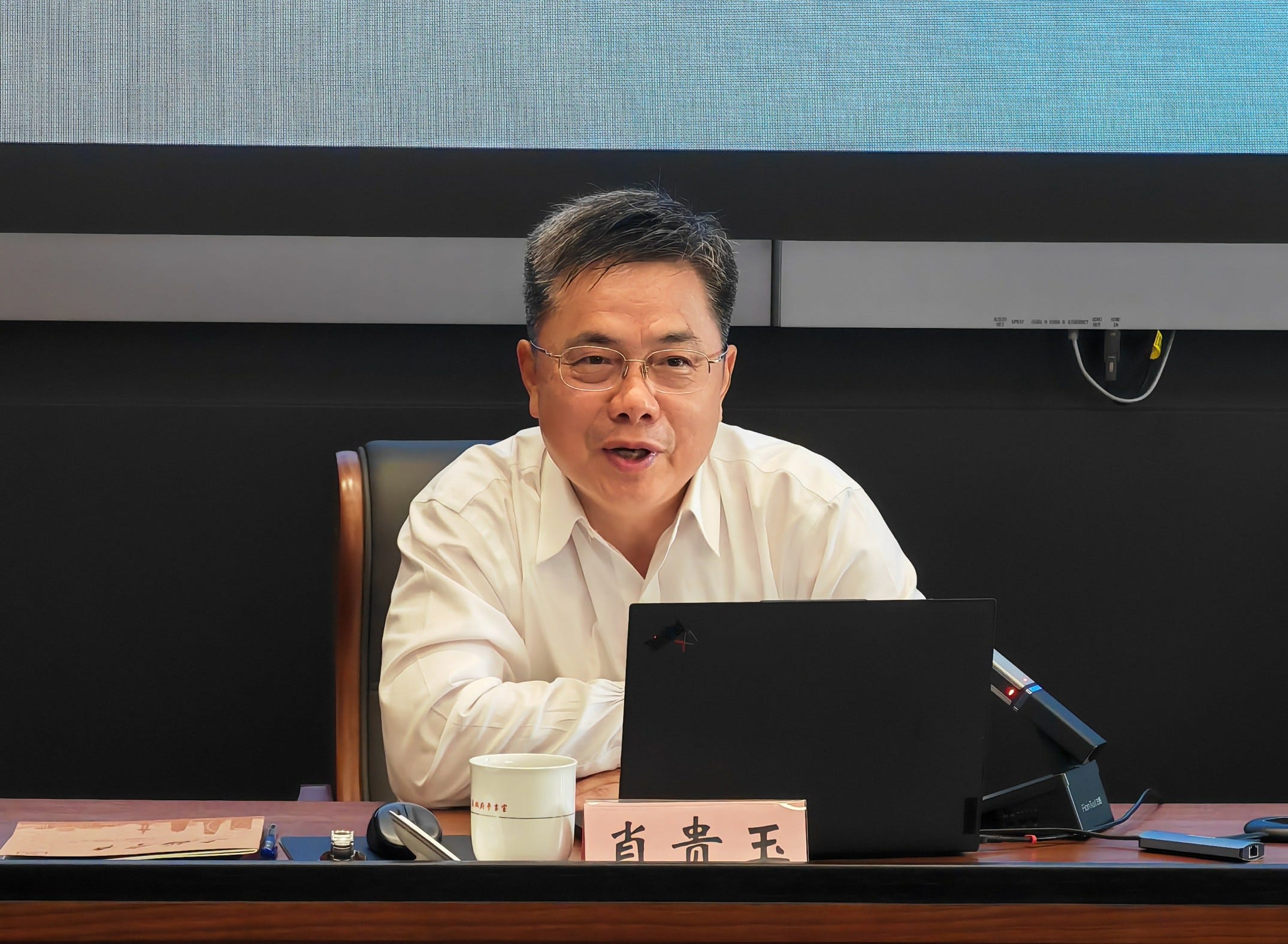
As Beijing drafts its 15th Five-Year Plan amid a domestic “anti-involution” campaign, Xiao Guiyu, Deputy Secretary of the Leading Party Members’ Group and Vice Chairman, Shanghai Municipal Committee of the Chinese People’s Political Consultative Conference (CPPCC), says manufacturing must retain a substantial share in China’s economy as the “ballast stone” of the country’s great power ambitions, endorsing a formal pledge from the recently concluded Fourth Plenum to maintain the sector’s weight in the national economy.
Although Xiao is a municipal official, his vice-ministerial rank and the weight of Qiushi suggest the argument enjoys serious political backing in Beijing.
Xiao’s article is accessible on Qiushi’s official website and official WeChat blog.
—Yuxuan Jia
保持我国制造业合理比重是个重大问题
Maintaining a Reasonable Share of Manufacturing in China’s Economy Is a Matter of Great Importance
In May 2025, during an inspection tour in Luoyang, Henan Province, General Secretary Xi Jinping said that it is imperative to maintain a robust and reasonable share of the manufacturing, a key pillar of the national economy, in the process of advancing Chinese modernisation. The Communique of the Fourth Plenary Session of the 20th Central Committee of the Communist Party of China explicitly stated that “the share of manufacturing in the national economy should be kept at an appropriate level.” Ensuring such an appropriate level is an essential requirement for accelerating the building of a manufacturing powerhouse and for fostering a modernised industrial system; it is also a matter of fundamental importance for the Chinese modernisation.
International experience shows that major economies and economic powerhouses have long sustained a reasonable share of manufacturing in their economic structure. U.S. manufacturing accounted for more than 20 per cent of global manufacturing output for seven decades from 1930 to 2000, and between 1945 and 1955 it made up roughly half of global manufacturing. After 2008, despite only limited success in “reshoring” and “reindustrialisation,” the United States has maintained notable international competitiveness in manufacturing, particularly in key components and critical basic materials. In Germany, manufacturing contributed between 20 per cent and 23.5 per cent of GDP from 2000 to 2023, underpinned by a strong technological base and a well-integrated industrial system. In Japan, the Republic of Korea, Singapore, and other advanced economies, the manufacturing share has remained broadly stable at around 20 per cent of GDP since the 2000s.
By contrast, countries that have chosen to “deindustrialise” after achieving manufacturing-led prosperity have seen not only a contraction in manufacturing but also a weakening of the very foundations of their economies. In the United States, for instance, manufacturing’s share of GDP declined from 22 per cent to 13 per cent between 1990 and 2010; a large-scale contraction in the sector contributed to widening trade deficits and rising income inequality. Likewise, in the United Kingdom and France, two long-industrialised economies, manufacturing accounted for less than 10 per cent of GDP in 2024, and the erosion and hollowing out of their industrial base has been accompanied by sluggish growth and insufficient economic dynamism.
Latin American economies such as Brazil and Argentina, meanwhile, have struggled to build robust industrial competitiveness, leaving their economies vulnerable and contributing to their slide into the “middle-income trap.” In recent years, several developed countries have sought to promote “re-manufacturing” in response to the consequences of deindustrialisation, yet the challenges remain substantial. In short, the greater a country’s capacity—particularly in the case of major economies—to maintain a reasonable share of manufacturing, the stronger its industrial and technological accumulation and the foundations for high-quality economic development.
China’s domestic experience illustrates a leapfrog trajectory in manufacturing development—from a weak industrial base to global leadership. After the founding of the People’s Republic, the first generation of Party and state leaders, having witnessed the hardships of old China, clearly recognised that the country’s vulnerability stemmed in large part from its backward industrial and technological capabilities. From the very first Five-Year Plan (1953–1957), industrialisation was placed at the core of national development.
With the launch of reform and opening up, China’s industrial sector gained strong momentum and expanded rapidly in scale. Industrial value added exceeded 1 trillion yuan in 1992 and 10 trillion yuan in 2007. In 2010, China’s share of global industrial output reached 21 per cent, surpassing that of the United States for the first time; by 2012, industrial value added had risen above 20 trillion yuan. Since the beginning of the new era, both the scale and sophistication of China’s manufacturing sector have reached new heights. In 2024, manufacturing value added reached 33.6 trillion yuan, accounting for 24.9 per cent of GDP, marking the country’s 15th consecutive year as the world’s largest manufacturing power. China’s manufacturing industry employs more than 100 million people, accounting for about 14.2 per cent of total employment nationwide. Existing studies show that each additional job on a manufacturing assembly line can generate six jobs along the supply chain and three more in other sectors.
China’s development experience highlights a clear conclusion: “The manufacturing industry is an indispensable sector to China at all times.” Manufacturing is the foundation of a country and the basis of a strong nation.
Maintaining a reasonable share of manufacturing provides overarching, strategic support for China’s goal of building a great country. China is now at a pivotal stage in its transition from a major manufacturing country to a manufacturing powerhouse. As General Secretary Xi Jinping has repeatedly emphasised, “To go from a major country to a strong one, we must give paramount importance to the development of the real economy; at no time should we allow the economy to become detached from the real economy.” Ensuring that manufacturing retains a reasonable weight in the economy is therefore of profound significance.
First, it is essential for promoting high-quality economic development. Manufacturing is a key pillar of the real economy and a “ballast stone” of overall economic stability. It enables the formation of industrial, supply, financial, and talent chains that are mutually integrated, supportive, and reinforcing, thereby underpinning high-quality development.
Second, it is vital for safeguarding national security. A strong manufacturing base enhances the resilience of industrial and supply chains, secures industrial safety, and guarantees the supply of national strategic resources, forming a core force for preserving economic independence and national security.
Third, it is crucial for enhancing international competitiveness. Manufacturing provides the material foundation for, and is a core manifestation of, a country’s comprehensive strength. It, to a considerable extent, determines a country’s position in global value chains and serves as an irreplaceable strategic asset in major power competition, as well as a decisive factor in securing the initiative in international competition.
Fourth, it powers scientific and technological self-reliance. A robust manufacturing sector is a critical step toward building an innovative country and a global science and technology leader. Many major technological breakthroughs originate in manufacturing before diffusing into other sectors, and manufacturing itself is a key arena for applying scientific and technological innovation. The deep integration of manufacturing with emerging technologies will unlock significant new growth potential.
Fifth, it is indispensable for maintaining social stability. Manufacturing ensures the supply of basic goods, has a strong capacity to absorb employment, and provides a solid foundation for long-term social stability.
Traditional economics holds that as an economy grows, the share of manufacturing tends to decline while that of services rises. Since the 12th Five-Year Plan period (2011-2015), China’s industrial share in GDP has fallen year by year, from 40 per cent in 2011 to 34.1 per cent in 2015, then to 30.9 per cent in 2020 during the 13th Five-Year Plan (2016-2020), and further to 30 per cent in 2024 under the 14th Five-Year Plan (2021-2025). Correspondingly, the share of manufacturing declined from 29.3 per cent in 2017 to 24.9 per cent in 2024. In this sense, China’s manufacturing share exhibits an inverted-U pattern of “rising first, then declining,” broadly in line with the theoretical and empirical regularities of industrialisation.
However, it is important to guard against the share of manufacturing declining too fast or too far, as this could lead to serious consequences. General Secretary Xi Jinping has consistently attached great importance to this issue. As early as 2018, he observed that “China is still in the stage of industrialisation, yet the share of manufacturing in the economy has already shown an excessively rapid decline—this must command our full attention.” Since then, he has repeatedly stressed the need to form a correct understanding of changes in the manufacturing share.
Overall, given the large scale, comprehensive range, and extensive supply chain networks of China’s manufacturing sector, preventing an excessively rapid decline in its share is both essential and entirely achievable. The Fourth Plenary Session of the 20th CPC Central Committee made a clear strategic arrangement that “the share of manufacturing in the national economy should be kept at an appropriate level.” Looking ahead to the 15th Five-Year Plan period, ensuring such a reasonable share will require not only maintaining appropriate quantitative growth, but also achieving effective qualitative improvement and properly managing the following five key relationships in the course of development.
First, it is important to properly manage the relationship between building up new growth drivers and upgrading traditional ones. Despite significant progress, China’s manufacturing sector still faces bottlenecks in certain key and core technologies. In emerging fields such as semiconductors, high-end precision instruments, and aircraft engines, gaps remain relative to the international frontier; for example, China’s integrated-circuit industry remains relatively weak compared with Western countries in areas such as key equipment and advanced chips.
Meanwhile, some traditional enterprises lack sufficient momentum for transformation and continue to exhibit path dependence in their production and operational systems. The key constraints on upgrading traditional industries stem not only from a shortage of ideas and capabilities within firms, but also from a lack of effective policy support.
To properly manage the relationship between building up new growth drivers and upgrading traditional ones, it is necessary to accelerate the development of strategic emerging industries and strengthen policy support for technological innovation in integrated circuits, artificial intelligence, and biomedicine, etc. Greater efforts must be made to break through technological “chokepoints” and achieve self-reliance in core technologies as soon as possible.
Priority should be given to building high-end industrial clusters, with accelerated deployment in high-technology industries such as next-generation information technology, new materials, high-end equipment, civil aviation, and ship and offshore engineering equipment. These efforts will help China’s manufacturing sector move steadily toward the middle and upper tiers of global value chains, generate economies of scale, and enhance the country’s overall cost and efficiency advantages.
Policy focus should also tilt toward green and low-carbon industries, fostering the growth of new energy sectors such as hydrogen energy and energy storage. This requires stronger planning, more effective implementation mechanisms, intensified technological research, broader application scenarios, and a faster rollout of pilot projects and high-efficiency production capacity.
At the same time, the upgrading of traditional industries must continue. Greater policy and financial support are needed to guide traditional sectors toward higher-end, smarter, greener, and more integrated development.
Second, it is important to properly manage the relationship between manufacturing and services. At present, significant obstacles remain to the integrated development of China’s manufacturing and service sectors. The supply of high-end services is insufficient: in 2024, producer services accounted for 31.5 per cent of GDP, far below the roughly 50 per cent commonly seen in developed countries. High-quality supply in areas such as R&D, design, and information technology remains limited, and manufacturing firms’ demand for high-end services is still inadequate. Surveys show that around 50 per cent of manufacturing enterprises report no need to purchase services externally, and their existing service procurement is largely concentrated in logistics and transportation.
The integration between manufacturing and services is also inadequate. The development of value-added services for advanced manufacturing remains weak, and software development in particular still falls significantly short of the international frontier. Financial support for the real economy is insufficient: firms continue to face persistent problems of difficult and costly financing, credit resources exhibit structural mismatches, and direct financing channels remain underdeveloped.
To effectively manage the relationship between manufacturing and services, it is necessary to accelerate the building of a modernised industrial system and to cultivate new quality productive forces in line with local conditions. New technologies, processes, and solutions should be leveraged to continuously raise the innovativeness, technological sophistication, and overall advancement of all stages and the entire chain of manufacturing.
Strong efforts should be made to promote the integrated development of manufacturing and services. This requires seizing the trends of digitalisation, integration, and upgrading in the service sector, identifying key areas for deeper integration between advanced manufacturing and modern services, and strengthening the development of integrated application scenarios. Service-oriented manufacturing in areas such as industrial design, testing and certification, shared manufacturing, digital transformation, supply chain management, systems integration and general contracting, and customised production should be advanced.
Financial services must also become more targeted and effective. Enhancing the professionalism of financial institutions and improving service models will help strengthen the capacity of finance to serve the real economy.
Third, it is important to properly manage the relationship between scientific and technological innovation and industrial innovation. The integration between them remains inadequate in several key areas. Investment in basic research is insufficient: in 2024, basic research accounted for 6.9 per cent of China’s total R&D expenditure, still far below the levels in the United States (18 per cent), Japan (13 per cent), and EU member states (19 per cent).
The commercialisation of scientific and technological achievements is also inadequate. In 2024, the patent commercialisation rate of Chinese universities was below 10 per cent, whereas the rate exceeded 50 per cent in the United States and Germany. A large volume of scientific research output remains confined to papers, laboratories, and technical reports, rather than being effectively transformed into productive forces.
Moreover, the role of market entities in innovation is not yet fully brought into play. The breadth and depth of enterprise participation—especially that of private enterprises—in undertaking major government science and technology projects, accessing R&D funding, and engaging in innovation-related decision-making still need to be expanded. The development of enterprise-led consortia that integrate industry, universities, research institutes, and end-users also needs to be further strengthened.
To properly manage the relationship between scientific and technological innovation and industrial innovation, scientific innovation must drive industrial innovation. It is essential to strengthen the role of science and technology as a primary source of development momentum. Efforts should focus precisely on the “key acupoints” and “critical nodes” in the commercialisation of scientific and technological achievements. In line with local conditions and through coordinated planning, proof-of-concept centres, small- and pilot-scale testing platforms, and application demonstration bases should be developed to open up the “last mile” from technological breakthroughs along the innovation chain to practical application along the industrial chain.
At the same time, industrial innovation should be leveraged to guide scientific and technological innovation. The market strengths and leading role of various business entities in innovation must be fully recognised. Enterprises should be enabled to play the principal role in innovation decision-making, R&D investment, research organisation, and technology commercialisation. The market should be allowed to guide technological directions, pathway choices, and the allocation of factors. Enterprises should be supported in playing a greater role in addressing common challenges in industrial development and tackling key technological bottlenecks, thereby promoting the concentration of innovation resources in areas critical for breakthroughs in core technologies.
Fourth, it is important to properly manage the relationship between regional development and industrial coordination. Current development practice shows that building a unified national market in China remains a long-term and arduous task. Regional industrial layouts still exhibit “copy-and-paste” homogeneity; for example, many localities are aggressively courting popular industries such as artificial intelligence, leading to excessive competition and and a scramble to enter the same industries, and in some cases resulting in supply–demand imbalances.
Regional competition for investment has become overly intense. Many localities offer similar incentive packages, such as tax exemptions, preferential land policies, and even free factory space, to attract enterprises. These practices distort market mechanisms and undermine orderly market competition.
To properly manage the relationship between regional development and industrial coordination, it is necessary to foster differentiated development patterns for key regions and industries, strengthen the integrated and interconnected development of regional manufacturing, and build industrial layouts marked by regional division of labour and complementary strengths. Efforts should be made to enhance the resilience of industrial chains and promote coordinated development.
Localities should be encouraged to accelerate high-quality development of manufacturing in line with local conditions. They should ground their strategies in regional realities, fully tap their resource endowments and the strengths of their existing industrial systems, and give full play to their distinctive advantages. Greater priority must be given to manufacturing development, so that its role as a ballast stone of stable growth is fully brought into play and the core competitiveness of China’s manufacturing sector is effectively enhanced.
Fifth, it is important to properly manage the relationship between self-reliance and opening up. In recent years, In recent years, the United States and other Western countries have intensified their suppression of China’s manufacturing sector, and growing uncertainty surrounding their trade and economic policies toward China has weighed on the exports of many Chinese manufacturing firms.
At the same time, the risks of international decoupling and supply chain disruption continue to rise. Some countries have imposed technological blockades on China, placing Chinese semiconductor-related companies on “entity lists” and restricting their access to critical manufacturing equipment and software tools.
To properly manage the relationship between self-reliance and opening up, China must pursue openness on the basis of autonomy, accelerate the domestic development of critical technologies, narrow technological gaps, and build greater competitiveness and influence within the international industrial division of labour. It is essential to uphold self-development within the framework of institutional opening up, advance high-standard institutional opening up, and remain committed to openness and cooperation rather than turning inward. A systematic and proactive strategy should be put in place to break through bottlenecks, optimise global supply chains, strengthen the resilience of industrial and supply chains, expand the development space of China’s manufacturing sector within the domestic–international dual circulation, and continuously raise the position of Chinese industries within global value chains.
These five relationships are closely interconnected and mutually reinforcing. Properly managing them requires both sound top-level design and stronger institutional support, together with improved mechanisms and enhanced collaboration among multiple stakeholders. This calls not only for technological innovation and targeted breakthroughs, but also for the effective allocation of resources to fully unlock the vitality of market entities.
At the current stage, it is essential to seize the major opportunity presented by the formulation of the 15th Five-Year Plan, translate the requirement of maintaining a reasonable share of manufacturing into concrete actions, further enhance the core competitiveness of China’s manufacturing sector, and promote high-quality economic development at a higher level and on a more sustainable basis, thereby laying a solid foundation for Chinese modernisation.
