
Henry Huiyao Wang, Founder and President of the Center for China and Globalization (CCG), has been named to the Advisory Council of Think20 (T20) U.S. in 2026.
According to the Global Solutions Initiative, T20 is one of the official engagement groups of the G20, bringing together think tanks, research centres, and policy experts from around the world to provide evidence‑based insights and policy recommendations to G20 leaders and officials. T20 U.S. in 2026 is being convened as a policy research network under the theme “Harnessing Knowledge and Ensuring Continuity for Better Policymaking in Uncertain Times.”
According to a Stimson Center post, the T20 Advisory Council brings together policy researchers, think tank leaders, former senior diplomats, and practitioners from major economies, international organisations, academic institutions, and policy research organisations. Its members come from countries including the United States, China, Germany, France, Italy, the United Kingdom, Canada, India, Brazil, South Africa, Russia, Mexico, Argentina, the Netherlands, Portugal, Nigeria, Tunisia, and Bangladesh, reflecting broad participation from G20 members, European economies, and countries from the Global South.
As part of the 2026 T20 process, the Advisory Council is expected to contribute policy solutions to the broader T20 U.S. policy process ahead of the 2026 G20 Leaders’ Summit in Miami, helping support policy continuity as the United Kingdom prepares to host the G20 in 2027.
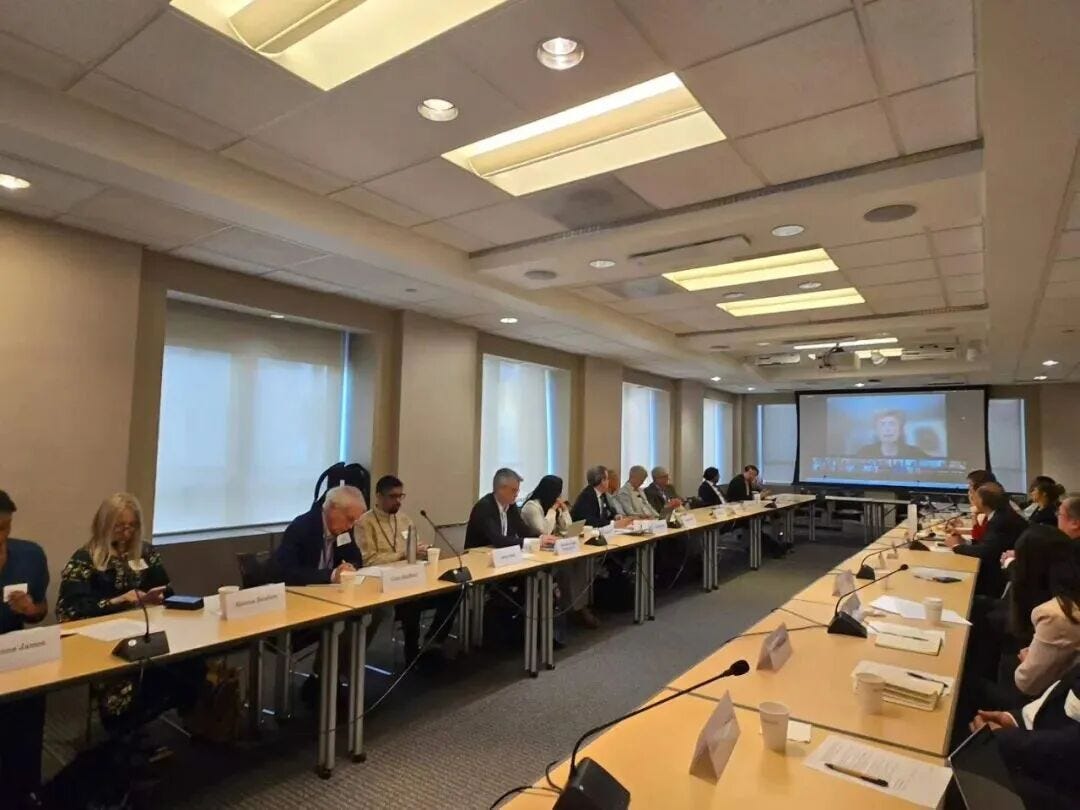
On April 17, 2026, Wang participated in a T20 seminar in Washington, D.C., co-hosted by the Brookings Institution, the Quincy Institute for Responsible Statecraft, and the Stimson Center.
Against this backdrop, we are pleased to repost the Global Solutions Summit (GSS) summary report, available via the Global Governance Innovation Network. The report offers a concise overview of discussions at the Global Solutions Summit and provides further context for the ongoing T20 and G20 policy agenda.

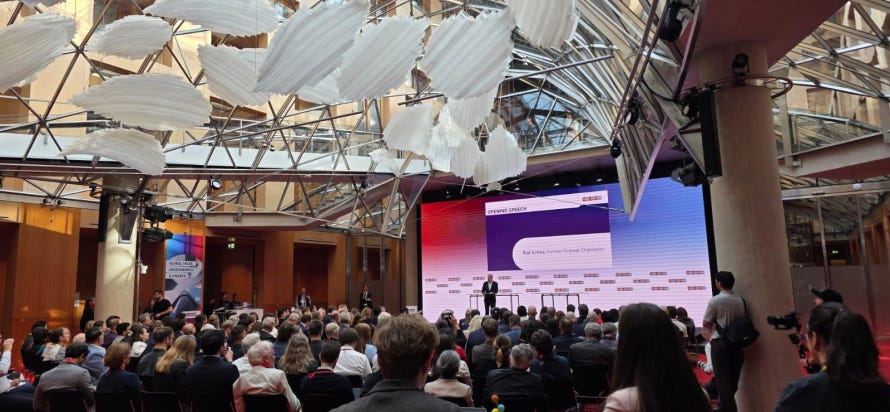
T20 U.S. @ The Global Solutions Summit 2026
Berlin, Germany
June 1-2, 2026
T20 U.S.
Through the T20 U.S. in 2026, the Think Tank 20 (T20) policy research network is once again poised to produce and share practical and timely knowledge products for all G20 policymakers, ensuring continued engagement on key themes of international policy relevance to all Member States and regional groupings. In 2026, these include, but are not limited to, the G20 U.S. working group themes of: 1. removing regulatory burdens; 2. unlocking affordable and secure energy supply chains; 3. pioneering new technologies and innovation; and 4. identifying areas of consensus on trade issues. Additionally, the T20 is committed to continued work on, among other major legacy issues, sustainability, inequality, international financial architecture and collective security reform, human rights, pandemic prevention and public health, migration and refugees, gender and youth empowerment, disabilities, humanitarian action, food insecurity, and peace.
Global Solutions Summit
The GSS is an international platform that supports G20 and G7 processes by bringing together a wide range of stakeholders to develop practical, solution-oriented responses to global challenges. Each year, the summit gathers policymakers, experts, and practitioners from across sectors for a series of interactive sessions designed to translate dialogue into outcomes on topics ranging from international economic cooperation, energy, and climate and sustainability to digital and AI transformation, and global governance. Guided by the 2026 theme, “Finding Common Ground in a Fractured World,” the summit places emphasis on reimagining, and rebuilding trust in, multilateral cooperation at a time of geopolitical tension and inequality. Through cross-sector engagement and innovative approaches, the summit seeks to forge a new multilateralism for a new era, cultivating the alliances needed to turn global disruption into progress.
Major Day 1 Sessions
The Limits of Going Alone: Economic Security vs. Global Cooperation (T20-T7 Troika Dialogue)
The T20-T7 Troika dialogue focused on the growing recognition that no major economy can achieve economic security alone, making multilateral cooperation essential for developing mutually beneficial partnerships and addressing challenges related to supply chains, sustainable development, and long-term resilience. The discussion also assessed the potential risks associated with economic nationalism and explored how more equitable relationships, rather than extractive practices, can strengthen economic security at both domestic and international levels. Participants broadly agreed that the international community is experiencing increasing fatigue and declining confidence within multilateral institutions, underscoring the need for institutional reforms that can reinvigorate cooperation across borders. Several contributors emphasized the G20’s unique role as a central forum for building coalitions that transcend inward-looking, nationalistic agendas and, instead, can help to prioritize human capital development, sustainable economic practices, and inclusive growth worldwide. The dialogue also highlighted energy security and resilience from natural disasters as increasingly urgent international priorities, while stressing the importance of global cooperation to support stable energy transitions and regional stability. The exchange further explored how successive G20 presidencies can strengthen policy continuity by advancing integration as a cross-cutting theme, helping to sustain engagement and generate long-term buy-in across G20 Member States.
G20 Sherpas Private Meeting
T20 and T7 policy research network representatives also participated during the Global Solutions Summit in a rich, private exchange with seven G20 Sherpas from Argentina, Australia, Germany, India, Norway, the OECD, and the United Nations. In connection with offering policy research support across a range of substantive topics, the T20 and T7 policy researchers in attendance engaged the G20 Sherpas in a dialogue on, for instance, i.) facilitating strong, sustainable, balanced, and inclusive growth, including through new approaches to development finance; ii.) skills development to increase women’s participation in the workforce; iii.) global governance of artificial intelligence (e.g., new Global Partnership on AI Governance) and other pioneering technologies, including through the promotion of digital public infrastructure; iv) public health and pandemic prevention; v) energy security and the protection of vital supply chains; vi) social issues, including gender, inequality, and aging populations in especially advanced industrial societies; and
A New Approach to Achieving the Global SDGs: From Aid to a Development Approach?
This discussion examined strategies for accelerating progress toward the Sustainable Development Goals (SDGs) amid growing financial constraints and shifting approaches to international development. Panelists emphasized that achieving the SDGs will require greater levels of investment and growth, especially in regions across the Global South that face persistent development challenges. A recurring theme was that many governments are moving away from traditional aid-based approaches, which makes alternative financing mechanisms, such as private sector investment, longer-term development funding, and domestic resource mobilization, more critical than ever to unlocking opportunities and sustainable growth. Participants also highlighted the continued importance of bilateral and multilateral cooperation in supporting development objectives, while also stressing the need to strengthen implementation capacity, improve accountability, and enhance program effectiveness to rebuild confidence in global development efforts.
Major Day 2 Sessions
T20 U.S. Advisory Council Launch
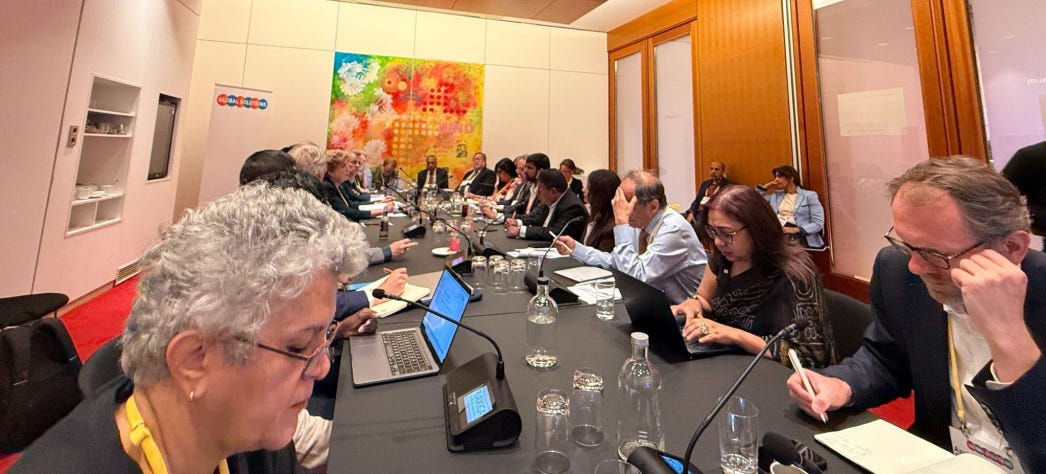
Complementary to the T20’s Workstreams (see below), the T20 U.S. Advisory Council will once again reflect on and feed carefully researched policy ideas into the G20 U.S. presidency priority themes across the Sherpa and Finance Tracks and beyond, and in light of rapid, multiple changes in global and regional multilateral governance. Specifically, individual Advisory Council members will be asked to prepare at least one brief “Policy Solutions” paper, in a short 1-2 weeks period in response to a G20 Member State’s or regional grouping’s request. The Advisory Council will also provide feedback on “Incubator Concepts,” such as a new T20 Foresight Hub or revival of T20/G20 Implementation Roadmaps and Scorecards. The T20 Advisory Council members can be found here.
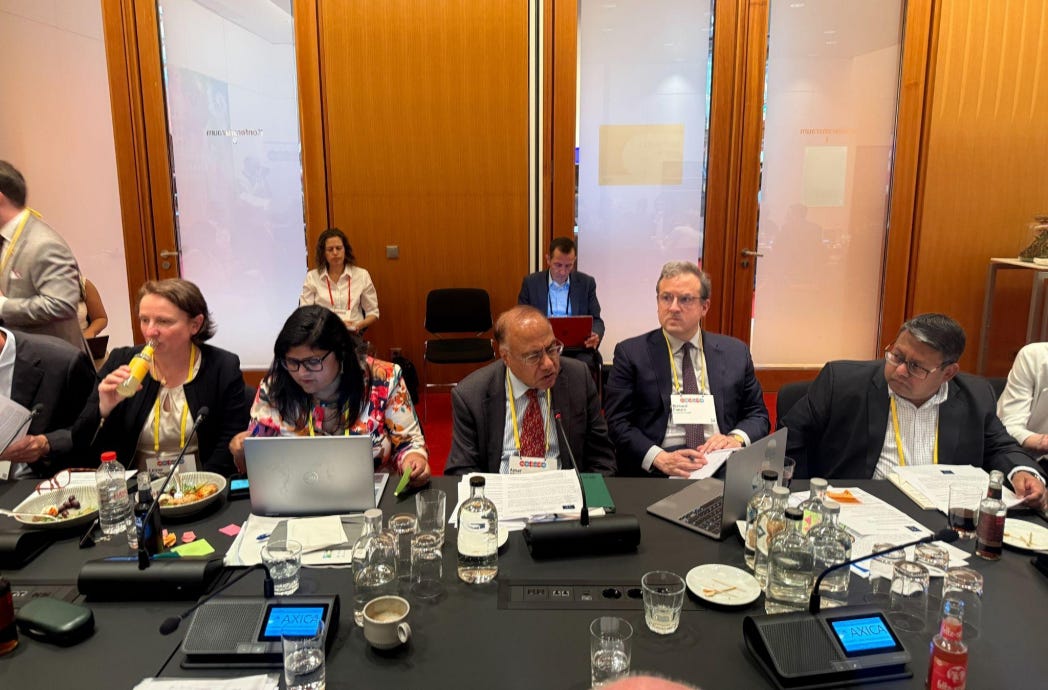
The Advisory Council launch, hosted during the Council for Global Problem-Solving meeting, focused on key questions about how the council’s policy solutions papers can better support G20 policymakers, how incubator tools can strengthen follow-through, and how T20 outputs can be better aligned with policymaker needs. Two lead-off presentations showcased these policy solutions in practice: Dr. Maria João Rodrigues emphasized AI governance and digital transformation as drivers of a new growth model, while Dr. Philani Mthembu presented on the T20 South Africa’s work on addressing global inequality through the G20. Each policy solution will be developed with a pragmatic emphasis on political feasibility to strengthen the case for use by government leaders. Additional contributions during the session stressed the strategic importance of AI and the value of better aligning alternative global governance forums on AI, such as the AI for Good Summit and the Global Dialogue on AI Governance, to reinforce coherence in regulatory approaches. The Advisory Council also highlighted the potential for coalition-building among like-minded states to advance responsible innovation and increase actionable commitments found in the policy solutions.
Workstreams
The T20 U.S.’ five distinct Workstreams (formerly taskforces) are led by policy-researchers and scholars that bring diverse expertise to contribute around five policy notes per workstream for the benefit of G20 and other international policy-makers. Across the five thematic areas, co-chairs reported on several of the top strategic priorities emerging from their respective workstreams.
1. Fostering Trade and People-Centered Economic Growth: Co-Chair Dean Bambang Brodjonegoro from the Asian Development Bank Institute emphasized the need to support regional approaches to the WTO/global trade, as well as uplifting lower income countries through trade-based growth.
2. Safeguarding Energy Security and Resilience: Co-Chair Paul Samson, Center for International Governance Innovation, highlighted four areas of focus, including energy diversification, transitioning to strategic energy reserves, nuclear renaissance, and just energy transitions (including the role of critical minerals).
3. Boosting Innovative Technologies, including Artificial Intelligence: Co-Chair Stephanie Diepeveen,ODI-Global, emphasized her workstream’s focus was on bridging the digital divide, disrupting the AI industrial revolution with safeguards, and creating an all digital citizen. There was a healthy conversation on the term “boosting” to ensure that the T20 was not promoting the militarization of AI’s capabilities.
4. Mobilizing Finance and Tackling Debt Constraints, including through International Financial Architecture Reform: Co-Chairs Katharin Berenseman, IDOS and Izabella Textiera, CEBRI, discussed the high cost of debt and the efforts underway to improve the international financial system by reforming priorities and restructuring debt, as well as the need to have high income and low income countries cooperate on international financial architecture reforms.
5. Sustaining and Strengthening Global Coordination on Socioeconomic Development and Peacebuilding: Co-Chair Zach Paikin, discussed the challenge of UN Security Council reform and how there are opportunities across the G20 that are less politicized than the New York-based IGN process to strengthen multilateralism. He also touched on how the G20 can still provide an inclusive platform bringing disparate powers together in the same room at a time when norms surrounding the use of force are contested.
This discussion emphasized that economic resilience depends on a predictable, rules-based open trade architecture that can function as a foundation for sustained, global growth. It identified priorities including strengthening the multilateral trading system, supporting neighboring partners, curtailing trade distortions, and addressing regulatory barriers to cross-border commerce. On energy security, points were raised on securing affordable and reliable energy amid geopolitical fragmentation, with an emphasis on linking energy security to development and inclusion. Regarding emerging technologies, the participants discussed how AI represents a policy challenge that is widely discussed yet difficult to translate into concrete solutions. Participants stressed the need to improve coordination across global AI initiatives to build synergies, manage disruptions, and support more coherent governance.
The fourth workstream examined debt sustainability, the role of national development banks, domestic resource mobilization, and reforms to the international financial architecture. The willingness of G20 countries to cooperate on these issue areas provides important entry points for advancing this unfinished agenda. Finally, participants also focused on strengthening multilateral reform as a pathway to sustainable peace. Discussion included debates over whether this shift entails adjustments to the composition of permanent UN Security Council members, the development of new rules governing the legitimate use of force, and whether efforts should be made to restore elements of the “old” world order.
Select upcoming Calendar-of-Events (and the T20 U.S. organizing team welcomes further think tank self-initiated T20 side events throughout 2026):
● 1-3 July: ACUNS Annual Meeting 2026, including a roundtable on Continuity and Contestation: the G20 at a Crossroads and its Implications for the UN System (Lisbon).
● 31 August - 1 September: G20 Finance Ministers and Central Bank Governors Ministerial (Asheville, North Carolina)
● 20-26 September: UNGA High-Level Week, including a T20 U.S. side-event (New York).
● 12-18 October: 2026 Annual Meetings of the World Bank and the International Monetary Fund, including a T20 U.S. convening (Bangkok).
● 30-31 October: G20 Foreign Ministers’ Meeting (Atlanta)
● 16-17 November: Pre-T20 U.S. Summit Track 1.5 Dialogue (New York)
● 18-19 November: T20 U.S. Summit (New York)
● 14-15 December: G20 Leaders’ Summit (Miami)
