


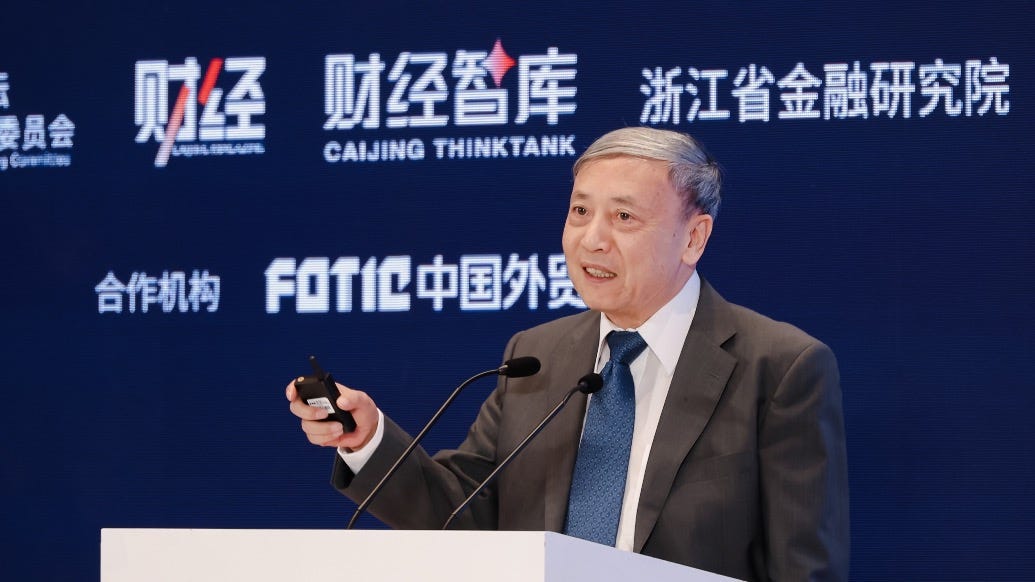
Cai Fang is a former Vice President—meaning Vice Minister—of the Chinese Academy of Social Sciences (CASS). He currently holds the title of Academician (学部委员 ), reserved for CASS’s highest-ranking scholars. He is also President of the Chinese Association of Labour Economics under CASS, Chairman of the Academic Committee of the China Finance 40 Forum (CF40), and a member of the World Bank’s High-Level Advisory Council on Jobs. A leading voice in China’s economic reform, development, and labour economics, Cai has long explored issues of demography, agriculture, rural development, and income distribution.
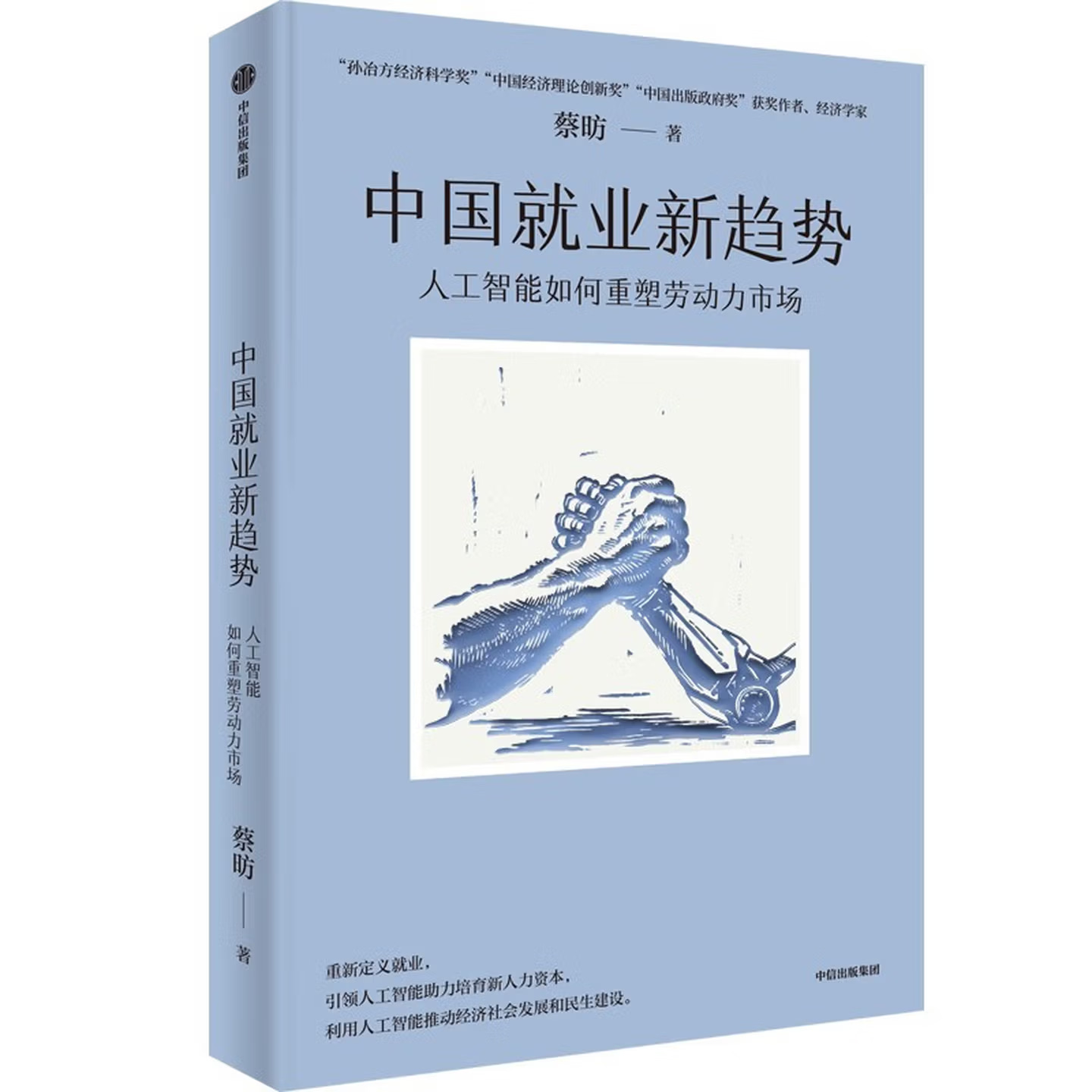
In his recent book, New Trends in China’s Employment: How Artificial Intelligence Is Reshaping the Labour Market (中国就业新趋势:人工智能如何重塑劳动力市场) published by CITIC Press, Cai examines the disruptive impact of artificial intelligence on China’s labour market and offers policy responses to guide China’s future workforce through this technological revolution.
This article is adapted from the introduction to Cai’s new book and was published on 12 February 2026 on CF40’s official WeChat blog. Cai has kindly authorised the translation.
蔡昉:中国就业新趋势
Cai Fang: New Trends in China’s Employment
The development of artificial intelligence and its impact on employment have increasingly become focal issues in public discourse, academic inquiry, and policymaking circles. They have also emerged as a shared and urgent subject of international cooperation. On 10–11 February, 2025, at the AI Action Summit held in Paris, France, 60 countries and international organisations, including China, jointly signed the Statement on Inclusive and Sustainable Artificial Intelligence for People and the Planet. The statement’s provisions on employment emphasise the need to enhance shared knowledge on the impacts of AI in the job market, better anticipate AI implications for workplaces, training, and education, and use AI to foster productivity, skill development, quality, and working conditions, as well as social dialogue.
China, with the world’s largest workforce, is a global leader in AI development and home to the largest robotics market. As a result, the technological revolution and the digital economy driven by breakthroughs in AI are poised to have profound effects on China’s employment landscape. This is a pressing issue that demands systematic and in-depth research. However, despite the urgency of the challenge, existing scholarship—particularly within economics—remains limited. This book seeks to make an initial contribution to the field, to attract greater scholarly attention and foster broader participation in advancing both academic and policy research on this critical subject. This introduction serves as a prelude to the volume as a whole.
What Kind of “Moment” Are We in?
At the end of 2022, the U.S. artificial intelligence company OpenAI launched the chatbot ChatGPT, enabling users around the world to experience firsthand the disruptive progress of AI through its ability to “converse like a human.” As an industry pioneer, OpenAI is positioned as an explorer of artificial general intelligence (AGI), focusing on large models, multimodality, and general-purpose capabilities. ChatGPT has often been likened to an “all-round top student,” capable of everything from poetry writing to programming. At its core, it functions as an enabling technology that empowers virtually all domains of human production and daily life.
Before the shockwaves generated by ChatGPT had subsided, concerns arose about the model’s “high threshold”—including its immense computational power requirements, high energy consumption, substantial training costs, and massive investment needs. Limitations in Chinese-language support and domain-specific depth also became apparent. Additionally, some warned that disparities in AI development could exacerbate economic and social inequalities, leading to further fragmentation between nations.
In response to these concerns, DeepSeek, a Chinese AI company founded in 2023, introduced its eponymous model. While OpenAI follows a “big and bold” approach, DeepSeek adopts a “small yet refined” strategy: it reduces the costs of large models through algorithmic optimisation, focuses on vertical applications, and tailors its solutions to the Chinese linguistic and contextual environment, allowing for quicker integration into everyday work and life.
The emergence of DeepSeek and the renewed contest it has triggered within the AI field have introduced new questions and formidable challenges, raising important theoretical and practical issues. In particular, the competition among countries, companies, and models in technological development and application has intensified, with far-reaching implications for the economy, society, and public welfare. On one hand, China has made substantial progress in artificial intelligence, developing internationally competitive models in areas such as large language models, computer vision, autonomous driving, and multimodal AI. On the other hand, in terms of national strength and public well-being, the success of any country in the AI race will increasingly depend on its ability to address the broader economic and social challenges.
From the perspectives of urgency, inevitability, and timeliness, the socioeconomic impact of artificial intelligence—particularly its challenges for employment—becomes increasingly evident. The following discussion also serves as an explanation of the motivation and purpose behind this book.
Western media have described the rise of DeepSeek as a “Sputnik moment,” using the Cold War–era metaphor to signal both recognition of a major technological breakthrough and concern over intensifying international competition in AI. However, from another cultural reference point, this moment could equally be likened to “David versus Goliath”: the shepherd boy armed with a sling defeating the heavily armoured giant, symbolising the use of asymmetric advantage. Such analogies, however, should remain superficial. Technological competition is not a zero-sum game; healthy rivalry can ultimately nurture a richer, more diverse AI ecosystem.
In a letter to the Financial Times, a reader suggested that rather than invoking a “Sputnik moment,” DeepSeek’s breakthrough might better be described as a “Toyota moment.” Just as Toyota reshaped the car industry by “making reliable cars at lower costs through leaner, more efficient manufacturing,” DeepSeek’s strategy focuses on efficiency, cost control, and scalable accessibility, thereby empowering a broader range of products and services. In this sense, the “David” overcoming “Goliath” may not refer to a specific company but to an ethos of open collaboration, pluralistic values, and technological evolution itself.
Moreover, the “Sputnik moment” metaphor carries the shadow of Cold War thinking. The development and diverse innovation within AI’s technological pathways is ultimately not a life-or-death, zero-sum contest. For example, as DeepSeek emerges, some investors see new opportunities for smartphone manufacturers like Apple. In a world where consumer-oriented large language models are increasingly productised, distribution platforms are becoming indispensable. The “small yet refined” technological path represented by DeepSeek is particularly suited to the smartphone ecosystem. By extension, both horizontal competitors among AI models and vertical users can all benefit from this multi-win scenario.
Focusing on AI’s Impact on Employment
Whatever metaphor one chooses to describe the current “moment,” it concerns the strategic and policy implications for innovative companies competing in AI and the governments of the countries in which they operate. As competition in AI intensifies—especially as its applications accelerate and its scope of impact broadens—the longstanding economic and social consequences of AI will emerge with unprecedented prominence. Among these, the impact on employment undoubtedly takes centre stage. For ordinary citizens, economists, and policymakers alike, discussing any given “moment” requires, first and foremost, an examination of how the AI revolution will reshape employment and what policy decisions should follow. The urgency of this task is becoming increasingly evident.
In the study of long-term global economic development, economists have long debated the concepts of “convergence” versus “divergence.” When a sufficient number of latecomer countries experience faster development and catch up with advanced economies, global convergence is typically observed. Conversely, when too many countries fall further behind, divergence becomes the dominant outcome. The most well-known instance of the “Great Divergence” occurred after the Industrial Revolution, which set developed and developing countries on dramatically different paths. In contrast, the most recent “Great Convergence,” which began in the 1990s, was driven by globalisation, with developing economies, especially China, narrowing the gap with advanced countries.
The AI revolution is likely to produce economic consequences similar to those of the Industrial Revolution and economic globalisation. Whether it leads to a new round of “Great Convergence” or another “Great Divergence” will ultimately depend on collective human choices, and to a significant degree, on China’s position and role. In advancing Chinese modernisation, staying at the forefront of the new technological revolution is not only essential for achieving China’s national development goals but also enables China to support the continued catch-up momentum of other developing countries.
Preparedness determines outcomes. The Third Plenary Session of the 20th Central Committee of the Communist Party of China identified “addressing structural employment challenges” as a major task in improving employment-first policies. The timeline for implementing reform measures aligns closely with the upcoming 15th Five-Year Plan period (2026-2030) for national economic and social development, highlighting the importance of early research and strategic planning. A central factor driving structural employment challenges is the transformation of economic structures and industrial forms driven by AI development, a challenge further exacerbated by population ageing.
The preceding discussion highlights the economic and social impacts of artificial intelligence at a macro level, emphasising the urgency and inevitability of addressing these challenges. The lens of structural employment challenges brings theoretical debates closer to real-world concerns. The employment challenges faced by individual households and workers, as well as the statistical patterns observed by researchers and policymakers, are becoming increasingly interconnected with AI applications.
For example, young workers, particularly recent graduates, are increasingly struggling to gain labour market recognition based solely on formal qualifications, with youth unemployment rates significantly exceeding the overall average. The reform of gradually delaying the statutory retirement age conflicts with the observed decline in labour force participation as people age, creating opposing pressures. The coexistence of “jobs without applicants” and “applicants without jobs,” or the paradox of rising vacancy and unemployment rates, has become more common. The previously assumed logic of workers moving from lower- to higher-productivity sectors no longer holds universally; reverse mobility and occupational transitions are increasingly widespread. These phenomena highlight structural employment challenges, which are expected to intensify with the advancements in AI, robotics, and the digital economy, necessitating a response of unprecedented urgency.
The International Monetary Fund (IMF) has assessed countries’ readiness for the rise of artificial intelligence by constructing the AI Preparedness Index and conducting international comparisons. The index comprises four sub-indicators: digital infrastructure, human capital and labour market policies, innovation and economic integration, and regulation and ethics.
Overall, the rankings of the AI Preparedness Index align closely with levels of economic development. China ranks 31st in the index, significantly ahead of its position in per capita GDP rankings, reflecting its leading role in AI development. Among the sub-indices, China performs most strongly in digital infrastructure (14th), while ranking 29th in innovation and economic integration. However, its preparedness in human capital and labour market policies is relatively weaker, at 37th, and regulation and ethics is a notable shortcoming, ranking 41st.
Breaking Through Outdated Paradigms
This book is an economics-focused exploration of China’s development, examining the employment challenges posed by artificial intelligence and the digital economy it enables. Writing this book presents two challenges for me as well.
On the one hand, while it is crucial to understand the broader trends in AI and technological development, attempting to master every technical detail is both an unrealistic task and potentially counterproductive. Such an approach risks diverting attention from the core issues and diluting the economist’s unique analytical sensitivity. Therefore, this book focuses on explaining the economic principles that underpin technological change and its effects.
On the other hand, when addressing the economic issues of the AI era, existing economic paradigms show numerous shortcomings that are increasingly out of touch with the times. Willing to take the risk of overlooking some details, I aim to highlight several outdated concepts that are relevant to this book’s theme. The goal is to raise awareness of these ideas in advance, so as to avoid being constrained by traditional frameworks and conventional thinking.
First, in pursuit of elegant formal models and quantifiable measurement, economics has often favoured overly simplified and singular causal relationships. If this has long been regarded as one of the discipline’s shortcomings, the challenge is magnified in an era when AI permeates all sectors. The global economy, industrial chains, and innovative firms alike are characterised by growing complexity; no single indicator can adequately measure input-output relationships, and no single variable can explain success or decline. When artificial intelligence itself is capable of conducting deep analytical reasoning, the adequacy of earlier simplified models and assumptions must be reexamined.
The complexity of technological progress and its consequences also necessitates transcending the confines of economics when analysing seemingly simple economic phenomena, while thinking and understanding the issues from the perspectives of sociologists, demographers, historians, and even philosophers. For example, even when the issue at hand is the impact of artificial intelligence on employment, three perspectives should not be overlooked.
First, employment conditions at any given time are shaped not only by technological changes and macroeconomic fluctuations but also by earlier demographic transformations. Therefore, demographic and historical perspectives are essential.
Second, in the course of economic development and structural change, the fundamental goal of improving employment quality lies in maintaining sufficient social mobility. Sociological insights are vital to forming this perspective.
Third, technological progress often results in discontinuities between job creation and job destruction, requiring intervention through social protection systems. The related institutional arrangements should no longer be exclusionary and implemented through rigid identification. Building inclusive systems focused on comprehensive human development cannot be assessed purely through fiscal balance; it demands broader philosophical reflection.
Second, economists have traditionally sought certainty and predictability. Milton Friedman argued that the task of economic theory, as a positive science, “is to develop a system of generalisations that can be used to make predictions about the consequences of changes in the economic environment.” In statistical terms, predictable aggregate trends correspond to averages or expectations. Theoretical predictions and scenario forecasting are essential components of research. However, deviations from expectations are an inherent part of uncertainty. To understand economic dynamics, it is necessary to consider both the overall expected trajectory and the significance of deviations. In an increasingly uncertain world, deviations have become the norm, even though the causes of each instance may differ.
Finally, some once-influential theoretical hypotheses, though historically explanatory, are losing practical relevance due to disruptive technological progress and may need to be removed from policy discourse. Three examples illustrate this point.
First, the development of an AI-enabled digital economy does not automatically result in a “trickle-down effect.” AI’s benefits can only align with the goal of common prosperity when full employment is achieved across various groups, productivity gains are distributed evenly across sectors, and institutional mechanisms ensure equitable sharing of development outcomes. Today, entrepreneurs who blend technological innovation with wealth accumulation command significant social respect and often advocate for trickle-down thinking. For example, American venture capitalist and Netscape co-founder Marc Andreessen has argued that “Productivity growth, powered by technology, is the main driver of economic growth, wage growth, and the creation of new industries and new jobs, as people and capital are continuously freed to do more important, valuable things than in the past.” While this argument has some merit, it can unintentionally reinforce the assumption that benefits will automatically trickle down throughout society.
Second, the input-output structure of the digital economy, driven by new technologies, increasingly challenges the traditional economic assumption of diminishing returns, giving rise to patterns of increasing returns. While this can boost productivity, it may also create “winner-takes-all” situations, leading to monopolisation and potentially undermining employment.
Third, the once-prominent theory of induced technological change—according to which technological innovation responds to the relative scarcity of factors—is losing explanatory power as AI alleviates resource constraints. The incentive for technological progress aimed at conserving specific resources may lose its practical significance in this context.
Drawing on research literature and practical experience, several stylised facts regarding technology’s impact on employment can be identified. These insights help illuminate the employment effects of AI and digital transformation, while also enriching theory through observations of China’s labour market. Such analysis runs throughout the book.
These stylised facts include:
A reverse transfer of employment from higher-productivity to lower-productivity sectors—a phenomenon that may be termed a “reverse Kuznets process.”
Sectors characterised by low productivity, high costs, and high income elasticity of demand—often associated with “Baumol’s cost disease”—tend to expand their capacity to absorb employment.
New technologies, including AI, exhibit dual tendencies: augmenting human capabilities while simultaneously substituting for human labour. The “appropriate” trajectory for this shift requires policy guidance.
Ensuring the broad sharing of productivity gains constitutes the ultimate pathway for mitigating employment shocks, securing workers’ livelihoods, and enhancing social welfare.
To reconcile technological advancement with employment expansion, and to ensure that new forms of work embody high-quality employment, this book advances policy recommendations in five areas: establishing regulatory guardrails to acheive AI for good; improving labour market institutions and strengthening social protection; leveraging AI platforms and technologies to support employment-first policies; cultivating new forms of human capital and accelerating the formation of new quality productive forces; and promoting institutional arrangements that distribute the gains of technological and productivity growth more equitably.
Policy Approach: The Dialectics of Change and Continuity
Given the nature of the artificial intelligence revolution, the scale of employment disruption it may cause is likely to be unprecedented. In this regard, the situation has changed—this time truly is different. Today, nearly all AI experts, scientists, and social scientists focused on technological transformation recognise the plausibility of AGI and believe that such a “singularity” could occur in the near future. If such a prediction proves credible rather than speculative, its realisation will mark a watershed moment, dividing the nature and scale of automation’s impact on employment into two distinct phases.
First phase: AI-enabled automation both creates and destroys jobs. It displaces positions requiring lower levels of human capital while generating roles that demand higher levels of human capital. Therefore, the rate at which human capital is developed constrains the number of new jobs created. On the surface, it may appear that machines (or robots) are replacing people, but in essence, higher levels of human capital are replacing lower ones. This dynamic manifests as both structural unemployment and widening income inequality. For example, the returns on capital increase relative to labour compensation; workers with higher human capital earn more than those with lower levels of skills; and innovators of technology receive greater rewards than those who merely adopt it.
Second phase: AI models reach intelligence comparable to, or even surpassing, that of humans, and through AI agents, embodied intelligence, and robotics, they tend to replace all human jobs. At this point, traditional skills are no longer sufficient to protect workers from the impacts of AI-driven job displacement. The skill gap between individuals becomes irrelevant, and the connection between human capital returns and productivity disappears altogether.
In fact, the characteristics associated with the first phase are already all over the place in current reality, leading to changes across various levels of the economy and society. At the same time, early signs of the second phase are beginning to emerge. This reflects the changed reality. What remains unchanged, however, is that human capital and social protection continue to be the key tools for addressing employment disruption.
However, with the anticipated emergence of AGI, the substance of these two instruments must evolve. First, in terms of human capital investment: in the first phase, investing in people enhances the competitiveness of certain individuals in the labour market. In the second phase, investing in people shifts to a competition between human intelligence and artificial intelligence, directly affecting the survival of individual jobs—and potentially human employment as a whole.
Second, regarding social protection: a shift is required from narrowly targeted, exclusionary systems based on stringent beneficiary identification toward more universal and inclusive welfare arrangements. Such systems must be capable of protecting anyone, at any time, without blind spots or delays.
The Logic, Structure, and Overview of the Book
To clarify the book’s overall logic and central conclusions, and to help readers distil its core arguments, the nine chapters are organised into three main sections. Building on the introduction’s discussion of AI’s impact on employment, the book explores:
The structure of China’s labour market, current employment conditions, and the new challenges of the AI era;
The potential consequences of AI-induced employment disruption;
The policy responses and institutional reforms required to address these challenges.
Section one, covering Chapters One to Three, explores how the rapid development of artificial intelligence is profoundly transforming the labour market. This transformation involves both job creation and job destruction, yet the two effects are asymmetrical, with job displacement often preceding and surpassing job creation. As a significant participant in global AI development, China faces multiple challenges. With AI being a general-purpose technology, its disruptive impact could exceed prior expectations. While technological progress ultimately leads to new jobs, AI’s high penetration and automation risk prolonged employment shocks.
Amid the deepening population ageing and intensifying labour shortages, China’s employment challenges have shifted from a general insufficiency to structural imbalances. Among the various factors driving these structural employment challenges, current institutional factors are brought into focus. AI-driven automation may accelerate job displacement, exacerbate skill mismatches, and increase income inequality, while institutional barriers, such as the household registration (hukou) system, further hinder labour market efficiency. International experience shows that ageing can drive automation, leading to job displacement, but targeted policies can guide technological development and mitigate employment disruptions. Therefore, institutional innovation and policy adjustments are crucial for balancing technological progress with employment stability.
This section, which focuses on structural employment challenges in China’s labour market, analyses the challenges posed by the dual pressures of low birth rates and an ageing population, and their impact on employment matching. The relationship between labour force age structure and human capital demand generally follows an inverted U-shape, yet in China, the demographic profile increasingly resembles a U-shape, creating structural tensions. The simultaneous rise in job vacancy ratios and unemployment rates signals the intensification of these mismatches and an increase in the natural rate of unemployment. Addressing this issue requires life-cycle-oriented policies and institutional protections, with particular focus on both low birth rates and the ageing population.
Section two, covering Chapters Four and Five, examines the theoretical frameworks and scenarios for employment transformation in the AI era, focusing on the paradox between productivity growth and employment shocks: while productivity increases substantially, job displacement may exacerbate income inequality. Drawing on phenomena such as the Solow paradox and Baumol’s cost disease, the analysis suggests that low-productivity service sectors may act as an employment buffer, while the appropriate application of AI in fields like education and healthcare can create complementary jobs.
Inspired by Keynesian optimism, two forms of “decoupling” are proposed: decoupling technological innovation from employment destruction, and decoupling workers’ compensation from individual productivity. The latter emphasizes the role of social welfare and redistribution mechanisms in sharing productivity gains.
The transformation of employment forms is inevitable, yet emerging forms of work often involve underemployment, instability, “reverse Kuznets” dynamics, and excessive competition within labour markets—factors that suppress wage growth and degrade job quality. High-quality employment cannot rely on automatic trickle-down effects; it requires targeted regulation and guidance, strengthened social protection, skill development, and enhanced bargaining power for workers to promote employment quality and social mobility. In the AI era, designing effective mechanisms to equitably “share the pie” is essential for achieving high-quality employment.
Section Three, covering Chapters Six through Nine, explores AI’s dual-edged nature. Beyond the risks of job replacement and ethical concerns, the key challenge is alignment—ensuring that AI development serves human welfare and adheres to ethical principles. To achieve AI for good, employment-first principles should be embedded in algorithm design and data selection, with human-machine collaboration balancing efficiency with employment. AI’s capabilities can also be leveraged to mitigate its disruptive effects, such as accelerating job creation, optimising public services, reducing incentives for job replacement, and institutionalising the equitable sharing of productivity gains to bridge technological divides.
Maintaining a reasonable rate of economic growth and swiftly transitioning out of the middle-income stage to become a moderately developed country by 2035 is the key strategy for addressing all challenges. On the supply side, focusing on developing new quality productive forces, enhancing factor mobility, and promoting technological innovation will boost total factor productivity. By leveraging AI as a growth driver to sustain economic growth, combined with institutional reforms, investment efficiency can be improved, and excessive competition avoided.
On the demand side, increasing household incomes, improving income distribution, and expanding public services will help unlock consumption potential. To address the “consumption paradox” arising from an inverted population pyramid, policy adjustments and institutional reforms are needed to guide consumption toward levels aligned with China’s stage of development. By shifting growth drivers and simultaneously boosting consumption, the economy can achieve sustainable, high-quality growth.
Section Three also explores pathways for cultivating new forms of human capital in the AI era. Traditional models focused solely on extending years of schooling are increasingly insufficient. There needs to be greater emphasis on non-cognitive skills, such as practical wisdom, social skills, and tacit knowledge. Human capital investment must span the entire life cycle: prioritising early childhood development, incorporating preschool and upper secondary education into the compulsory education system, and strengthening lifelong learning mechanisms through vocational training and digital learning platforms. By integrating childcare and early education resources, as well as vocational training and resources for older workers, inclusive education can promote social mobility and align human development with technological progress.
In response to AI-induced employment and socio-economic shocks, strengthening public welfare and social protection is a necessary approach. This includes expanding the provision of public goods, increasing social spending, ensuring access to education, healthcare, and social security, and narrowing income disparities through redistribution. Drawing from the modernisation experiences of high-income countries, it is essential to expand transfer payments and address the deadlock in hukou reform to enhance social mobility. Employment must be redefined, and job creation mechanisms must be innovated—such as subsidising broader categories of “Baumol-type” jobs, exploring universal basic income, and preserving sectors that combine economic, cultural, and nostalgic value, like brick-and-mortar bookstores.
At the same time, transitioning towards universal welfare systems is crucial to eliminating disparities in benefits and improving equal access to public services. Public finance can be restructured through intergenerational burden-sharing, growth-linked redistribution, and efficiency-enhancing equalisation to build a people-centred social protection system. Updating and reconstructing labour market institutions and introducing mechanisms like a “living wage” will ensure that the benefits of technological progress are widely shared.
Book Description
The development of artificial intelligence and its impact on employment have become central concerns in public discourse, academic research, and policymaking circles, as well as a shared and urgent topic for international cooperation. China has the world’s largest workforce, is at the forefront of global AI development, and has the largest robotics market worldwide. Therefore, the technological revolution and digital economic transformation driven by breakthroughs in artificial intelligence are set to have profound effects on China’s employment landscape, making this an urgent issue that requires systematic and in-depth study.
This book focuses on the employment challenges arising from artificial intelligence and the digital economy it enables, providing an in-depth analysis of AI’s disruptive effects on employment. Drawing on interdisciplinary perspectives from economics, sociology, and demography, it deconstructs how the AI-powered technological revolution reshapes the labour market. The book uncovers the real-world impact of AI-induced employment disruption, examines the nature of emerging employment challenges, and outlines a comprehensive strategy for addressing these issues.
Grounded in China’s distinctive socioeconomic context, it proposes policy responses and institutional reforms, particularly in the area of cultivating new forms of human capital in the AI era. The goal is to leverage artificial intelligence to promote economic and social development, strengthen public welfare, and align human development with technological progress, contributing to the advancement of Chinese modernisation.
Cai Fang on Beijing's income equality playbook

Beijing has long framed its fight against inequality in a vocabulary of its own, built around a three-stage taxonomy of income allocation: primary distribution, meaning wages and returns to capital; secondary distribution, where the tax and welfare systems reallocate income via social security, public services, and transfer payments; and a third, “terti…
China’s consumption problem is an income distribution problem

Last month, Cai Fang, former Vice President—meaning Vice Minister—of the Chinese Academy of Social Sciences (CASS), wrote in the Communist Party of China (CPC)’s flagship journal Qiushi that China should optimise its income distribution structure through institutional development.